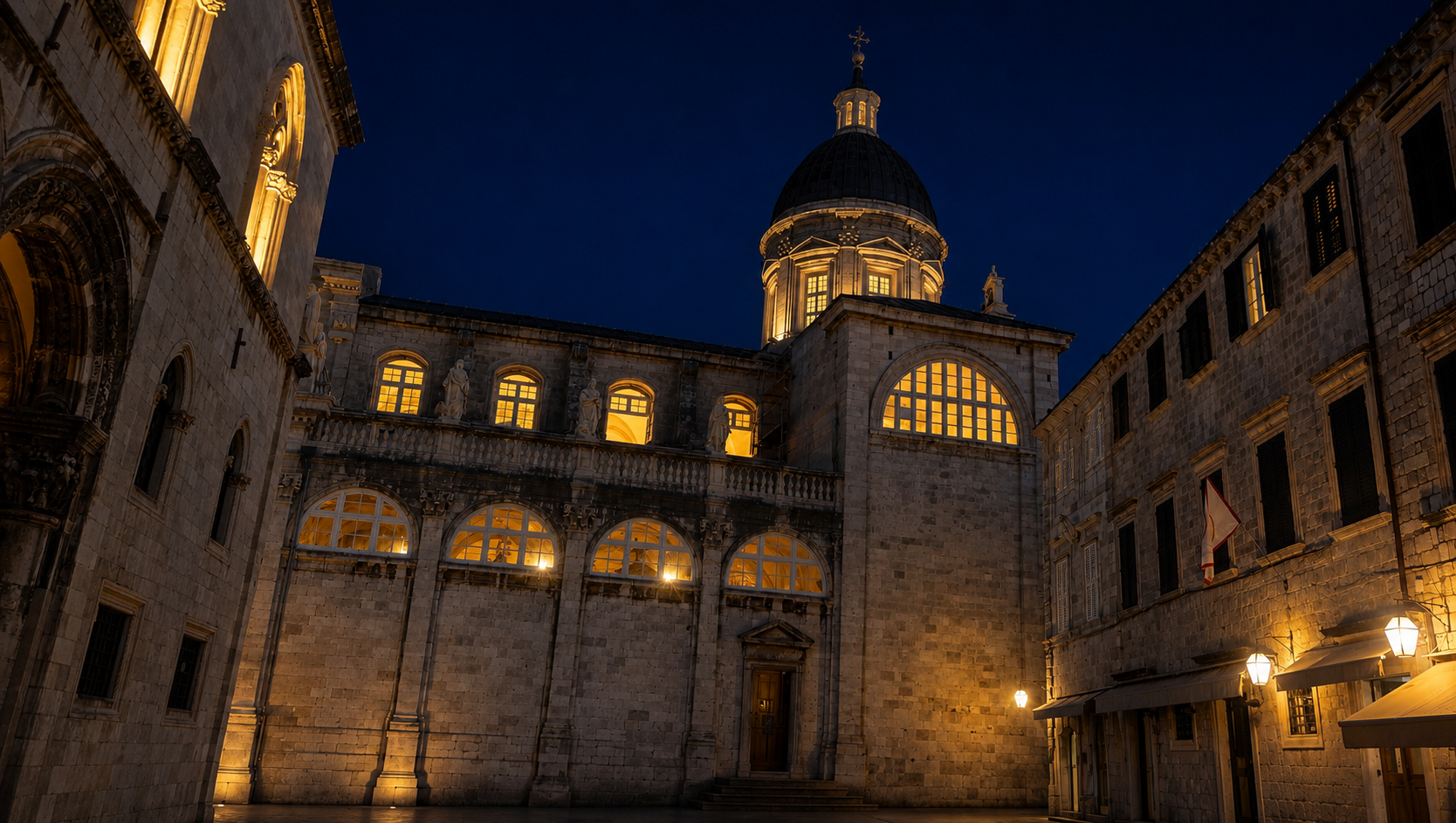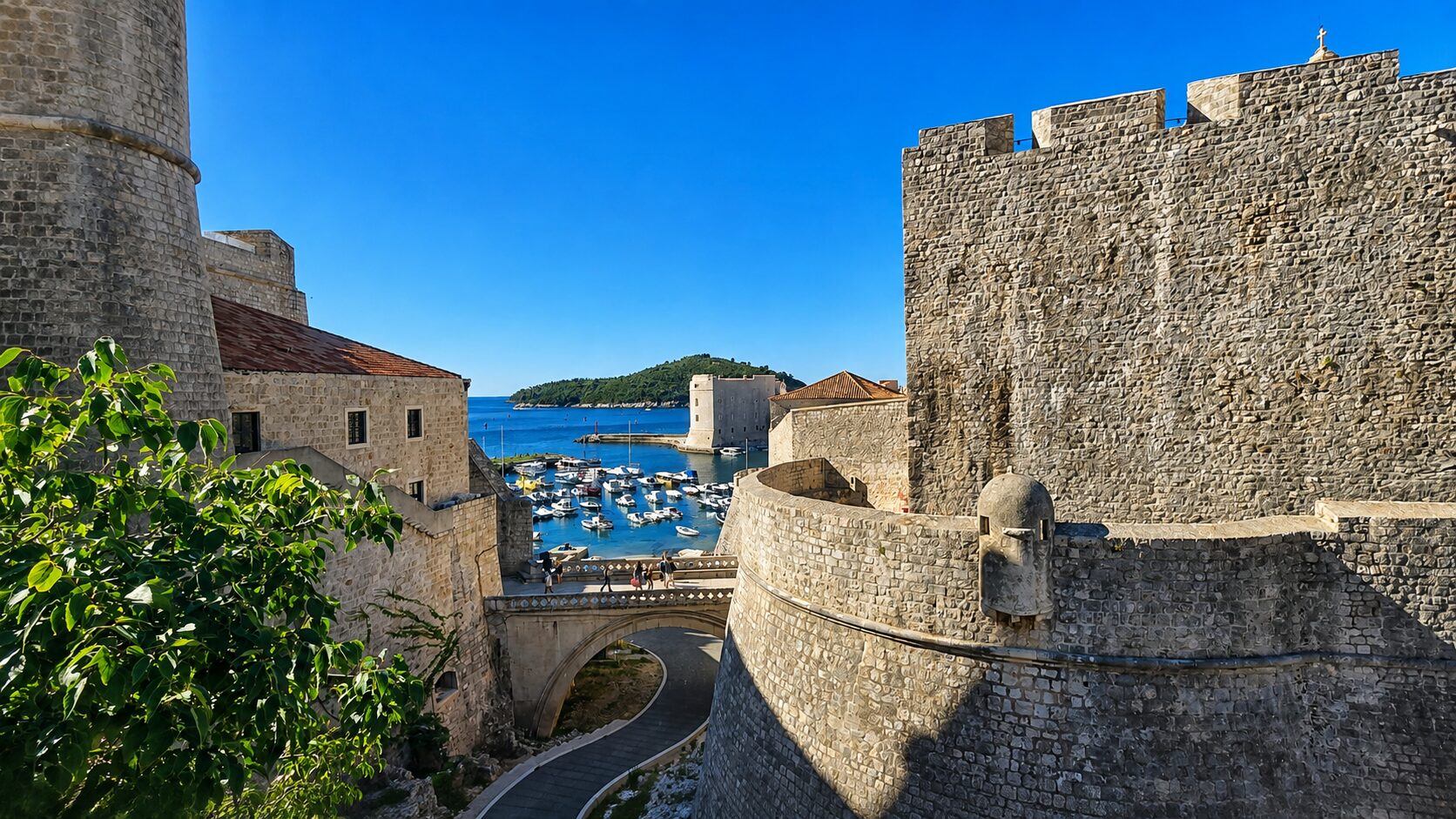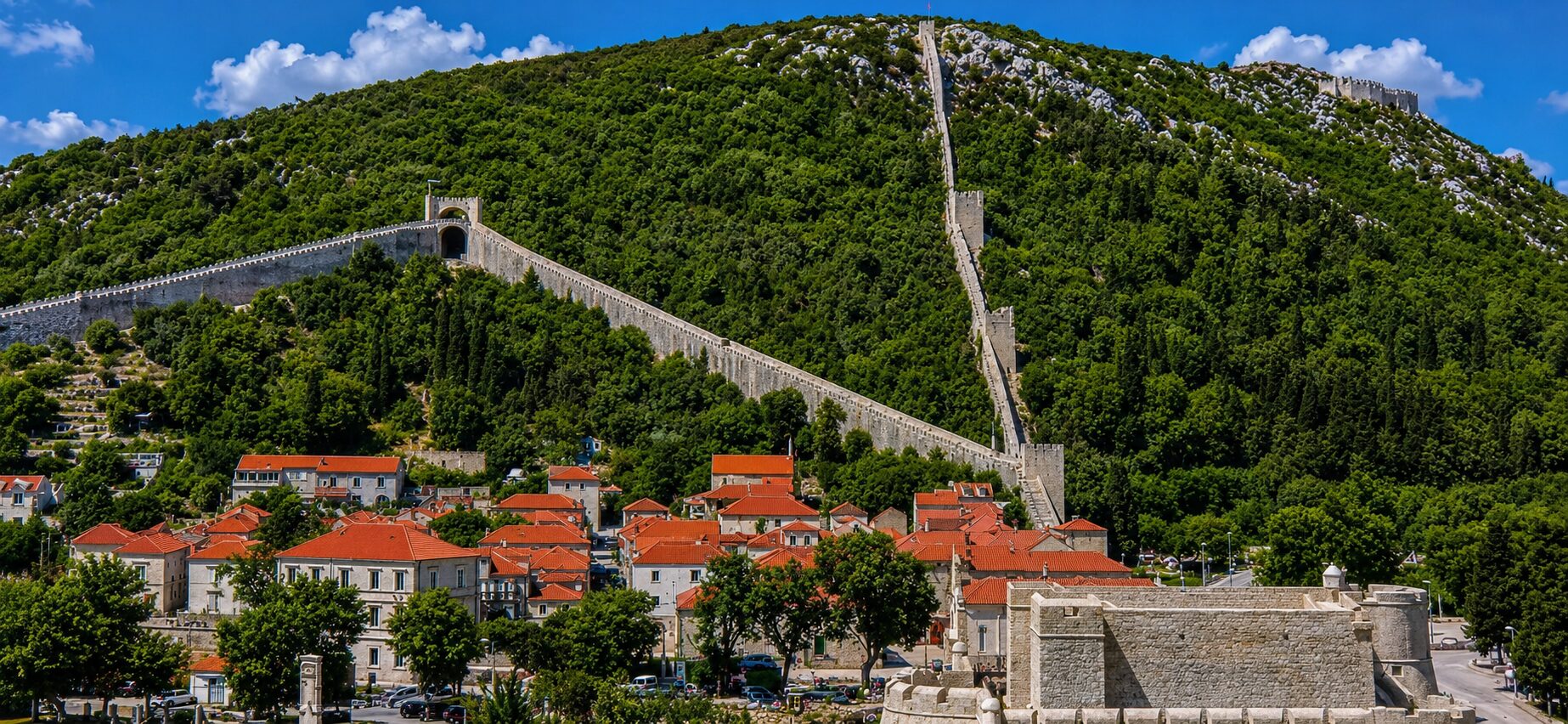
Ston from Dubrovnik is one of the most rewarding day trips if you want to see a quieter, more local side of southern Croatia.
It is close to Dubrovnik, but the atmosphere is completely different. Instead of busy stone streets and large crowds, Ston gives you salt pans, medieval walls, seafood restaurants, quiet alleys, oysters from Mali Ston Bay, and the slow rhythm of the Pelješac Peninsula.
For many visitors, Ston is a surprise. They come because they have heard about the walls or the oysters, but they leave remembering the silence, the food, the sea air, and the feeling that this small town still lives close to its history.
The drive takes only about one hour, which makes Ston from Dubrovnik an excellent choice for travelers who want a meaningful day outside the Old City without spending hours on the road.
How Far Is Ston from Dubrovnik?
Ston is located at the beginning of the Pelješac Peninsula, around 55 kilometers from Dubrovnik.
By car or arranged transfer, the drive usually takes about 50 minutes to one hour, depending on traffic and your starting point. From Dubrovnik Cruise Port in Gruž, the route is also practical because you leave the city quite quickly and continue toward the coastal road and Pelješac.
The drive itself is beautiful. You pass small villages, stone houses, olive trees, cypress trees, sea views, and quiet parts of the coast that many visitors never see if they stay only inside Dubrovnik Old Town.
For guests who want a relaxed day outside the city, Ston from Dubrovnik can be arranged as part of private tours in Dubrovnik, especially when the focus is history, food, wine, and a slower local experience.
Why Visit Ston from Dubrovnik?
Ston is famous for three things: salt, walls, and oysters.
But the real charm of Ston is the way these three things connect. The saltworks explain the economy. The walls explain the need for protection. The oysters and seafood explain the connection with the sea and local life.
This is why Ston is much more than a short photo stop. It tells a story about survival, trade, food, and the practical intelligence of the old Dubrovnik Republic.
In Dubrovnik, you see palaces, churches, diplomacy, and power. In Ston, you see what helped support that power: salt, land, sea, fortifications, and trade routes.
Ston and the Dubrovnik Republic
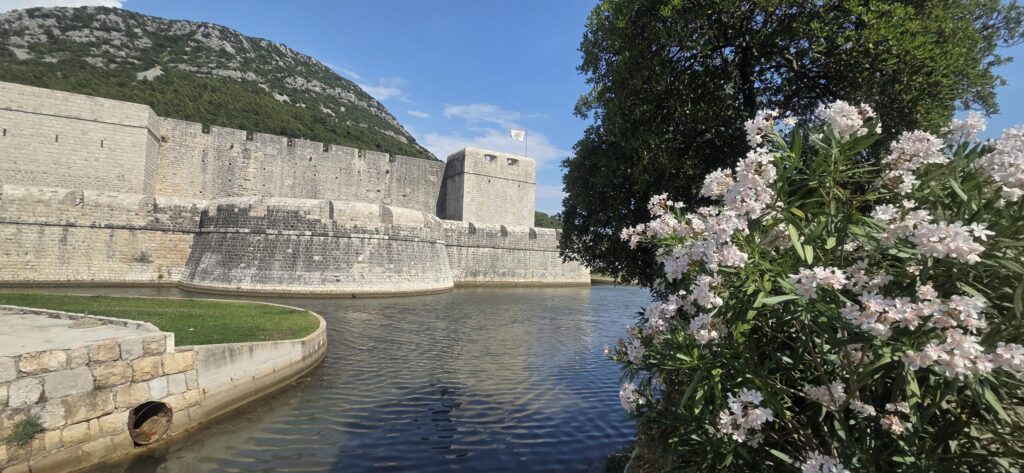
To understand Ston, you have to understand how valuable salt once was.
Today, salt is simple and inexpensive. In the past, it was essential. It preserved food, supported trade, and brought serious income. For the Dubrovnik Republic, salt was not only a local product. It was a strategic resource.
Ston became part of the Dubrovnik Republic in the 14th century. The Republic immediately understood the importance of this area. Ston had salt pans, fertile land, sea access, and a key position at the entrance to Pelješac.
That is why the Republic protected it so carefully.
The town, the salt pans, and the walls were part of one system. Ston was not built only to look impressive. It was built to protect something valuable.
If you are interested in how such a small city-state became so successful, Ston is a perfect continuation of the story of the Dubrovnik Republic and its maritime power.
To understand the larger historical background, you can also read more about why the Republic of Dubrovnik became such a successful trading republic.
Ston Saltworks: The White Gold of the Republic

The Ston Saltworks are one of the most important historic saltworks in this part of Europe.
They are located right next to the town, in a flat open area where the sea, sun, and wind still shape the landscape. At first glance, the salt pans may look simple. But once you understand how they worked, you see how clever and valuable this place really was.
Salt production in Ston was based on natural evaporation. Sea water moved through shallow pools, and the sun and wind helped create salt slowly, season by season.
What makes Ston special is that salt is still harvested in a traditional way. This gives the visit a very real feeling. You are not looking only at a monument from the past. You are looking at a living tradition.
During the time of the Dubrovnik Republic, salt was often called white gold. It brought income, supported trade, and needed protection. That is why Ston’s saltworks were guarded so carefully.
When you stand by the salt pans, you can understand the practical mind of the Republic. Dubrovnik did not survive only because of beauty. It survived because it knew how to manage resources, protect trade, and use every advantage of its territory.
Ston City Walls

The Walls of Ston are one of the most impressive defensive systems in Croatia.
They were once about 5.5 kilometers long, which made them among the longest defensive wall systems in Europe. Even today, when you see them climbing over the hill between Ston and Mali Ston, they look dramatic and almost unexpected.
Many guests are surprised because they associate great walls only with Dubrovnik. But Ston’s walls tell a different story.
Dubrovnik’s walls protected a powerful city by the sea. Ston’s walls protected salt, land, and a strategic entrance to Pelješac.
You can walk part of the walls, and the views are beautiful. From above, you can see the salt pans, the town, the hills, and the bay. But it is good to be realistic in summer. The walk has steps, exposed sections, and very little shade.
In July and August, it is better to walk the walls earlier in the day or choose a shorter section. Ston is not a place where you need to prove anything. It is better to enjoy it slowly than to exhaust yourself in the heat.
Ston or Mali Ston?
Ston and Mali Ston are very close, but they have different personalities.
Ston is where you usually visit the saltworks, walk through the old streets, see the main town layout, and admire the walls.
Mali Ston is smaller, quieter, and more connected with the sea. It is known for oysters, mussels, fishing boats, and seafood restaurants. It feels like a small stone village made for a long lunch by the water.
If you have enough time, the best experience is to visit both. Ston gives you salt and history. Mali Ston gives you the sea and food.
Together, they create one of the most complete local experiences near Dubrovnik.
A Morning in Ston
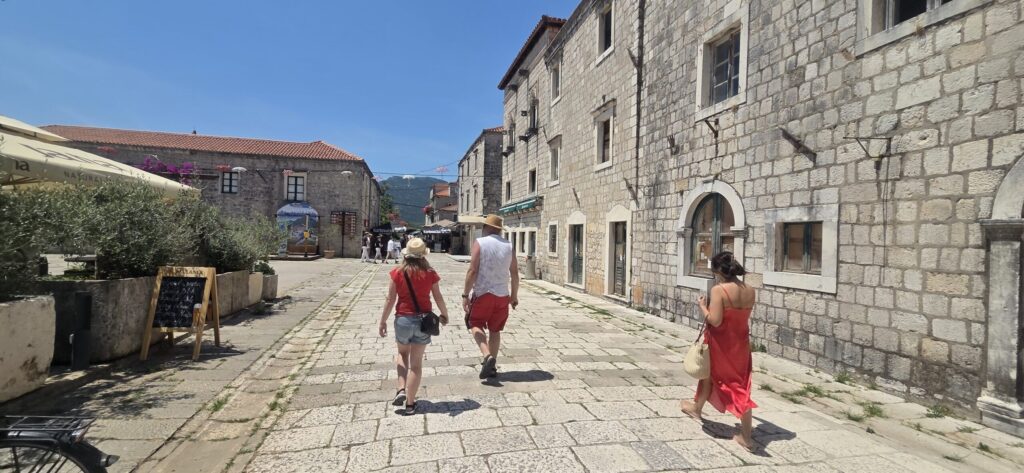
The best moments in Ston are often simple.
Early in the morning, before the heat rises, you may hear church bells before you hear another visitor. Local cats stretch across the warm stone streets. Doors open slowly. Someone drinks coffee in the shade. In Mali Ston, fishermen prepare boats, and the bay is calm.
This is the part of Ston I love most.
It does not feel staged. It does not try too hard. The beauty is in the rhythm of daily life.
That is why it is worth leaving enough time for a quiet walk, a short coffee break, and a few minutes without a schedule. Ston is not only about what you see. It is also about how you feel while you are there.
What to See on a Ston from Dubrovnik Day Trip
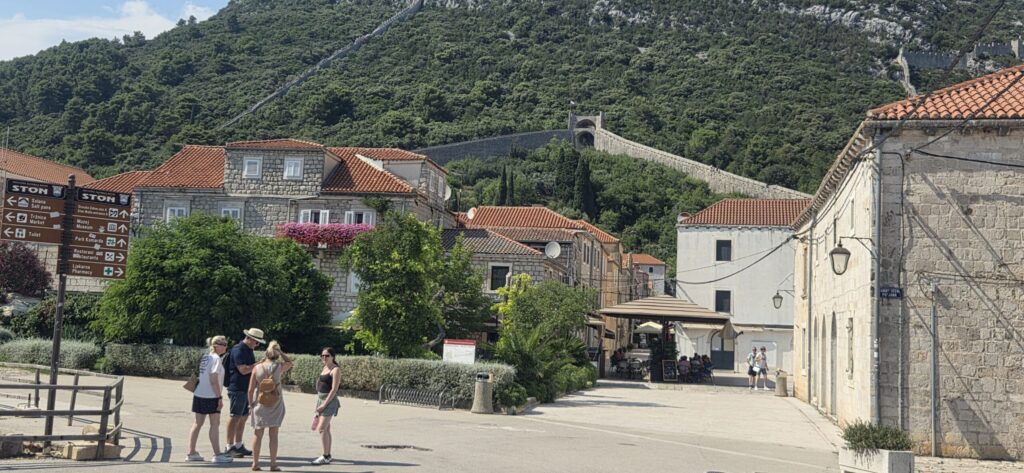
A typical visit to Ston combines history, local life, and food.
Many visitors start with the scenic drive from Dubrovnik, then continue with a walk through Ston, the saltworks, views of the walls, a coffee or refreshment break, and lunch in Ston or Mali Ston.
For history lovers, the focus can be the Dubrovnik Republic, salt trade, defense, and the role of Pelješac.
For food lovers, the visit can become more focused on oysters, mussels, fish, local wine, olive oil, and a longer lunch.
For families or senior travelers, the route can be lighter, with easier walking and fewer steps.
This is why Ston from Dubrovnik works so well as a day trip. It can be active, historical, romantic, gourmet, or very easy-paced.
Little Streets and Local Atmosphere
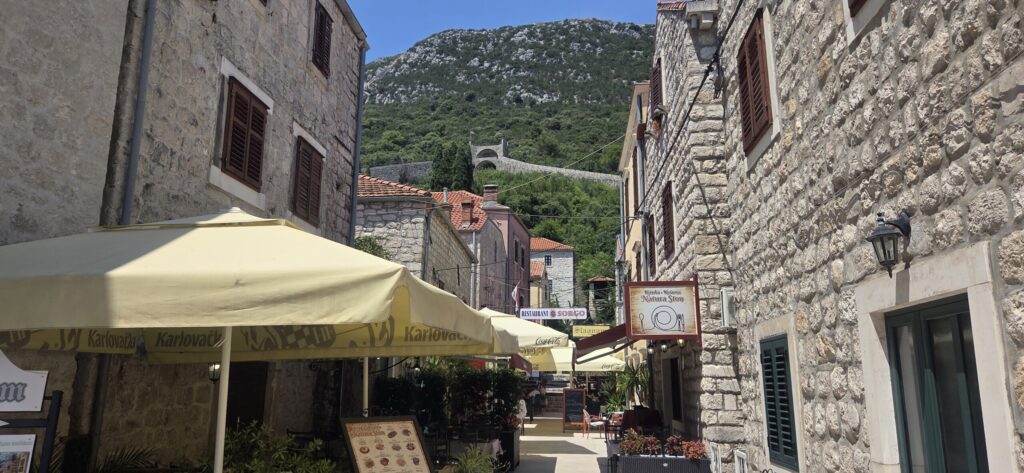
One of the best things to do in Ston is simply walk.
The streets are narrow, quiet, and full of small details: old stone houses, shutters, little corners of shade, plants by the doors, and views toward the walls.
It is not polished in a fake way. It feels lived-in.
This is also where you understand how different Ston is from Dubrovnik. Dubrovnik is grand and monumental. Ston is smaller, more modest, and more intimate.
Both places belonged to the same historic world, but they show different sides of it.
Coffee and Breaks in Ston
A coffee break in Ston is not a waste of time. It is part of the experience.
After the drive from Dubrovnik or after visiting the saltworks, it is nice to sit down, order coffee, fresh juice, lemonade, or something cold, and let the town slow you down.
In summer, this is especially important. The saltworks and walls can be exposed to the sun, so a shaded pause makes the day much more comfortable.
This is how locals move through Dalmatian towns in warm weather. You do not rush from one sight to another. You walk, stop, talk, drink something, and continue.
This slower rhythm is also part of Croatian coffee culture in Dubrovnik, where sitting down for coffee is not only a break, but a local way of experiencing the day.
What to Eat in Ston and Mali Ston
Food is one of the strongest reasons to visit Ston.
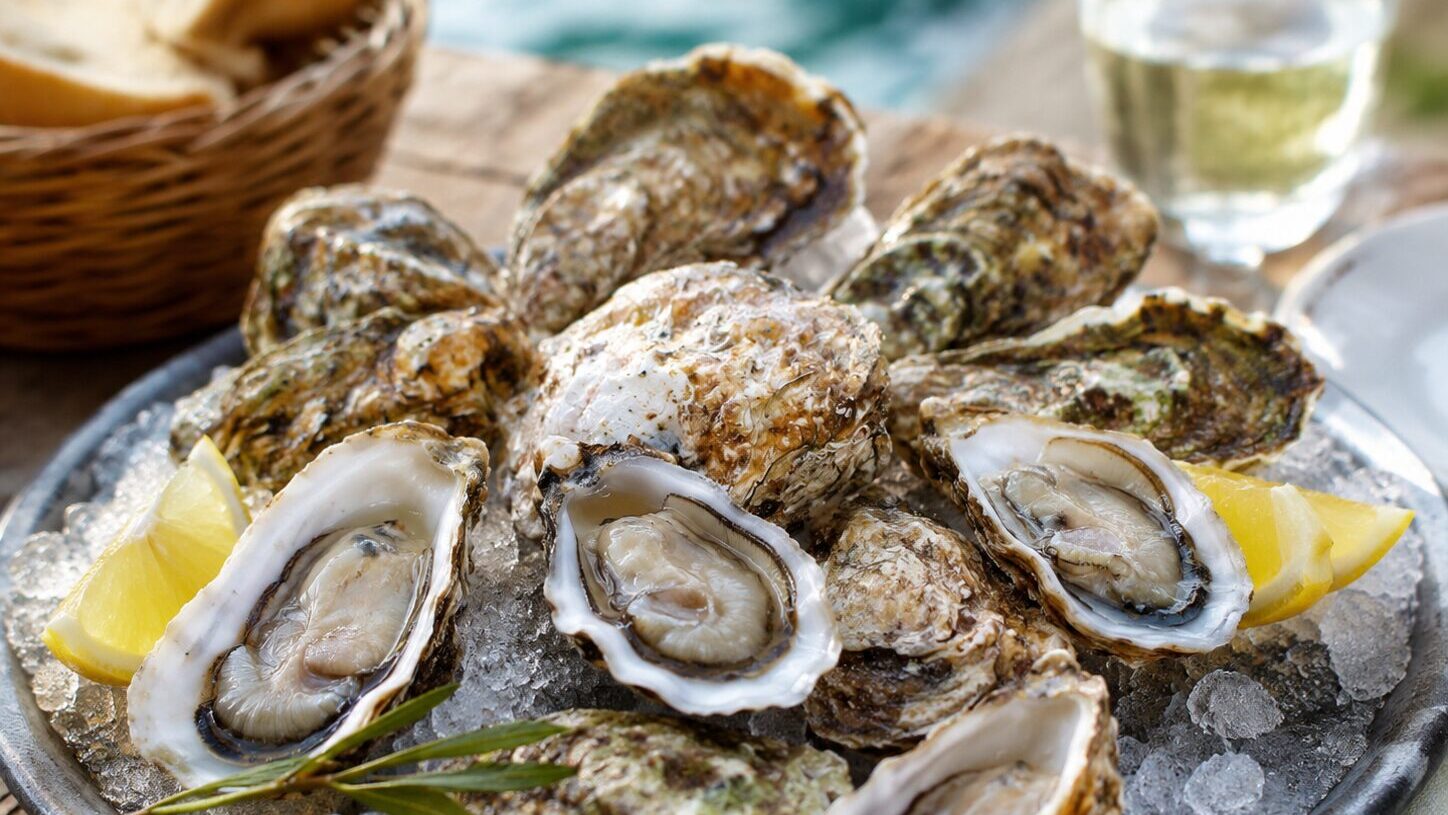
Mali Ston Bay is famous for oysters and mussels. The bay’s clean, nutrient-rich waters provide ideal conditions for shellfish farming. Oysters here taste of the place itself: fresh, mineral, lightly salty, and very connected to the sea.
Oyster farming in this area goes back centuries. It is not a new tourist idea. It is part of local life and local identity.
If you like oysters, the best way to try them is fresh, with just a little lemon. Nothing more is needed. The taste should stay clean and simple.
But Ston and Mali Ston are not only about oysters.
You can also enjoy mussels prepared na buzaru, one of the most traditional Dalmatian ways of cooking shellfish. Buzara usually includes olive oil, garlic, parsley, white wine, and sometimes breadcrumbs. It is simple, fragrant, and perfect with bread because the sauce is often the best part.
Other excellent dishes include black risotto, grilled fish, octopus salad, fish soup, homemade seafood pasta, shrimp, seasonal vegetables, local olive oil, and Pelješac wine.
Mediterranean Plate from Our Last Ston Tour
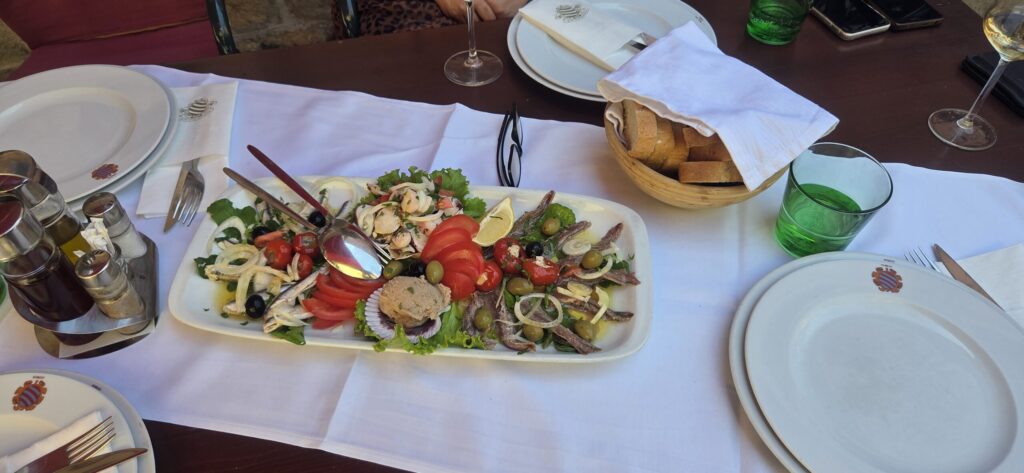
One of the dishes I loved on our last Ston tour was a simple Mediterranean plate.
It had exactly the kind of food that makes this region special: local seafood flavors, fresh ingredients, olive oil, vegetables, and that relaxed Dalmatian way of eating where nothing needs to be too complicated.
Food in Ston should feel like this: fresh, generous, local, and connected to the landscape around you.
This kind of plate is also a beautiful reminder that Mediterranean cuisine is not about heavy sauces or complicated presentation. It is about good ingredients, balance, seasonality, and the pleasure of eating slowly.
Homemade Seafood Risotto with Shellfish and Gamberi
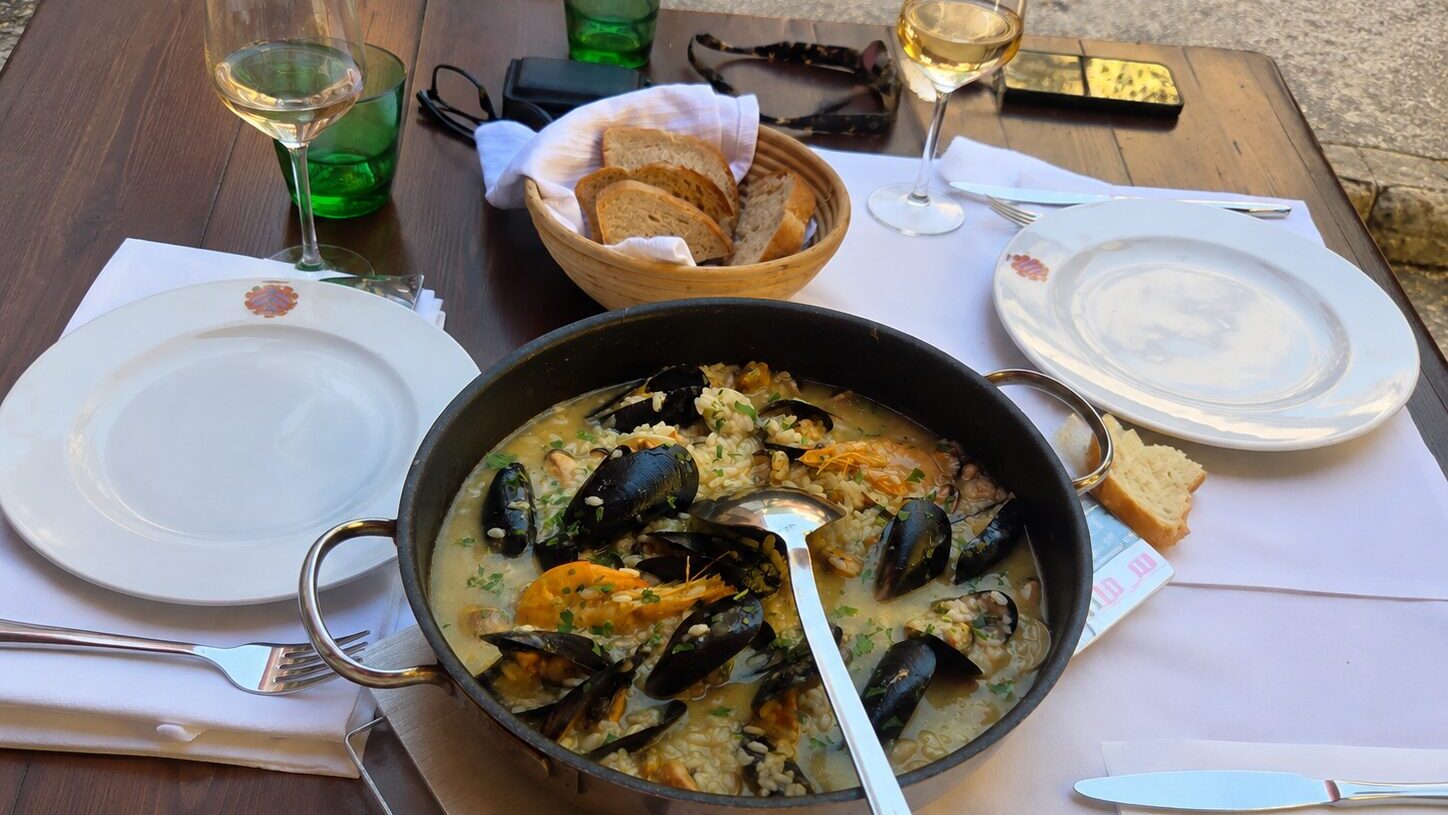
Another dish I always recommend in this area is homemade seafood risotto.
In Ston and Mali Ston, risotto feels very natural because the ingredients come from the sea around you. A good local version may include shellfish, mussels, clams, gamberi, shrimp, or other seasonal seafood.
This dish is not heavy or complicated. It is creamy, full of sea flavor, and usually prepared with olive oil, white wine, garlic, parsley, and fresh seafood stock.
For many guests, this is the safest and most satisfying choice if they want something local but do not eat raw oysters.
A homemade risotto with shellfish and gamberi is also a beautiful dish for photos because it shows the Mediterranean character of Ston in one plate.
Restaurants in Ston and Mali Ston
The restaurant experience in Ston depends on what kind of lunch you want.
Some guests prefer a classic seafood restaurant with comfortable service and a beautiful setting. Others want something more rustic and quiet. Some want oysters and wine. Others want a full lunch with several courses.
In high season, reservations are important. The best experience is not only about choosing a restaurant. It is about choosing the right time, the right table, and the right pace.
For Ston, local concierge support is especially useful because the best experience depends on timing, restaurant reservations, food preferences, weather, and the rhythm of the day.
A good Ston lunch should never feel like a tourist stop. It should feel like part of the journey.
Best Dishes to Try in Ston
If this is your first visit to Ston, keep the food simple and local.
Start with fresh oysters if you like them. Try mussels na buzaru or homemade seafood risotto with shellfish and gamberi. Order grilled fish if you want a classic Dalmatian main course. Add Swiss chard with potatoes, local olive oil, and a glass of Pelješac wine.
A beautiful Ston lunch could include:
fresh oysters with lemon,
mussels na buzaru,
homemade seafood risotto with shellfish and gamberi,
grilled fish with Swiss chard and potatoes,
local olive oil,
Pelješac wine,
and coffee after lunch.
You can also look for local cheeses, seasonal vegetables, homemade desserts, and simple cakes depending on the restaurant and season.
For travelers who enjoy food and wine, Ston can also be combined with Dubrovnik wines and local vineyards, especially if you want to continue deeper into Pelješac after lunch.
Pelješac Wine and Local Flavors
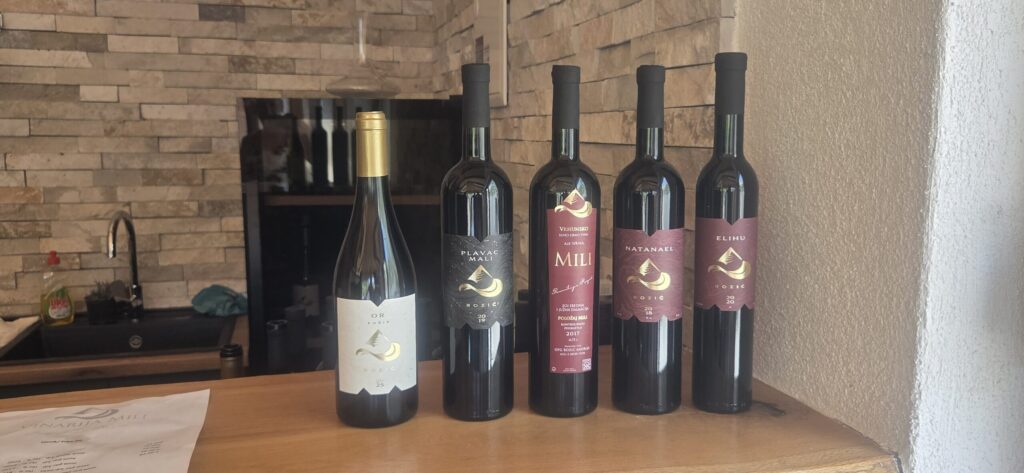
Ston is the entrance to Pelješac, one of Croatia’s most famous wine regions.
Pelješac is especially known for Plavac Mali, a strong local red grape that gives powerful wines with a lot of character. These wines are often connected with the sunny slopes of the peninsula and the intense Mediterranean climate.
With oysters and lighter seafood, many guests prefer a fresh white wine. With grilled fish, risotto, or richer dishes, local wines from Pelješac can be a beautiful pairing.
Food in Ston is not separate from the landscape. The salt, oysters, olive oil, wine, herbs, fish, and stone villages all belong to the same story.
Planning a Day Trip to Ston from Dubrovnik
Ston is ideal if you want to see more than Dubrovnik but do not want a long, exhausting day.
For American travelers planning a longer stay, Ston can also be a beautiful addition to a first-time Dubrovnik itinerary, especially if you want one day outside the Old Town with history, seafood and local atmosphere.
It works beautifully as a half-day or relaxed day trip from Dubrovnik. It can also be combined with Pelješac wineries, oyster tasting, Trsteno Arboretum, or a scenic coastal drive, depending on how much time you have.
If you are arriving by ship, Ston can be arranged as a fully custom private Dubrovnik shore excursion, with careful pickup, transport, local guiding, restaurant planning, and on-time return to the port.
A guided Ston experience can include:
pickup from your hotel, villa, or cruise port,
comfortable transport,
licensed local guide,
Ston Saltworks visit,
views or walk on the Ston walls,
walk through Ston’s old streets,
coffee or refreshment break,
restaurant reservation,
seafood lunch in Ston or Mali Ston,
and return to Dubrovnik.
Guests who enjoy quieter coastal places often also like a private coastal excursion from Dubrovnik, especially when they want to combine the Old Town with a relaxed seaside destination.
Who Is Ston Best For?
Ston is perfect for travelers who enjoy authentic places.
It is especially good for food lovers, history lovers, couples, families, senior travelers, cruise guests with enough time, and visitors who already know Dubrovnik Old Town and want to see something different.
Senior travelers who prefer a calmer pace may also enjoy my guide to Dubrovnik for senior travelers, especially if they want easy walking routes before or after a Ston day trip.
It is not the best choice if you want a fast, high-energy tour with many big attractions. Ston is quieter than that.
Its beauty is in details: salt, stone, seafood, wine, church bells, small streets, and lunch by the sea.
Best Time to Visit Ston from Dubrovnik
Spring and autumn are wonderful for Ston because the weather is usually pleasant for walking and lunch outdoors.
Summer is beautiful too, but it is better to start earlier, especially if you want to visit the saltworks or walk part of the walls. Midday can be hot, and shade is limited in some areas.
Winter and low season can be peaceful, but restaurant opening times may vary, so planning is important.
Morning is usually best in July and August. In May, June, September, and October, the day is more flexible.
Is Ston Worth Visiting from Dubrovnik?
Yes, Ston from Dubrovnik is absolutely worth planning if you want a different side of southern Croatia.
Dubrovnik shows you the power, beauty, diplomacy, and stone elegance of the old Republic. Ston shows you salt, food, defense, trade, land, sea, and daily life.
It is close enough for an easy day trip, but different enough to feel like you have entered another world.
For me, Ston is not just a stop on the way to Pelješac. It is a destination in itself.
A day in Ston gives you history, saltworks, medieval walls, quiet streets, seafood, coffee breaks, and one of the most memorable Mediterranean lunches near Dubrovnik.
FAQ: Visiting Ston from Dubrovnik
How far is Ston from Dubrovnik?
Ston is around 55 kilometers from Dubrovnik. By car or arranged transfer, the drive usually takes about 50 minutes to one hour, depending on traffic and your starting point.
Is Ston worth visiting from Dubrovnik?
Yes. Ston is one of the best day trips from Dubrovnik if you enjoy history, local food, oysters, saltworks, medieval walls, and quieter places with a strong Mediterranean atmosphere.
What is Ston famous for?
Ston is famous for its historic saltworks, impressive medieval walls, and oysters from Mali Ston Bay. It is also known for excellent seafood, Pelješac wine, and its connection with the old Dubrovnik Republic.
Can you visit Ston on a shore excursion from Dubrovnik?
Yes, if your ship schedule allows enough time. Ston can be arranged as part of a carefully planned shore excursion with pickup, transport, local guiding, restaurant reservation, and on-time return to the port.
What should I eat in Ston or Mali Ston?
The most famous local specialties are fresh oysters, mussels na buzaru, homemade seafood risotto with shellfish and gamberi, grilled fish, octopus salad, local olive oil, and Pelješac wine.
Plan Your Ston Tour with VipWalk Dubrovnik
If you would like to experience Ston from Dubrovnik in a relaxed, local, and beautifully organized way, VipWalk Dubrovnik can arrange a guided experience with comfortable transportation, licensed local guiding, saltworks visit, easy walking, restaurant recommendations, and concierge support before and during your stay.
Your Ston tour can be adjusted to your pace and interests — history, food, wine, oysters, quiet streets, or a longer Pelješac experience.
Visit VipWalk Dubrovnik private tours or contact us directly to plan your Ston day trip from Dubrovnik.