Croatian coffee culture is about much more than coffee. In Dubrovnik, meeting for kava is often a social ritual — a chance to talk, catch up, people-watch and enjoy time together without rushing. From early mornings in the Old Town to everyday cafés in Gruž and Lapad, this simple habit offers visitors a glimpse into local life.
There is something many visitors notice almost immediately after arriving in Dubrovnik: people sit for coffee everywhere.
Terraces are already active in the morning. Friends meet before work. Older residents read newspapers while watching the city wake up. Business conversations happen over espresso, and people often remain at their tables long after their cups are empty.
In Croatia, and particularly here on the Dalmatian coast, coffee is often as much a social ritual as a drink.
That is why coffee is often one of the small details travelers remember long after leaving Dubrovnik.
Coffee is about conversation.
It is about making time for somebody.
And quite often, it is about slowing down.
After years of guiding visitors through Dubrovnik, I have noticed that some of the most interesting questions guests ask have little to do with monuments. They want to know why our cafés are always busy, why people can spend so long over one coffee, what we actually order and whether this really is part of everyday life.
It is.
Coffee is woven into our social life in a way that can be difficult to explain until you actually experience it.
And once visitors sit down, stop watching the clock and join the conversation, they usually understand it very quickly.
I have seen that repeatedly while guiding in Dubrovnik. Some of the most memorable conversations with guests have happened not while standing in front of a monument, but when the sightseeing slowed down and we had time to sit together and talk.
That observation became the foundation for one of VipWalk Dubrovnik’s signature private tours — the Dubrovnik Early Morning Walking Tour & Local Coffee Experience. I created it from something I was already seeing with guests: the quieter the moment became, the more curious they often became about Dubrovnik itself.
Why Coffee in Croatia Feels So Personal
In many places, coffee is primarily functional.
It is something you buy on the way to work, drink while walking or finish quickly before moving on with your day.
In Croatia, particularly along the coast, coffee often serves another purpose as well.
It is social.
When Croatians say “Idemo na kavu” — “Let’s go for coffee” — the invitation usually means much more than ordering a drink.
Friends catch up after work.
Families meet on terraces.
Colleagues discuss business.
Students sit together and talk about life.
And serious conversations somehow seem a little easier when there is a cup of coffee on the table.
Coffee fits naturally into the social rhythm of life along the Adriatic, while Croatian coffee culture also reflects influences from Central Europe and the wider Balkans. Travelers interested in seeing more of this everyday side of the city may also enjoy our guide to experiencing Dubrovnik like a local.
For me, the important point is not that people in Dubrovnik live without schedules or responsibilities — of course we do.
It is that making time for conversation still matters.
That is especially noticeable in Dubrovnik.
Our city receives visitors from all over the world, yet behind the famous monuments and busy summer streets, ordinary local routines continue.
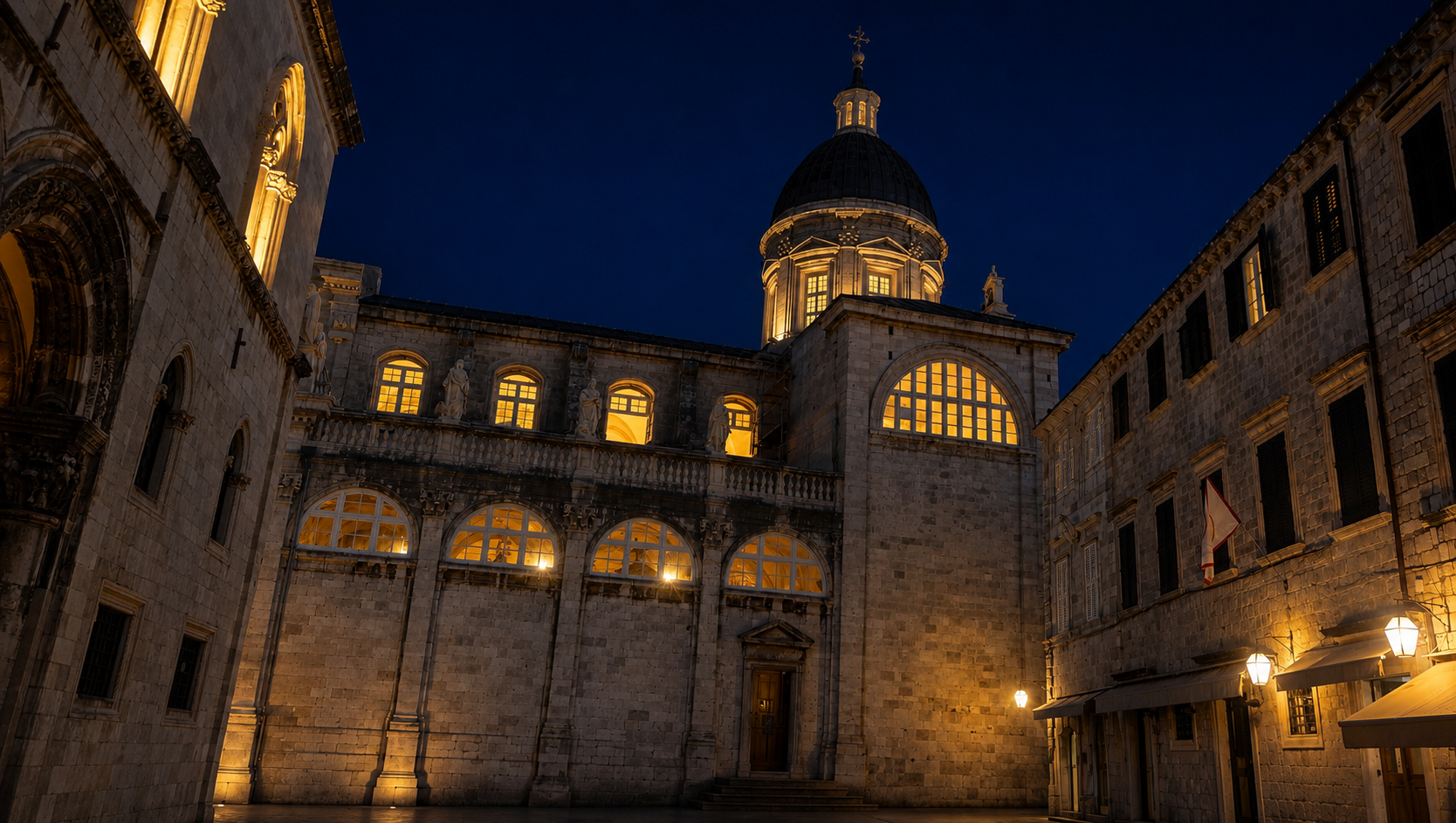
Come into the Old Town early enough and you will see a very different Dubrovnik: deliveries arriving, shutters opening, residents crossing Stradun and people sitting down for their first coffee before the busiest part of the day begins.
If you would like to experience the city during these quieter hours, our guide to How to Avoid Crowds in Dubrovnik explains when Dubrovnik feels most peaceful.
That quiet morning Dubrovnik is one of my favorite versions of the city.
Croatian Coffee Culture in Dubrovnik
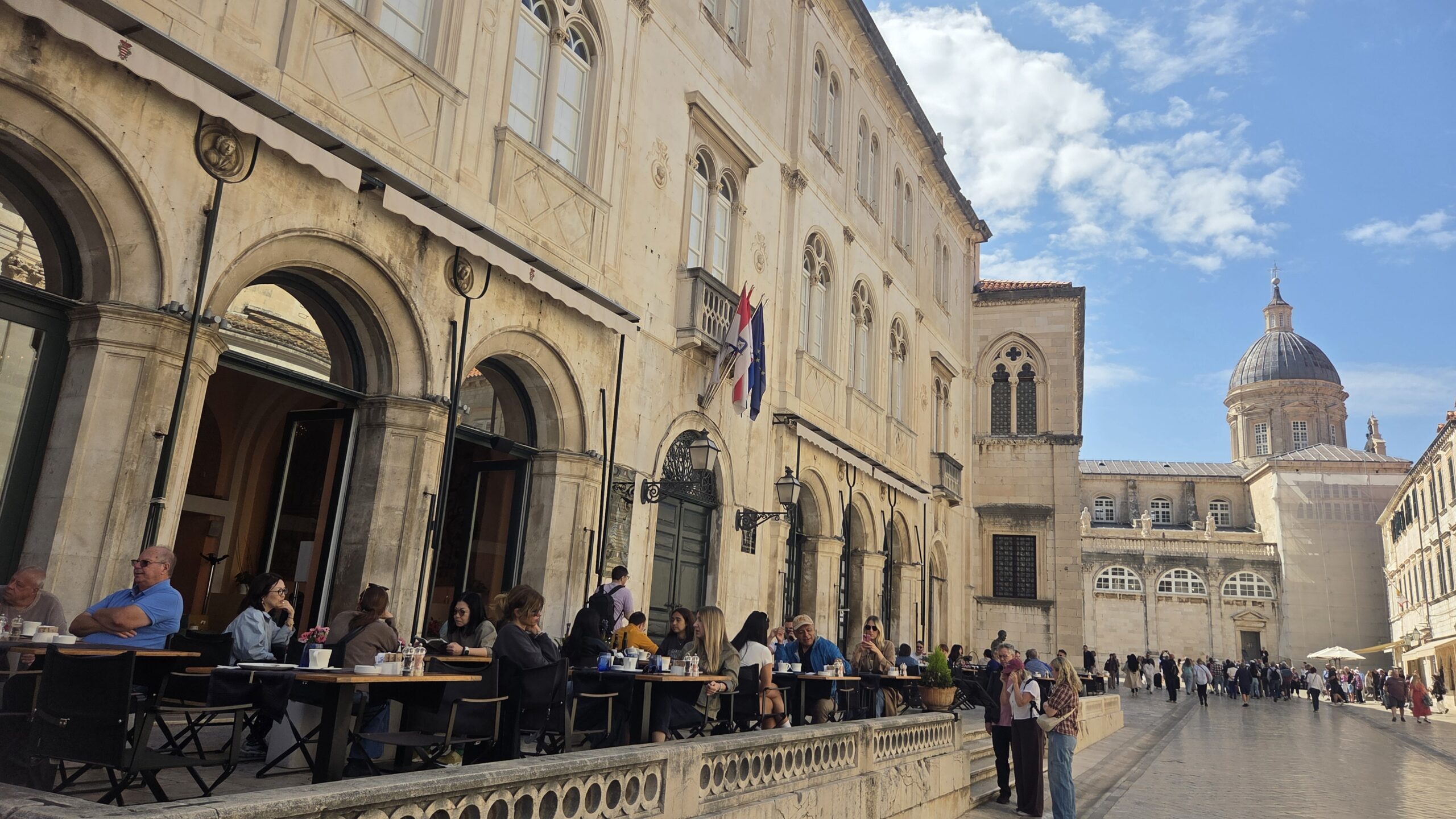
Dubrovnik has always been connected to the wider Adriatic and Mediterranean world.
For centuries, the Republic of Ragusa was a maritime and trading republic whose merchants, diplomats and sailors moved between different cultures and ports.
That history is part of Dubrovnik’s wider identity, but today’s coffee culture is best understood through everyday social life rather than through historical explanations alone.
Cafés are part of that everyday rhythm.
And the atmosphere changes considerably depending on the hour.
Early in the morning, the Old Town can still feel remarkably calm.
Later, terraces fill as visitors, guides and day-trippers move through the historic center.
During hot summer afternoons, shade becomes almost as important as the coffee itself.
And in the evening, cafés become places to meet friends, enjoy the cooler air and watch the city change as the stone streets light up.
One thing visitors often notice is that people do not seem particularly concerned about finishing coffee quickly.
Sitting for a while after you have finished your drink is completely normal.
There is no need to immediately order another.
And visitors generally notice that there is little pressure to leave the moment the cup is empty.
A café is more than a place selling coffee.
For many Dubrovnik residents, it is simply part of social life.
What Locals Actually Order in Croatian Cafés
Visitors sometimes expect coffee in Dubrovnik to follow exactly the same rules as coffee in Italy.
Along the Adriatic, visitors will certainly notice similarities with Italian espresso culture, but Croatian café culture has developed its own social habits and vocabulary.
Common orders in Dubrovnik include:
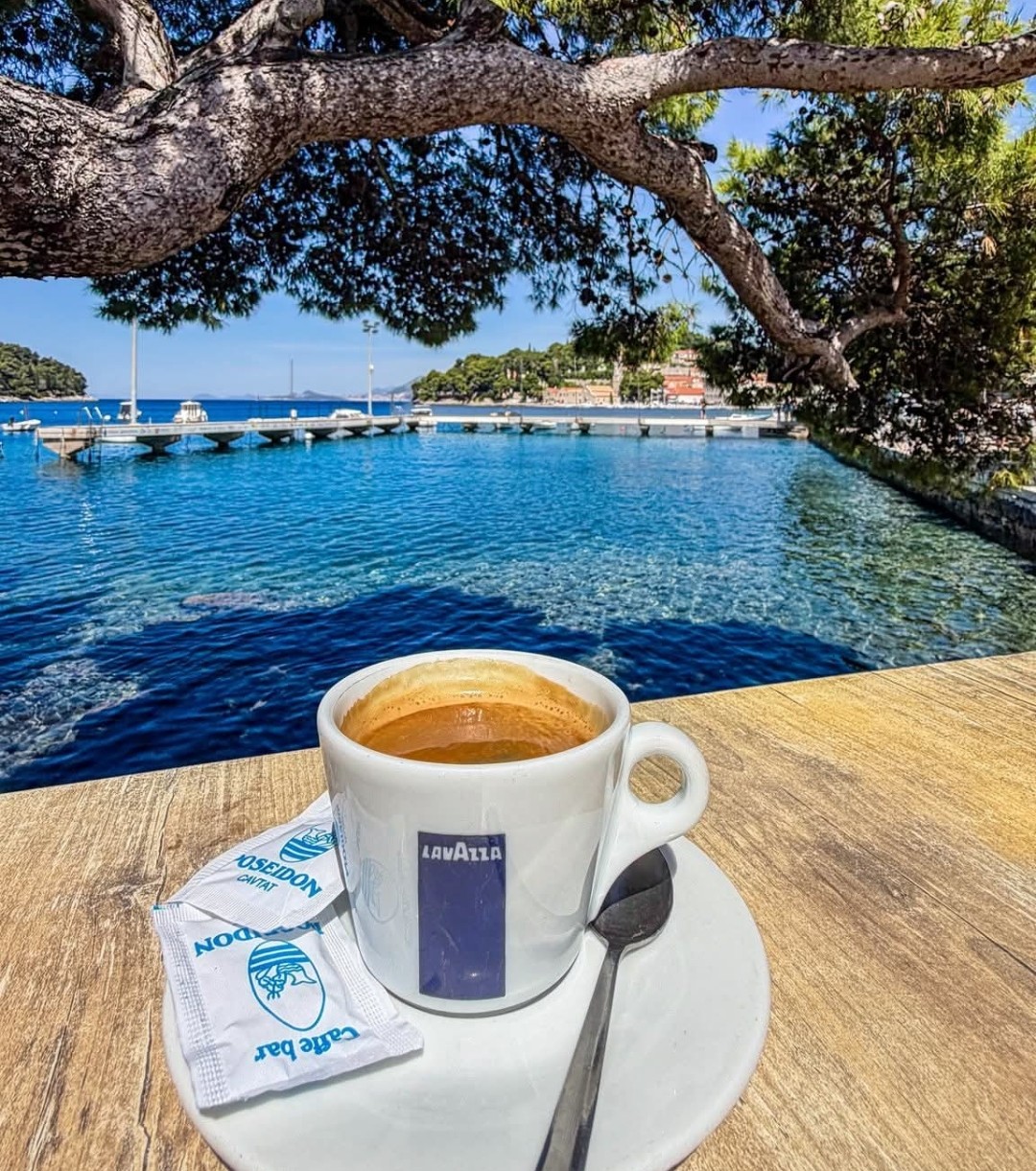
- Espresso, sometimes ordered simply as a small coffee or mala kava
- Macchiato
- Cappuccino
- Coffee with milk, or kava s mlijekom
- Latte-style milk coffees
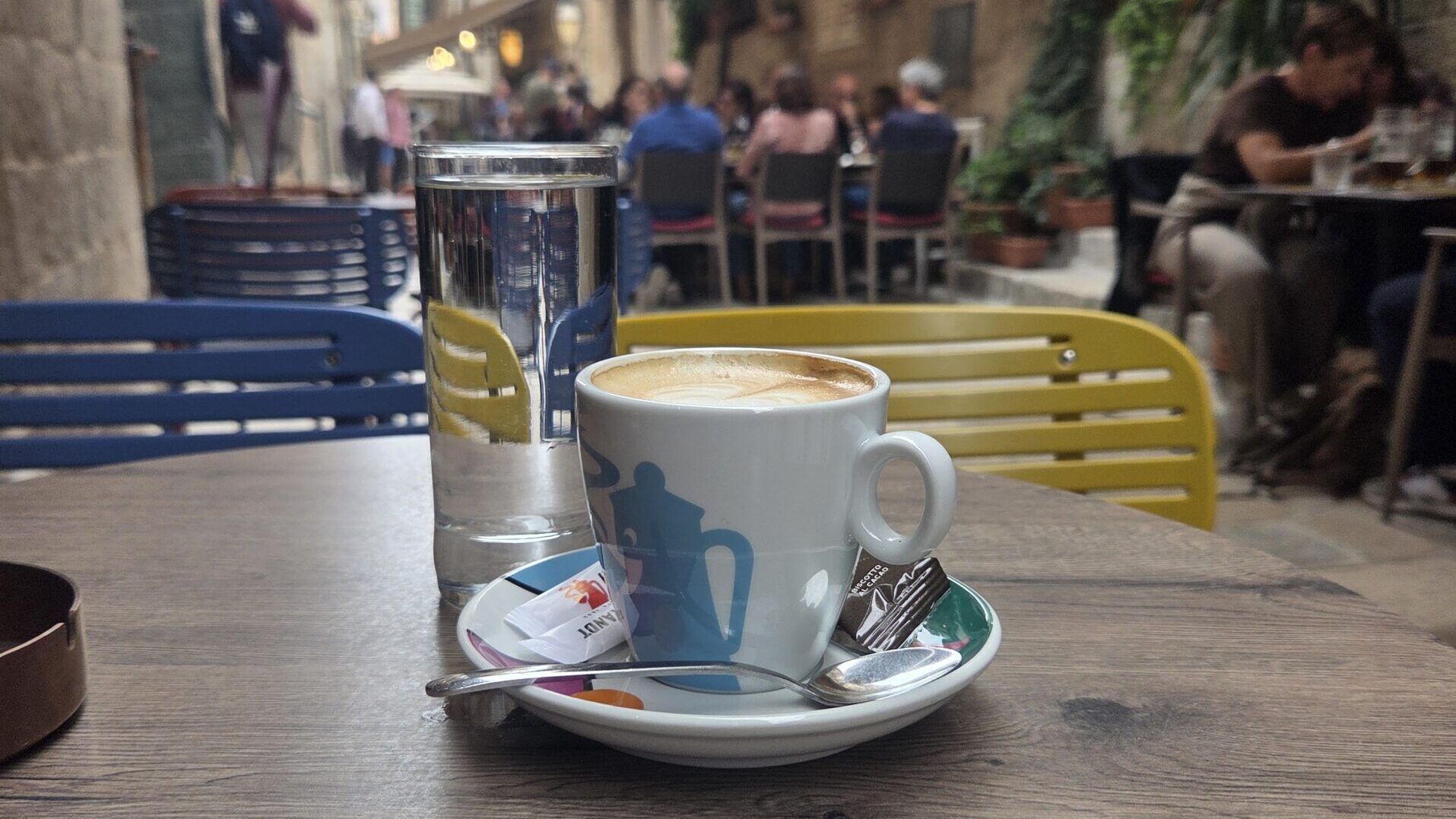
Depending on the café, coffee may also arrive with a glass of water.
What matters just as much as the order, however, is what happens afterwards.
You sit.
You talk, read, meet somebody or simply watch the city around you.
And this is not something created for tourists.
Outside the most visited parts of the Old Town, neighborhoods such as Gruž and Lapad have their own everyday café routines throughout the year.
That distinction is important.
Dubrovnik may be internationally famous, but coffee remains part of ordinary local life.
Turkish Coffee in Croatian Homes
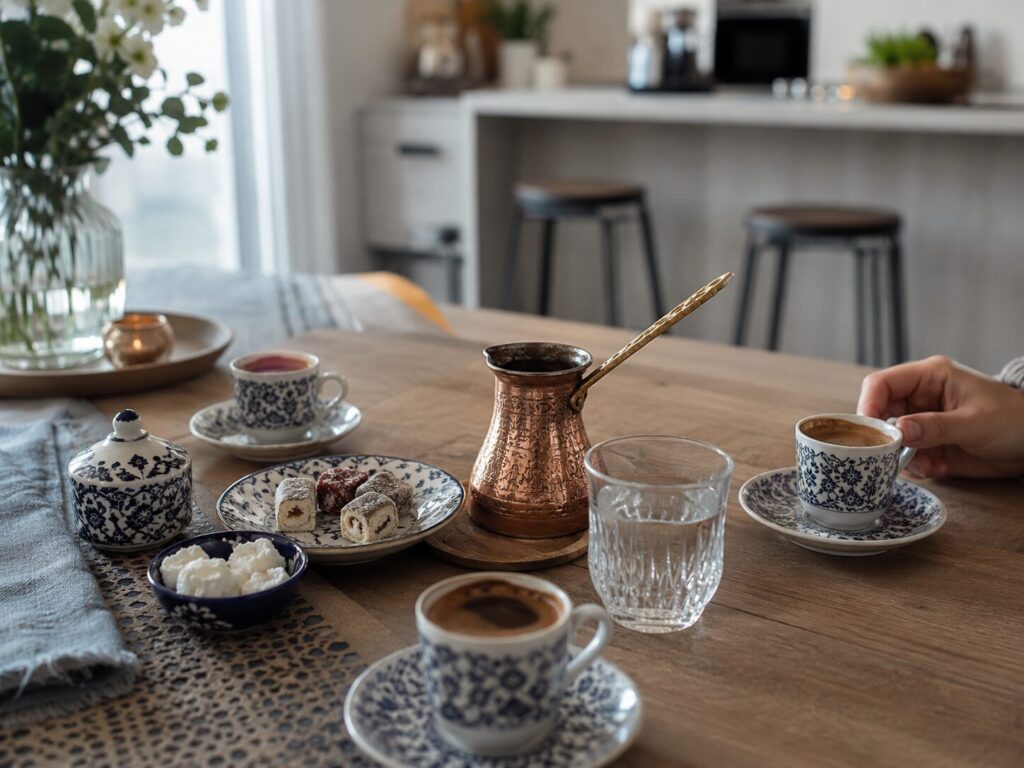
Coffee at home can be a different experience.
Some families in Dubrovnik still prepare traditional coffee in a small džezva, particularly when relatives, friends or neighbors come to visit.
In everyday speech, you may hear this called turska kava, or Turkish coffee. In some Croatian homes, you may also hear the more general expression domaća kava for traditionally prepared home coffee.
The coffee is prepared slowly and served in small cups, sometimes with something sweet on the side.
But the important part is rarely the preparation alone.
It is the ritual of sitting together.
Espresso machines and modern coffee makers are common today, of course, and not every Dubrovnik household follows the same traditions.
Still, for many people, the aroma of coffee prepared in a džezva carries associations with home, hospitality and long conversations around the kitchen table.
That is why understanding Croatian coffee culture only through café menus misses part of the story.
Some of its strongest memories are created at home.
The Mediterranean Art of Slowing Down
Coffee at home can be a different experience.
Some families in Dubrovnik still prepare traditional coffee in a small džezva, particularly when relatives, friends or neighbors come to visit.
In everyday speech, you may hear this called turska kava, or Turkish coffee. In some Croatian homes, you may also hear the more general expression domaća kava for traditionally prepared home coffee.
The coffee is prepared slowly and served in small cups, sometimes with something sweet on the side.
But the important part is rarely the preparation alone.
It is the ritual of sitting together.
Espresso machines and modern coffee makers are common today, of course, and not every Dubrovnik household follows the same traditions.
Still, for many people, the aroma of coffee prepared in a džezva carries associations with home, hospitality and long conversations around the kitchen table.
That is why understanding Croatian coffee culture only through café menus misses part of the story.
Some of its strongest memories are created at home.
The Mediterranean Art of Slowing Down
One of the pleasures of Dubrovnik is discovering that you do not always need to be moving.
Modern travel can become surprisingly exhausting.
People check maps, restaurant reservations, opening hours, messages and lists of attractions they still need to see.
But Dubrovnik rewards people who occasionally stop.
Sit somewhere for a while and different details begin to appear.
Church bells.
Footsteps on polished limestone.
Conversations coming from nearby windows.
Small streets branching away from the main squares.
Travelers who enjoy finding those quieter corners may also like our guide to hidden streets in Dubrovnik.
You begin noticing how the light changes on the stone or how quickly a busy street can become peaceful when you move only a few corners away.
Many of my guests, particularly those arriving with packed itineraries, tell me that these unplanned moments become some of the most enjoyable parts of their time in Dubrovnik.
Perhaps because they are not scheduled as attractions.
They simply happen.
Even during Dubrovnik’s busy summer months, those moments are still possible if you choose the right time and route.
Coffee gives you a very good reason to stop long enough to notice them.
The Hidden Rules of Croatian Coffee Culture
Coffee culture also comes with a few unwritten habits that visitors quickly notice.
One is that staying at the table after finishing your drink is perfectly normal.
You generally do not need to feel that somebody is waiting for you to leave immediately.
Another is that regular customers often return to the same cafés.
Over time, staff may know their usual order or recognize when they normally arrive.
That familiarity helps turn cafés into small social meeting places rather than simply somewhere to purchase a drink.
The preferred café can also change according to the season, time of day, weather and — very importantly in Dubrovnik during summer — where the shade is.
Some places work beautifully for a peaceful morning coffee.
Others are better for watching city life.
And many Dubrovnik residents spend much more of their everyday café time outside the historic center, particularly in residential areas such as Lapad and Gruž.
Understanding details like these helps visitors see Dubrovnik as a living city rather than only a collection of famous attractions.
The Best Way to Experience Dubrovnik Like a Local
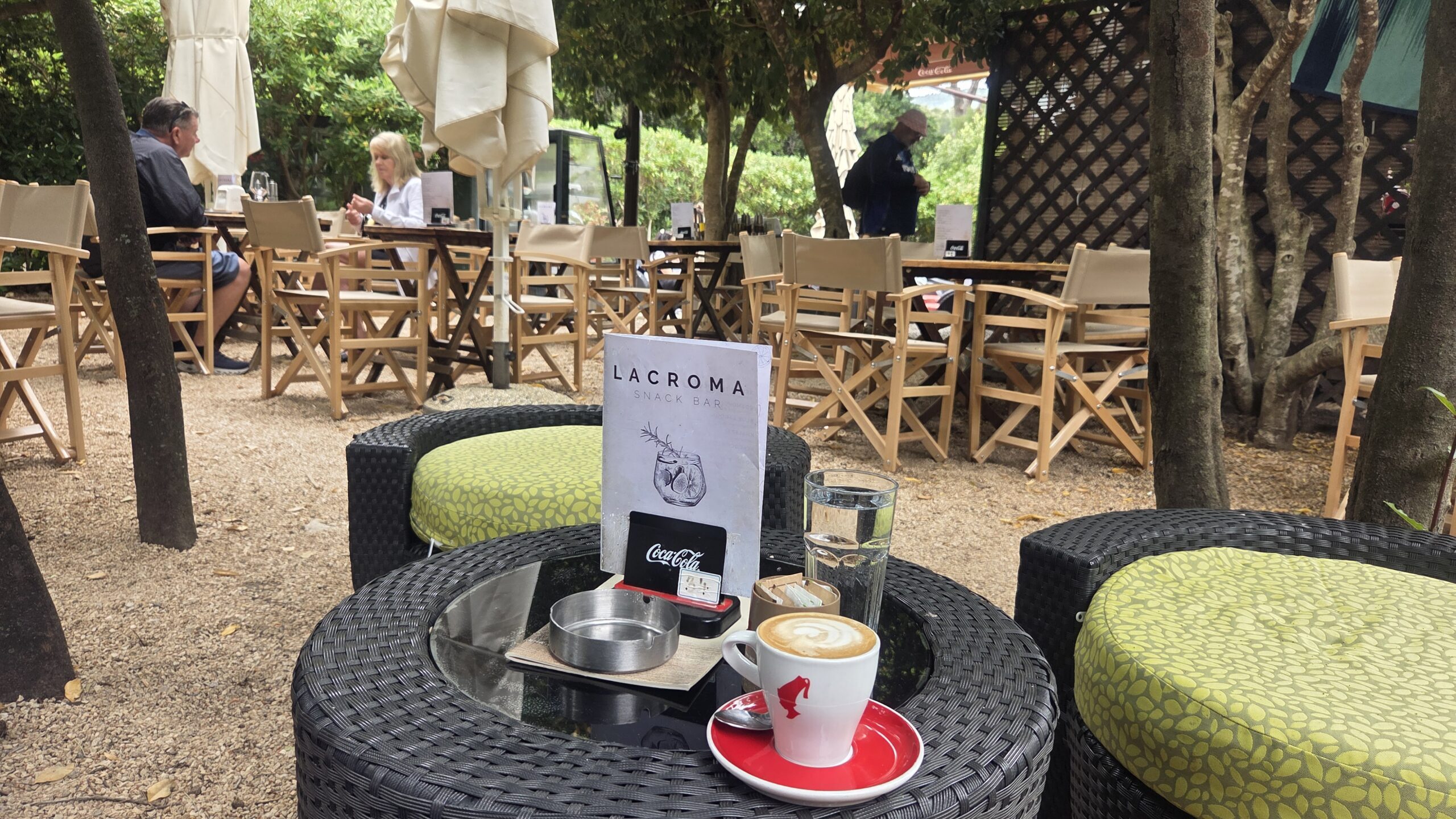
Most first-time visitors naturally want to see Dubrovnik’s major landmarks, the City Walls, historic buildings and perhaps its famous Game of Thrones filming locations.
They should.
These places are an important part of Dubrovnik’s story.
But they are not the entire story.
Sometimes understanding a city begins with something much smaller.
A quiet street.
An early-morning conversation.
A local story you would never find on an information plaque.
Or simply sitting over coffee without worrying about where you need to be next.
During private tours with VipWalk Dubrovnik, guests often ask me where people who live here go, what daily life is really like and how Dubrovnik changes outside the busiest tourist hours.
Guests joining our Dubrovnik Early Morning Walking Tour & Local Coffee Experience get to experience this quieter transition as the Old Town wakes up.
Some of my favorite moments as a guide happen when the conversation naturally moves beyond the prepared itinerary.
Guests begin asking about families, schools, food, traditions, life during winter or what it is actually like to live in a city visited by people from all over the world.
That relaxed atmosphere also appears in our article about Dubrovnik after the crowds.
At that point, visitors stop feeling that they are simply collecting sights.
They begin connecting the history they have learned with the city they can see around them.
And that is often when Dubrovnik becomes personal.
Understanding Croatian coffee culture is one thing.
Experiencing it with someone who lives and guides in Dubrovnik is different.
That is the idea behind VipWalk’s Early Morning Walking Tour & Local Coffee Experience.
Why I Created VipWalk’s Early Morning Coffee Experience
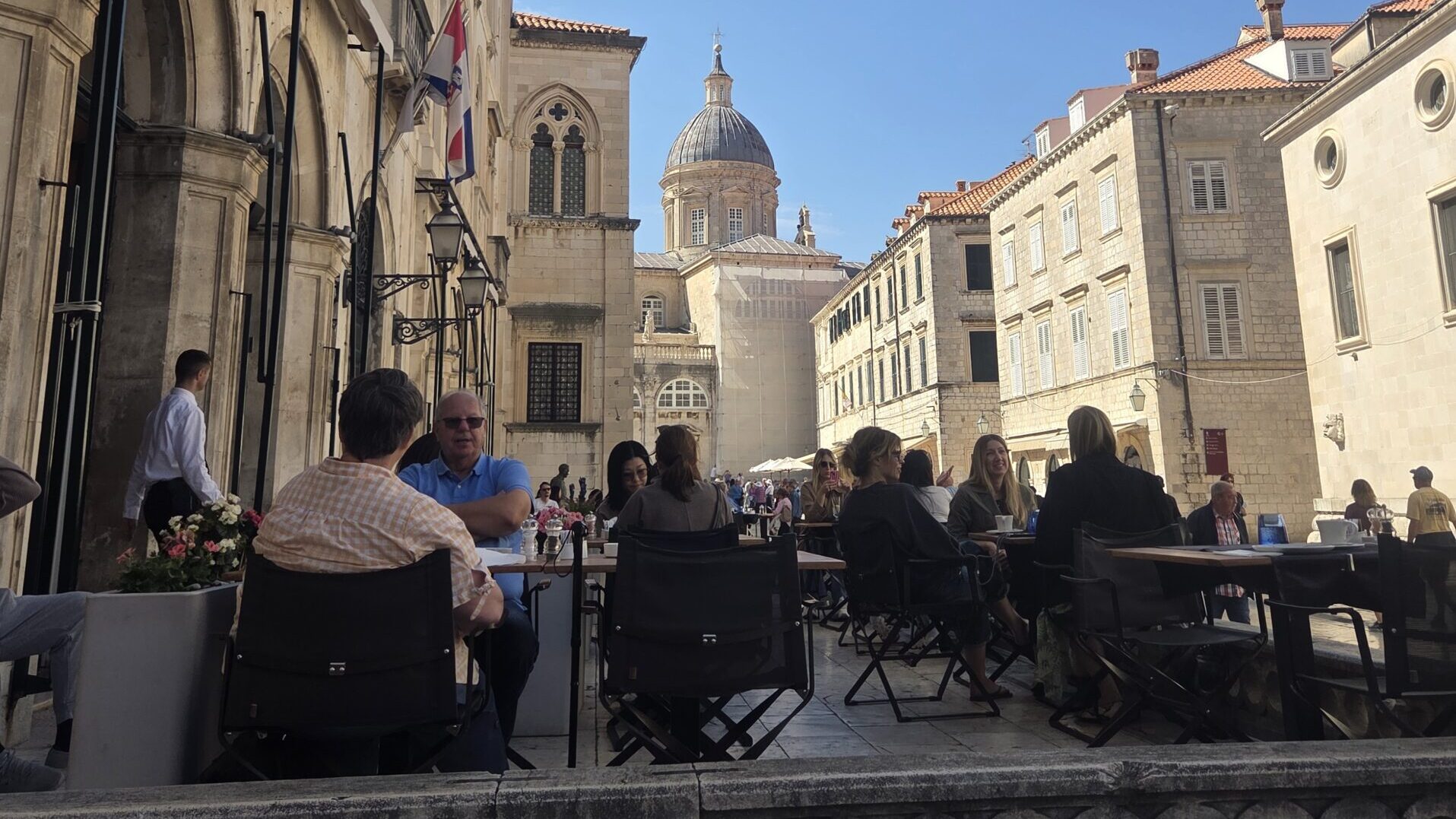
The idea for the Dubrovnik Early Morning Walking Tour & Local Coffee Experience came directly from my own years of guiding guests through Dubrovnik.
I did not set out to create a “coffee tour.”
I kept noticing something much more interesting: some of the moments guests remembered most happened when formal sightseeing slowed down and we started having a real conversation about the city.
They wanted to know what it was actually like to live here.
They asked about families, traditions, everyday routines, life outside the summer season and the small local habits that rarely appear in a conventional sightseeing itinerary.
I wanted to build an experience around those moments rather than treat them as something accidental between historical stops.
When I created this experience for VipWalk Dubrovnik, I was not trying to follow a tourism trend.
I was responding to something I had repeatedly experienced while guiding: the most interesting conversations often began when the sightseeing slowed down.
I had a very specific idea in mind — to bring together early-morning Dubrovnik, private guiding, local stories and the Croatian coffee ritual as one complete experience.
At the time, I was not seeing this particular concept presented as a private Dubrovnik experience in the way I had imagined it.
So I created it myself.
It grew naturally from the kind of experience I wanted my own guests to have and became one of VipWalk Dubrovnik’s signature private tours.
Since then, I have been genuinely pleased to see more travelers becoming interested in Dubrovnik’s early mornings and in experiences built around local coffee culture.
For me, that recognition is something positive.
It reflects a growing interest in discovering Dubrovnik beyond monuments, busy itineraries and standard sightseeing routes.
But the reason I created this experience has never changed.
It comes from years of guiding, observing what guests respond to and wanting to show them a side of Dubrovnik that cannot be reduced to a list of sights.
Dubrovnik’s history is extraordinary and deserves to be understood, but I never wanted a private tour to feel like a continuous lecture filled with dates and facts.
People often remember much more than monuments.
They remember conversations, local stories, the atmosphere of an almost empty Stradun, a street they might never have noticed alone and the feeling of sitting down for coffee and talking without rushing — much as Croatians do with friends.
Anyone can stop for coffee in Dubrovnik. What I wanted to create was something different: an experience where coffee, conversation and the quieter morning city were not additions to the tour, but part of the way we experienced Dubrovnik itself.
It is not simply a sightseeing tour with a coffee break added at the end.
The coffee is not a break from the experience. It is part of the reason the experience exists.
And the coffee itself is not really the product.
The experience created around it is.
Ideas can be described in a sentence. Creating an experience people remember takes years of knowing the city, understanding guests and learning what happens when an itinerary leaves room for genuine conversation.
That philosophy also influences the other private experiences we create at VipWalk Dubrovnik.
Some guests want to go deeply into history.
Others are fascinated by Game of Thrones, photography, hidden streets, maritime heritage, local traditions or everyday life.
And some simply want to enjoy Dubrovnik at their own pace.
A private tour should be knowledgeable, but it should also be personal.
For me, the guide’s role is not only to explain what guests are looking at, but to provide the context they cannot get simply by sitting at a café table alone — why a street matters, how the city changes through the day, which routines belong to everyday Dubrovnik life and the stories behind what they are seeing.
That balance between history, local knowledge and human connection is what turns sightseeing into an experience.
That is what makes it a VipWalk experience.
Travelers looking for another way to discover the city can also explore our full collection of private walking tours in Dubrovnik, each designed around different interests, pace and ways of experiencing Dubrovnik.
Because years later, travelers may not remember every historical date — but they often remember how Dubrovnik made them feel.
Travelers who would like to experience the original idea themselves can discover our Dubrovnik Early Morning Walking Tour & Local Coffee Experience.
Why Travelers Remember Croatian Coffee Culture Long After Their Trip
Travel memories are rarely stored as lists of historical facts.
People remember atmosphere.
They remember sitting outside on a beautiful morning.
They remember an unexpected conversation.
They remember having nowhere they needed to hurry to for a little while.
That emotional side of travel is one reason Croatian coffee culture can make such a strong impression.
A coffee may last twenty minutes or considerably longer, depending on the company and the day.
There is no fixed rule.
What matters is that spending time together over coffee feels completely normal.
For visitors accustomed to tightly scheduled days, that can be surprisingly refreshing.
Couples often particularly enjoy finding that rhythm together, which is why our guide to romantic things to do in Dubrovnik explores more ways to enjoy the city without treating every hour as a checklist.
And coffee culture does not need to be romanticized as a completely different way of life.
Croatians are busy too.
We work, check phones, keep appointments and rush when we have to.
But making time to sit with somebody still has social value.
Sometimes that means twenty minutes.
Sometimes it becomes two hours.
The experience is ordinary.
And precisely because it is ordinary, it can feel authentic to someone experiencing it for the first time.
That is often what travelers mean when they say they want to experience Dubrovnik “like a local.”
Not a staged version of local life.
Just an opportunity to understand some of the habits that make everyday life here what it is.
Coffee Rituals Through Every Season in Dubrovnik
Coffee culture in Dubrovnik does not disappear when the summer visitors leave.
In fact, autumn can reveal a quieter version of it.
Winter changes the atmosphere again, when residents gather in cafés during slower days and the historic center belongs much more to the people who live and work here.
Spring brings longer days, warmer terraces and the gradual return of outdoor social life.
Summer is completely different.
Coffee often moves earlier in the day, particularly for people who want to enjoy the Old Town before the heat and largest crowds arrive.
The setting changes with every season.
But the social ritual remains recognizable.
People meet, talk and make time for one another.
That continuity is one of the reasons coffee tells visitors something meaningful about everyday Croatian life.
Frequently Asked Questions About Croatian Coffee Culture in Dubrovnik
Is coffee culture important in Croatia?
Yes. Coffee is an important social ritual throughout Croatia, although habits vary between regions. In Dubrovnik and along the Dalmatian coast, meeting for coffee commonly means spending time together, talking and socializing rather than simply drinking a quick cup of coffee.
What coffee do locals drink in Dubrovnik?
Common orders in Dubrovnik include espresso, macchiato, cappuccino and kava s mlijekom, or coffee with milk. You may also hear someone order a mala kava, literally a “small coffee,” depending on personal habit and the café.
What does “Idemo na kavu” mean?
“Idemo na kavu” literally means “Let’s go for coffee.” In everyday Croatian life, however, it is often an invitation to meet, talk and spend some time together. The social occasion can matter more than the coffee itself.
Do Croatians really spend hours drinking coffee?
Sometimes — but certainly not every coffee lasts for hours. What is normal in Croatia is the absence of pressure to finish quickly. When friends have time and the conversation is good, coffee can easily become a long social occasion.
What is turska kava?
Turska kava literally means “Turkish coffee.” In Croatian homes, the term is commonly used for finely ground coffee traditionally prepared in a small pot called a džezva. You may also hear domaća kava used for home-prepared coffee. Habits and terminology vary between families and regions.
When is the best time to experience coffee culture in Dubrovnik?
For visitors who want to combine local coffee culture with a quieter Old Town, early morning is one of the best times, particularly during the busy summer season. The streets are calmer, temperatures are usually more comfortable and you can watch Dubrovnik gradually wake up before the largest daytime crowds arrive.
Where do locals drink coffee in Dubrovnik?
People drink coffee throughout the city. The Old Town certainly has its own café culture, but residential areas such as Lapad and Gruž are also filled with cafés used by Dubrovnik residents throughout the year.
Is coffee expensive in Dubrovnik?
Prices vary considerably depending on where you sit. Cafés in prominent locations inside the historic center can cost more than neighborhood cafés in other parts of Dubrovnik. It is always reasonable to check the menu before ordering, particularly around the most visited locations.
Do I need to tip for coffee in Croatia?
Tipping is not generally treated as a mandatory percentage-based obligation for coffee. If you are happy with the service, rounding up the bill or leaving a small amount is appreciated.
Can I sit at a café after finishing my coffee?
Yes. Continuing your conversation after finishing your drink is completely normal.
Can visitors experience Croatian coffee culture without taking a tour?
Absolutely. Choose a café, order something you enjoy and give yourself time to observe everyday life around you.
Anyone can have coffee in Dubrovnik. What a local guide can add is the context around what you are seeing — the city’s history, everyday routines, local stories and the questions that naturally appear when Dubrovnik stops being simply a list of attractions.
What makes VipWalk Dubrovnik’s Early Morning Coffee Experience different?
The experience was created from years of private guiding rather than by adding coffee to a standard walking tour.
The idea came from observing what happened when sightseeing slowed down: guests became more curious, asked more personal questions and wanted to understand how Dubrovnik actually feels to the people who live here.
So the experience connects the quieter morning city, historical context, local stories and genuine conversation over coffee.
You can have coffee anywhere in Dubrovnik. The point of this experience is what happens around it.
Did VipWalk Dubrovnik create its Early Morning Coffee Experience?
Yes. The concept grew from my own years of guiding in Dubrovnik and from observing how guests connected with the city when formal sightseeing gave way to conversation and everyday local life.
When I created the experience, I was not seeing this particular combination presented as a private Dubrovnik tour in the way I had imagined it, so I developed it for VipWalk myself. It later became one of our signature private experiences.
Are VipWalk Dubrovnik tours mainly history tours?
History is an essential part of understanding Dubrovnik, but it is not the only part.
VipWalk Dubrovnik’s private-tour philosophy combines local knowledge and historical context with the interests and pace of each guest. Depending on the experience, that can include hidden streets, local culture, maritime heritage, Game of Thrones, photography, everyday life and simply having enough time to talk and enjoy the city.
Experience the Authentic Side of Dubrovnik
The most meaningful travel experiences are rarely created by rushing from one attraction to another.
They come from understanding where you are.
From noticing the atmosphere.
From conversations and unexpected details.
And from discovering that a famous destination still has an ordinary everyday life behind the photographs.
Dubrovnik has magnificent monuments and centuries of history.
But it also has neighborhoods, habits, friendships, routines and local traditions.
Coffee is one small window into that world.
At VipWalk Dubrovnik, that is the side of the city we particularly enjoy sharing with visitors.
Our tours combine history and local knowledge with the freedom to ask questions, follow interesting conversations, discover quieter corners and adapt the experience to the people actually taking the tour.
And that local connection does not necessarily end when the walking tour finishes. Guests who book with VipWalk can also benefit from our Dubrovnik Concierge Service, with local advice and practical travel support before and during their stay.
Because seeing Dubrovnik is important.
Understanding it is even better.
And sometimes one of the most memorable moments of Croatia really is as simple as sitting over coffee while Dubrovnik slowly comes alive around you.