Dubrovnik wines offer a deeper understanding of the region beyond its famous walls, historic streets, and Adriatic views. While most visitors focus on the visual beauty of the Old Town, the true character of Dubrovnik is equally shaped by what grows just beyond it.
Wine in this region is not simply a product. It is a reflection of land, climate, and continuity. It tells a story that runs parallel to Dubrovnik’s history—quiet, resilient, and remarkably consistent over time.
To experience Dubrovnik wines properly, it is not enough to taste them. You need to understand where they come from, how they are made, and when they are best enjoyed.
For a broader approach to experiencing the city with this mindset, it helps to explore how to experience Dubrovnik like a local, where timing and rhythm define everything.
Dubrovnik Wines and the Landscape That Defines Them
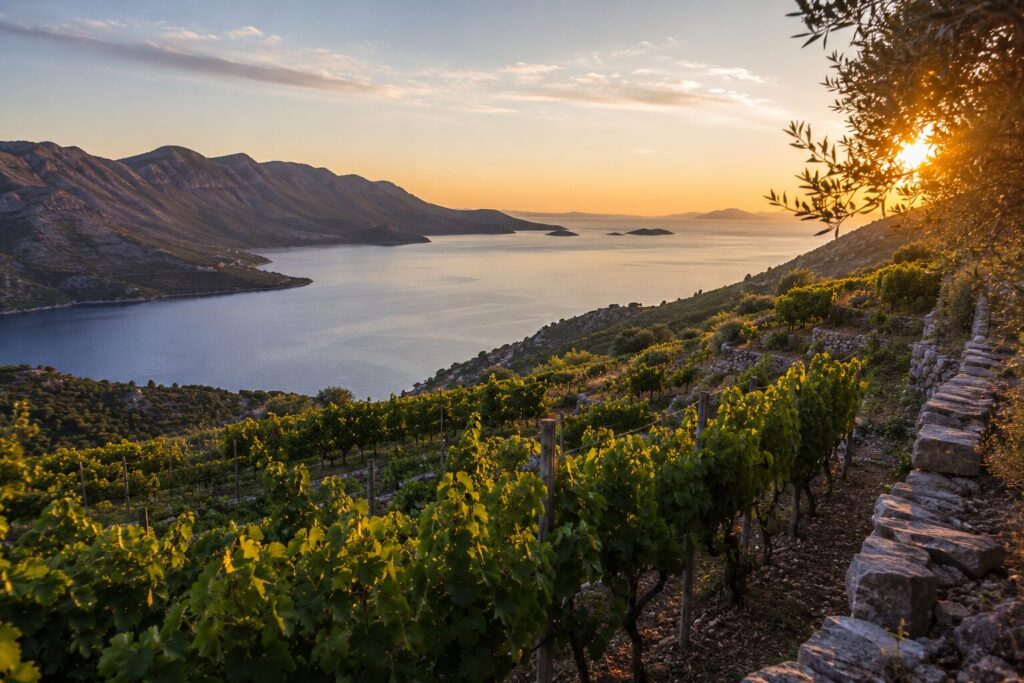
Dubrovnik wines are inseparable from the environment in which they are produced. The terrain across southern Dalmatia is demanding—rocky slopes, strong sunlight, limited soil, and exposure to sea winds.
The character of Dubrovnik wines is inseparable from what is often described as terroir—the interaction between soil, climate, and landscape.
These are not easy growing conditions. However, they are precisely what give Dubrovnik wines their distinctive identity.
Vineyards in this region are often located on steep inclines where mechanization is impossible. Everything is done by hand. Stone terraces are used not for visual appeal, but as a necessity to prevent erosion and preserve moisture.
The vines struggle. And that struggle creates concentration.
Low yields are common, but the grapes that survive develop deeper flavor, structure, and complexity. This is why Dubrovnik wines often feel more intense and more grounded than wines from easier climates.
Most production comes from:
- the Pelješac Peninsula
- the Konavle valley
- nearby islands such as Korčula
These areas are not large-scale wine destinations. They are quiet, functional, and rooted in tradition.
This connection between Dubrovnik and its surrounding landscape becomes more visible through coastal and countryside experiences outside the Old Town, where the region reveals a broader identity.
The Tradition Behind Dubrovnik Wines
What makes Dubrovnik wines particularly interesting is not only the environment, but the way they are produced.
Wine production here remains closely tied to family tradition. Many vineyards are privately owned, passed through generations, and managed with knowledge that is rarely written down.
Key elements of traditional production include:
- manual harvesting – grapes are often picked by hand
- low intervention – minimal chemical or industrial processes
- seasonal rhythm – decisions based on climate rather than strict schedules
- local consumption – many wines never leave the region
Historically, wine was part of everyday life in the Republic of Ragusa. It was not considered luxury—it was standard. It supported trade, hospitality, and daily routines.
Even today, that philosophy remains.
Wine is not over-explained. It is simply served.
Understanding Dubrovnik Wines Through Indigenous Grapes
The identity of Dubrovnik wines is best understood through its native grape varieties.
Plavac Mali – Strength, Sun and Structure
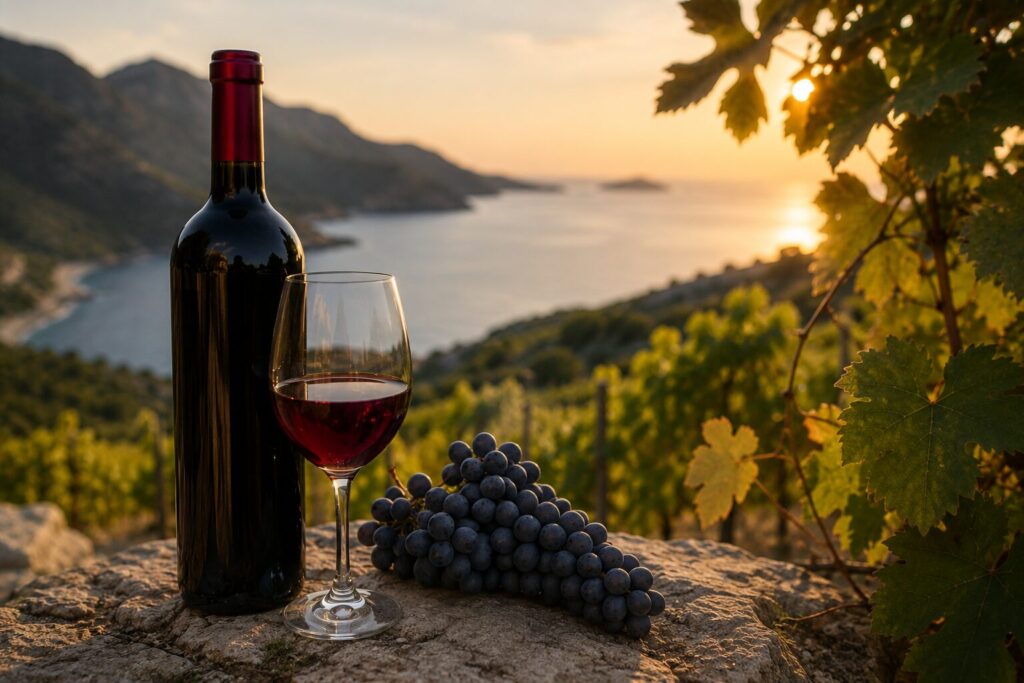
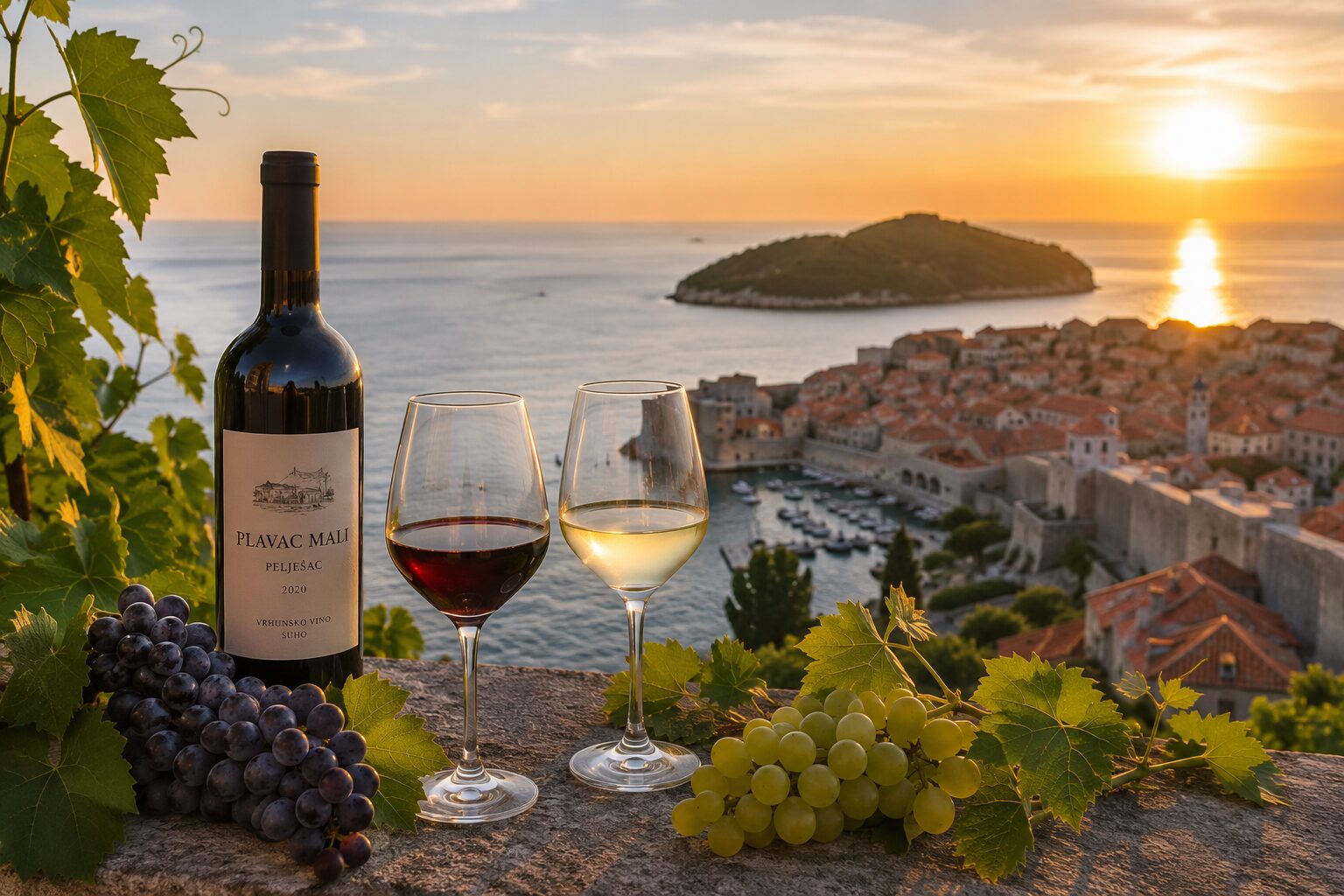
Plavac Mali is the defining red grape of southern Dalmatia and one of the most powerful expressions of the Dubrovnik wine region.
It thrives in some of the most demanding vineyard conditions in Europe—steep, sun-exposed slopes where soil is scarce and the elements are constant. Many of these vineyards face directly toward the sea, where vines are exposed not only to intense sunlight, but also to reflected heat from both stone and water. This creates a unique microclimate that pushes the grape to its limits.
The result is a wine with strong identity and depth. Plavac Mali is typically:
- full-bodied and structured
- higher in alcohol
- rich in dark fruit, dried fig, and spice, often with subtle earthy undertones
These are not wines designed for immediate softness or easy drinking. They are expressive, sometimes demanding, and closely tied to the land they come from.
What makes Plavac Mali particularly interesting is how it evolves. It does not reveal itself instantly. With time in the glass, its structure softens, its aromas deepen, and its complexity becomes more apparent.
Because of this, it is not suited to rushed environments or quick tastings. It requires a slower pace—time to open, time to settle, and time to be understood.
This same principle applies to Dubrovnik itself. Just as Plavac Mali rewards patience, the city reveals more when experienced beyond the surface. This is especially clear through private walking tours away from the main crowds, where attention shifts from what is obvious to what is meaningful.
In this way, Plavac Mali becomes more than a wine. It becomes a reflection of the region—intense, layered, and best appreciated with time.
Pošip – Freshness and Coastal Balance
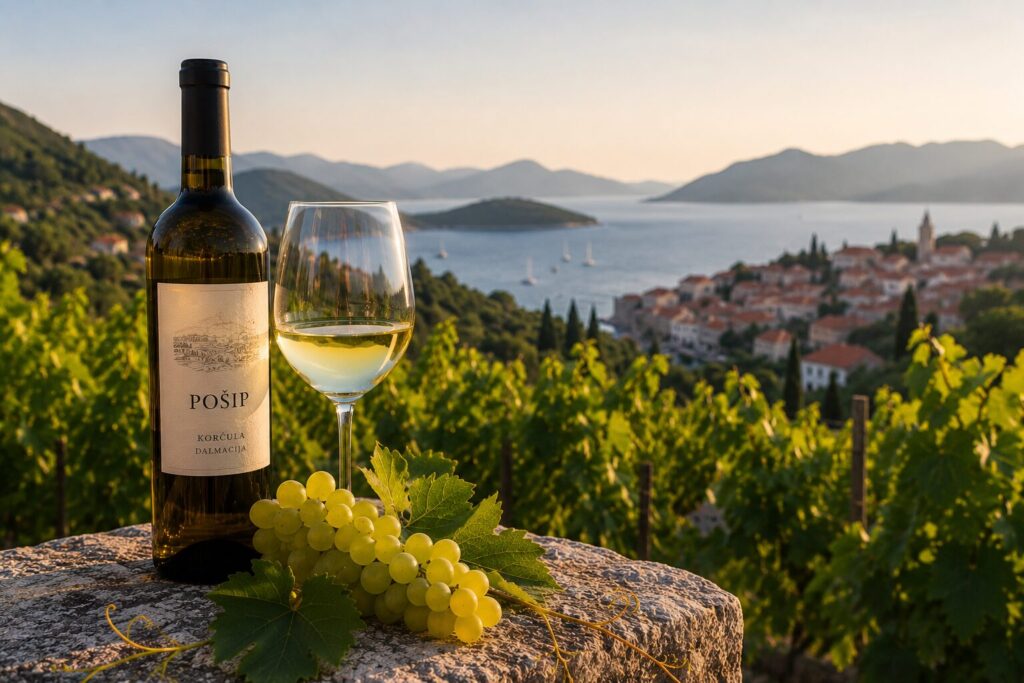
Pošip offers a clear contrast to Plavac Mali, both in structure and in overall expression.
It is a white wine defined by balance rather than intensity, shaped by the coastal climate of southern Dalmatia. Its profile is typically characterized by:
- freshness and clarity
- notes of citrus, stone fruit, and subtle Mediterranean herbs
- a clean, mineral finish that reflects the limestone-rich terrain
Unlike heavier white wines, Pošip does not aim to dominate the palate. Instead, it complements both the setting and the moment in which it is enjoyed.
This makes it particularly suited to coastal cuisine—fresh fish, light seafood dishes, and simple preparations that allow the wine to remain present without overwhelming the experience. It also performs exceptionally well in warmer conditions, where its natural acidity and freshness feel most aligned with the environment.
However, Pošip is not a wine for rushed consumption. While it can be enjoyed throughout the day, it reveals its character more clearly when the pace begins to slow. Late afternoon or early evening provides the ideal setting, when the heat softens and the atmosphere becomes more balanced.
In this context, Pošip becomes less about tasting notes and more about timing. It fits naturally into moments that are unhurried—when the focus shifts from movement to presence.
Understanding this rhythm is essential, which is why planning tools such as the best time to visit Dubrovnik are useful not only for sightseeing, but for shaping the overall experience of the city, including how and when its wines are best enjoyed.
Malvasia Dubrovačka – Subtlety and Heritage
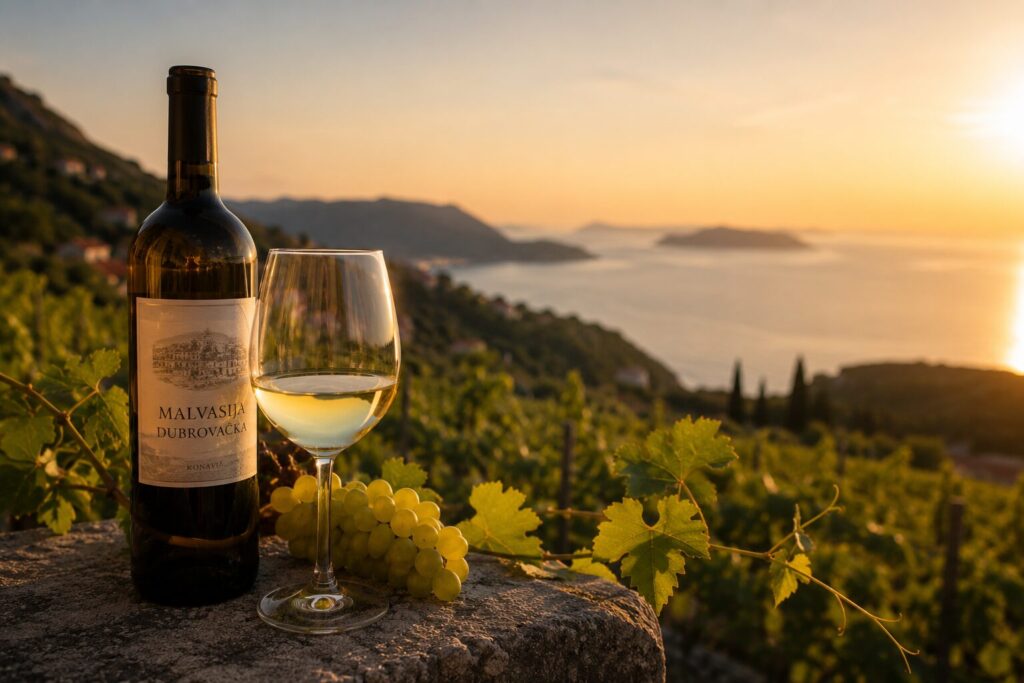
Malvasia Dubrovačka is one of the most historically significant grape varieties of the Dubrovnik region, deeply tied to its identity and cultural continuity.
Once widely cultivated during the time of the Republic of Ragusa, it nearly disappeared due to changing agricultural priorities and economic pressures. Its revival in recent decades has not been driven by commercial demand, but by a deliberate effort among local producers to preserve something distinctly Dubrovnik.
Its character reflects that intention. Malvasia Dubrovačka is:
- light and aromatic
- gently floral, often with notes of white blossoms and Mediterranean herbs
- refined, with a soft texture and balanced acidity
It does not aim to impress immediately. Instead, it unfolds gradually, revealing nuance rather than intensity.
This is a wine that requires attention. Not technical analysis, but presence.
For many visitors, Malvasia Dubrovačka becomes the most memorable precisely because it is understated. It does not compete for attention—it rewards those who notice it.
It is best experienced in quieter moments, where its subtlety can be fully appreciated. Unlike more structured wines, it aligns with stillness rather than movement.
In many ways, it reflects a lesser-seen side of Dubrovnik itself—one that exists beyond the main streets and peak hours. This is the Dubrovnik that emerges after the crowds fade, when the atmosphere becomes softer, more personal, and more aligned with the rhythm of the place.
Understanding this connection between wine and environment is essential, and it naturally aligns with experiences focused on exploring Dubrovnik after the crowds, where the city reveals its more refined and intimate character.
Where to Experience Dubrovnik Wines in the City
Dubrovnik wines are best experienced in environments that match their character.
Some well-known locations include D’vino Wine Bar, where Croatian wines are presented with focus and knowledge, and connections to producers such as Škar Winery, where the relationship between land and wine becomes clearer.
However, location alone is not enough.
The most meaningful wine experiences in Dubrovnik often happen:
- in quieter streets
- in small, less visible venues
- without strict planning
These moments align closely with areas described in best places to explore in Dubrovnik beyond the main routes, where atmosphere replaces structure.
For couples, these settings become especially meaningful, often reflected in things to do, where experience takes precedence over activity in Romantic Dubrovnik.
Dubrovnik Wines and Timing: The Most Important Factor
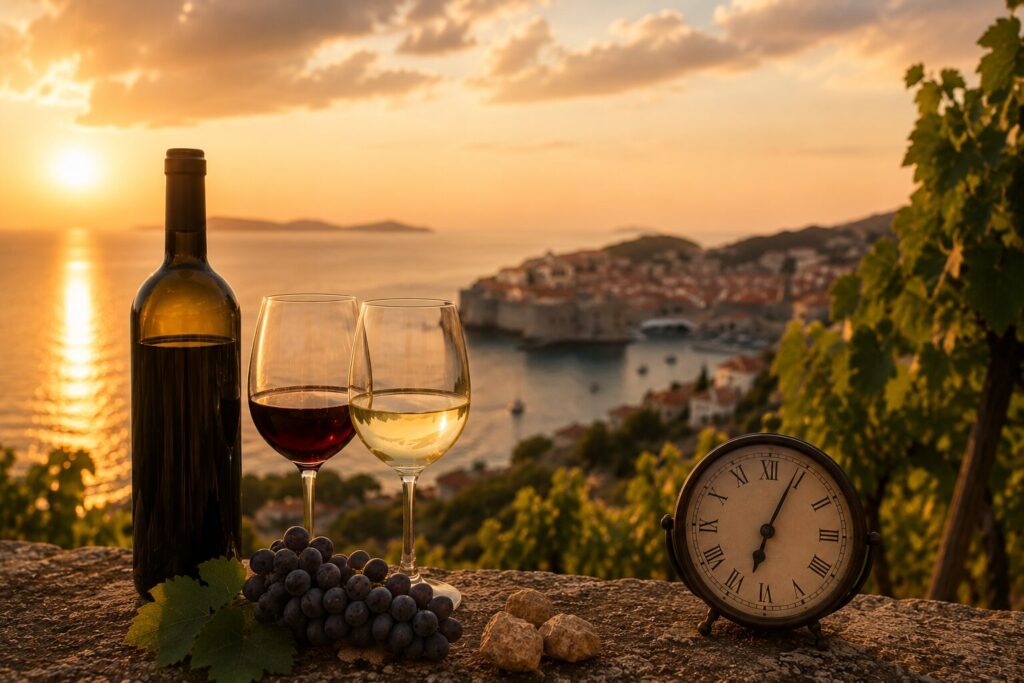
Timing is one of the most underestimated elements of Dubrovnik wines.
The same wine can feel completely different depending on when it is experienced.
Midday:
- bright, intense, crowded
Late afternoon:
- transitional, more balanced
Evening:
- calm, atmospheric, refined
The shift from day to evening changes everything.
Sunset is particularly important. It creates a natural pause in the city, where movement slows and perception changes.
This is when Dubrovnik wines feel most aligned with their surroundings.
It is also when scenic locations described in panoramic viewpoints across Dubrovnik reach their full effect.
At the same time, this is when Dubrovnik becomes more intimate, something explored in romantic things to do in Dubrovnik, where atmosphere becomes central.
A Typical Dubrovnik Wine Moment
There is a moment that defines Dubrovnik wines more than any tasting note.
It is simple.
A table. Stone still warm from the day. A glass placed without ceremony.
The city has shifted.
The noise is softer. The light is lower. The pace has slowed.
You begin to notice things:
- the sound of footsteps
- the reflection of light on stone
- the quiet rhythm of the evening
The wine is no longer the focus.
It becomes part of the environment.
This is where Dubrovnik wines make sense—not as something to analyze, but as something to experience.
A More Refined Way to Experience Dubrovnik Wines
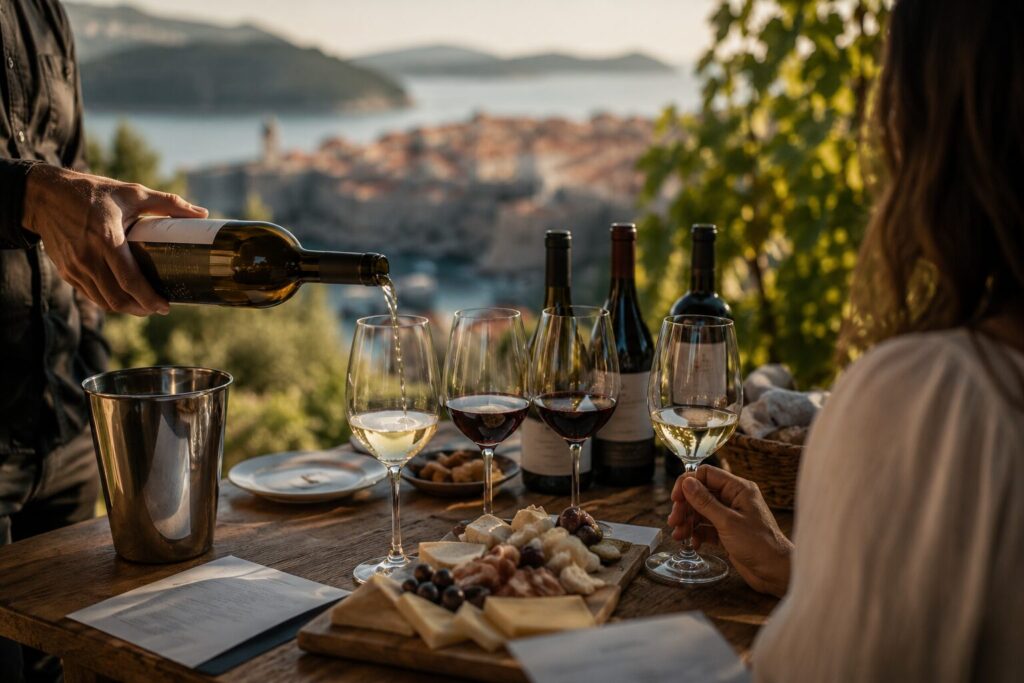
For those who want a more structured experience, the approach shifts slightly.
Instead of multiple locations, the focus becomes:
- fewer wines
- better timing
- stronger atmosphere
This is where experiences such as a private Dubrovnik sunset walking tour with wine fit naturally.
For couples, a romantic walking tour in Dubrovnik offers a similar structure—centered around pace, setting, and connection rather than movement.
For cruise visitors, where time is limited, this same approach is reflected in Dubrovnik shore excursion planning strategies, where efficiency and quality must work together.
The Cultural Meaning of Dubrovnik Wines
Dubrovnik wines reflect a broader cultural philosophy.
The Republic of Ragusa valued balance:
- between trade and independence
- between openness and control
- between visibility and restraint
Wine was part of this system.
Even today:
- presentation remains simple
- quality is expected, not advertised
- experience is understated
This aligns closely with what modern travelers seek, especially those described in what luxury travelers look for in Dubrovnik, where authenticity matters more than scale.
FAQ – Dubrovnik Wines
What are Dubrovnik wines known for?
Strong reds like Plavac Mali and refined whites such as Pošip and Malvasia.
Where are Dubrovnik wines produced?
Pelješac, Konavle, and nearby islands.
Are Dubrovnik wines expensive?
Often reasonably priced locally, especially compared to other Mediterranean regions.
When should I experience Dubrovnik wines?
Late afternoon and evening offer the best atmosphere.
Do I need a winery visit?
No. Many of the best experiences happen within Dubrovnik itself.
Experience Dubrovnik Wines the Right Way
Dubrovnik wines are not about tasting more.
They are about understanding better.
If approached with the right timing, setting, and pace, they reveal something deeper—not only about the region, but about how Dubrovnik itself is meant to be experienced.
For those who prefer a refined and atmospheric approach, a private Dubrovnik sunset walking tour with wine offers a seamless way to connect the city with its wine culture.
For couples, a romantic walking experience through Dubrovnik’s Old Town provides a quieter and more personal perspective.
And for a complete foundation, starting with a Dubrovnik travel guide with local insights allows you to structure your visit without losing spontaneity.