Dubrovnik Old Port maritime history is one of the best ways to understand how a small Adriatic city became an internationally respected trading republic.
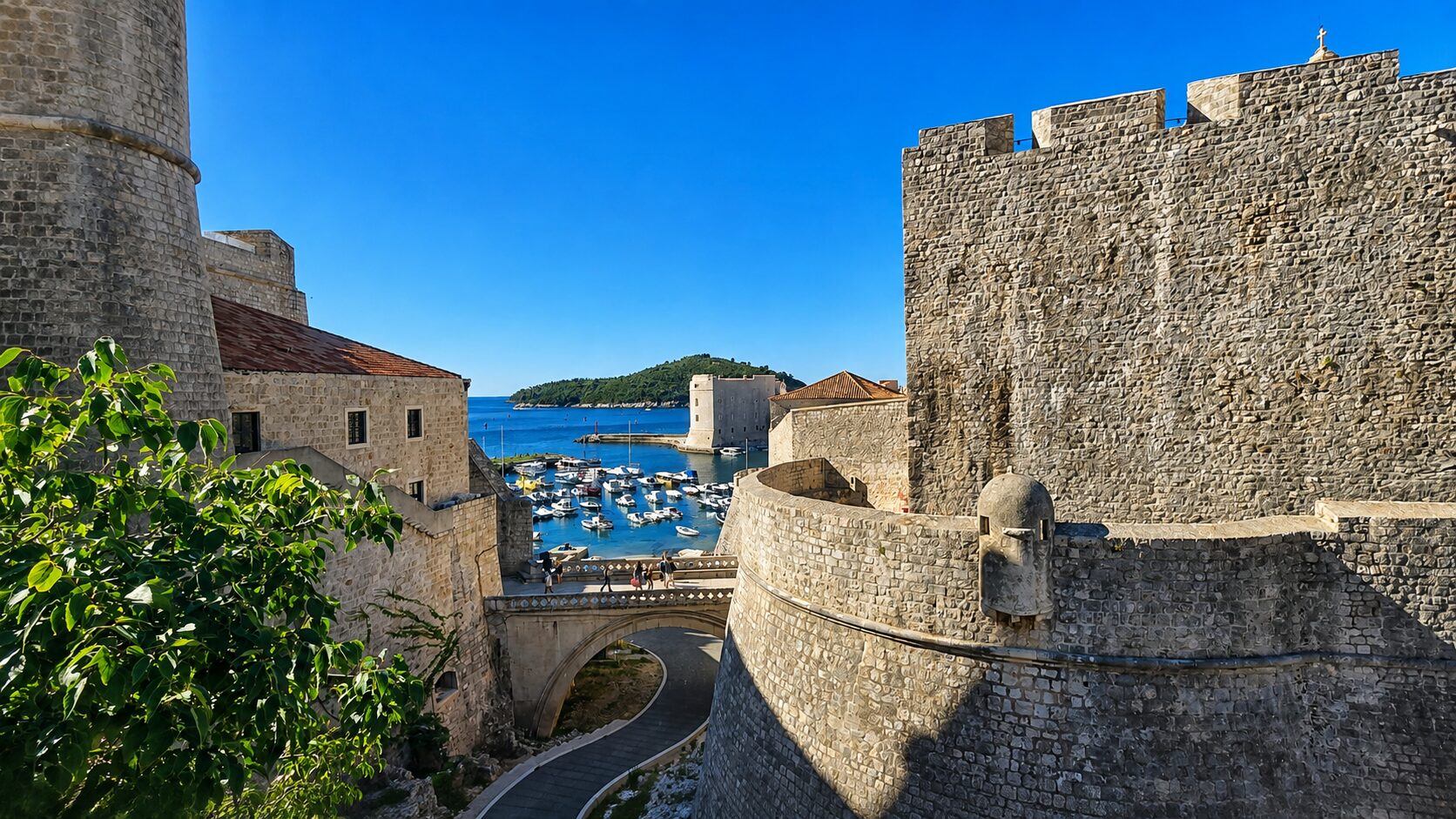
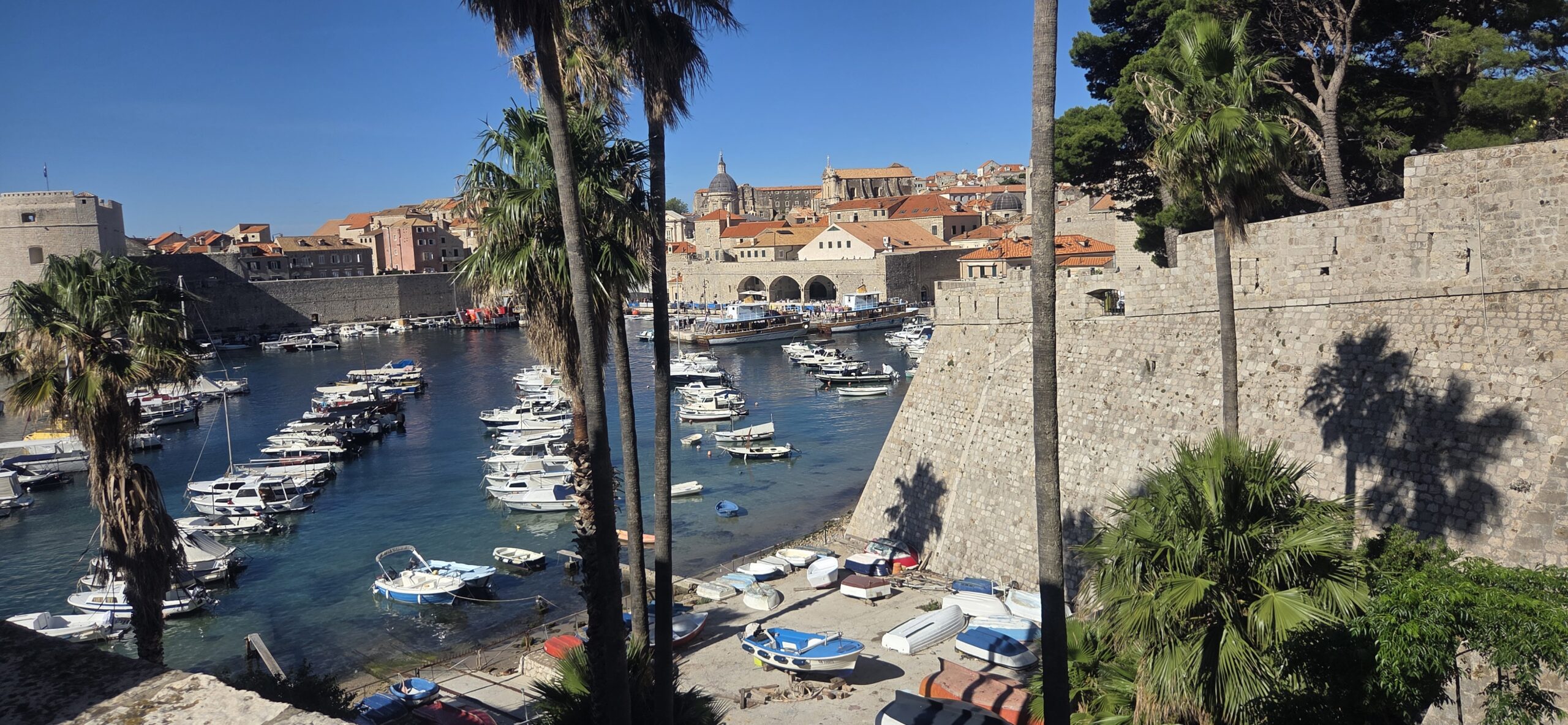
The view is calm: small boats on the water, stone arches beside the harbor, Fort St. John, and Lokrum Island in the distance.
But for centuries, this was a working harbor. Ships arrived with cargo and news from distant markets. Captains prepared for long voyages. Sailors loaded supplies. Merchants discussed opportunities. The city protected the entrance because its prosperity depended on what passed through it.
As a licensed Dubrovnik tour guide and a teacher at a maritime-technical school, I often return to the Old Port during private tours.
Dubrovnik was never a large territorial power. It could not afford careless decisions.
Instead, it invested in knowledge, understood risk, trained people, protected its reputation, and built relationships across political and cultural boundaries. It used the sea not as a border, but as a road to the world.
Visitors who want the broader context can also explore the Republic’s remarkable business success story. This article focuses on the harbor, the fleet, the karaka ships, and the people who turned strategy into everyday reality.
Leadership Lessons From Dubrovnik’s Maritime Republic
| Dubrovnik’s Maritime Experience | Lesson for Modern Organizations |
|---|---|
| A small republic built international relevance through maritime trade rather than territorial power. | Size is not the only source of competitive advantage. Expertise, positioning, and strategic relationships can create influence. |
| Ships depended on captains, crews, merchants, laws, and infrastructure working together. | Strong organizations succeed through coordination, clear responsibilities, and operational discipline. |
| Dubrovnik protected its reputation in foreign ports and across international markets. | Trust is built through consistent delivery, professional communication, and reliable partnerships. |
| The Republic invested in port defenses, maritime insurance, and contingency planning. | Growth should be supported by risk management and resilience. |
| Dubrovnik maintained relationships across political and cultural boundaries. | Diplomacy, adaptability, and cultural intelligence are essential in international business. |
Why Dubrovnik Old Port Maritime History Still Matters
Dubrovnik became an important Mediterranean maritime power from the 13th century onwards.
A maritime republic depended on ships, but ships alone were never enough. A vessel needed a capable captain, a trained crew, financing, provisions, navigation, commercial contacts, and a realistic understanding of risk.
The city needed laws, merchants needed contracts, and foreign partners needed confidence. The Republic needed a reputation strong enough to open doors abroad.
When I stand with a group at the Old Port, I sometimes ask a simple question:
What is the most important part of a ship?
The answers usually come quickly: the hull, the sails, the rudder, the captain, or the crew.
But the deeper answer is coordination.
A ship succeeds when many different parts work together at the right moment. The same is true of an organization.
A company can have an excellent strategy and still fail if operational details are neglected. A talented team can struggle if responsibilities are unclear.
That is why the Old Port is meaningful for corporate groups, executive teams, conference delegates, and MBA programs. It is where practical questions begin.
The Old Port Was the Operational Heart of Dubrovnik
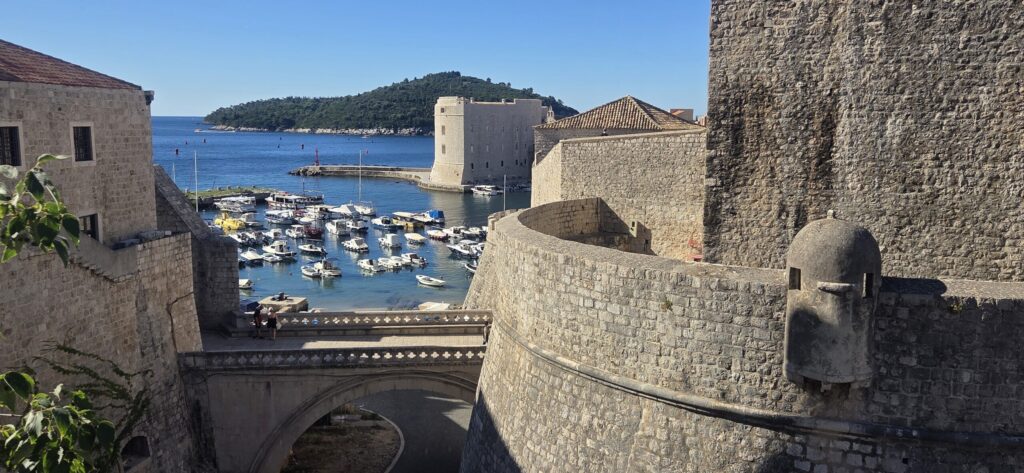
When visitors walk through Dubrovnik today, the grandest buildings naturally attract attention.
Rector’s Palace represents political authority. Sponza Palace recalls trade, customs procedures, and administration. The city walls express security and independence.
But the Old Port tells another part of the story.
This was where Dubrovnik’s international ambitions became visible. Cargo had to move, ships had to depart safely, repairs had to be completed, and routes had to be planned.
The port was not decorative. It was infrastructure.
The Great Arsenal and Small Arsenal were located in the harbor area. Ships and smaller vessels could be repaired there. Nearby gates, towers, and working spaces formed part of an organized maritime environment.
Even today, traces of that world remain visible. The stone arches belonged to a functioning port. The fortifications protected activity that mattered to the Republic.
During a private walking tour of Dubrovnik, this is often the moment when visitors stop seeing only stone and begin to see systems.
A Small Republic With a Serious Merchant Fleet
During its most successful maritime period, particularly in the 16th century, Dubrovnik developed a respected merchant fleet of approximately 180 to 200 ships.
Its vessels sailed across the Mediterranean and beyond. They carried goods, but they also carried the city’s reputation.
A poorly managed vessel could create financial loss. An unreliable captain could damage trust. A broken agreement could make future business more difficult. A professional crew, on the other hand, strengthened Dubrovnik’s standing in foreign ports.
Reputation does not live only in advertising. It lives in operations.
A company’s credibility is reinforced, or weakened, every time it communicates with a client, delivers a service, resolves a problem, or honors an agreement.
Dubrovnik could not force the world to do business with it.
It had to become a partner worth trusting.
The Karaka: More Than an Impressive Ship
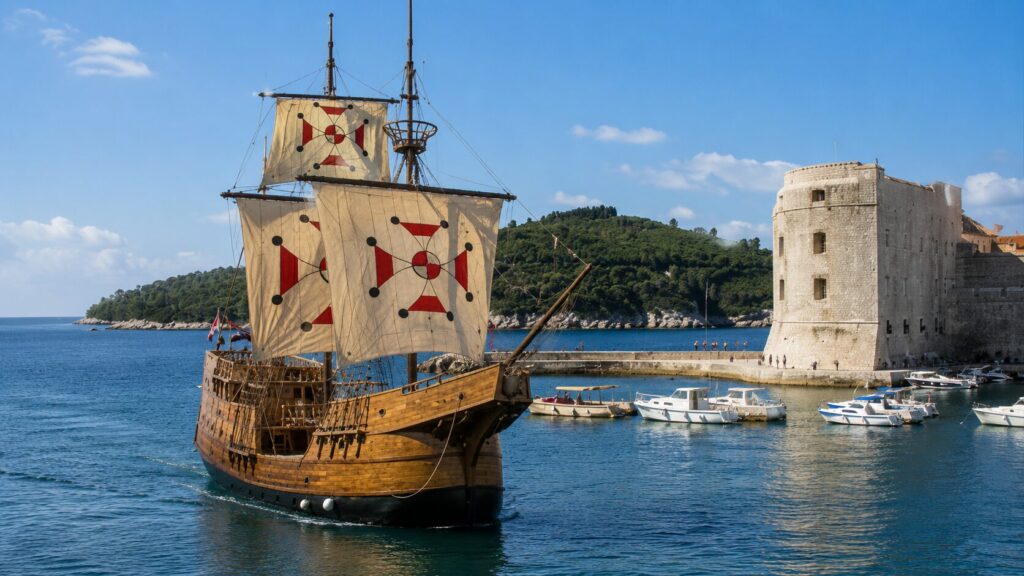
One of the most memorable symbols of Dubrovnik’s maritime tradition was the karaka.
The karaka was a large cargo sailing ship. During the 16th century, Dubrovnik karaka ships were among the largest cargo vessels in the Adriatic and among the largest ships of their kind in the world.
Their organizational complexity is even more interesting than their size.
A large vessel required technical expertise. Materials had to be chosen carefully. The crew needed training. Provisions, cargo, routes, and risks had to be considered before departure.
The captain needed authority.
But authority alone was not enough.
A captain also needed judgment.
During corporate tours, I sometimes ask participants to imagine standing at the harbor on the morning before a karaka departed.
What questions should be asked before allowing it to sail?
Is the crew ready? Is the cargo secure? Is the weather favorable? Does the captain have the right experience? What happens if conditions change?
Replace the ship with a major project, an international expansion, or an important client commitment, and many of the same questions remain relevant.
Dubrovnik Old Port Maritime History Is Also a Story of Infrastructure
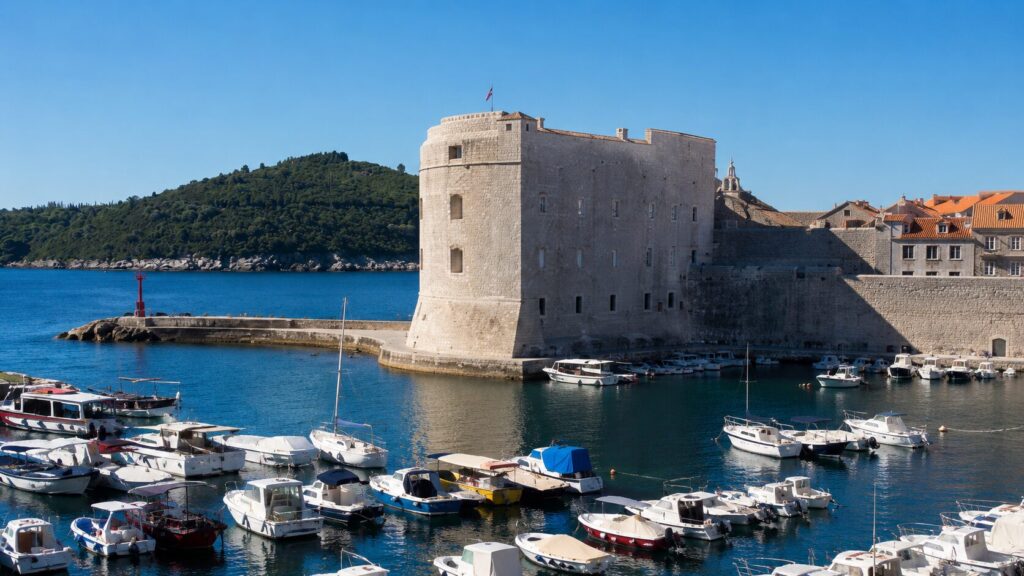
The Republic did not rely only on courage and ambition.
It invested in infrastructure.
Fort St. John guarded one side of the harbor entrance. The Tower of St. Luke helped control the other. At night, a chain could be stretched across the entrance to prevent unauthorized access.
The Kaše breakwater, built in the 15th century according to Paskoje Miličević’s design, helped protect the harbor from winds and waves.
Dubrovnik wanted to remain open to trade, but it did not confuse openness with carelessness.
Modern organizations face the same tension. They want partnerships, growth, and innovation. But growth creates exposure.
The real question is whether those risks are understood and managed intelligently.
The Kaše breakwater is made of stone.
Its lesson is not.
Resilience must be designed before the storm arrives.
Diplomacy Began Before a Ship Reached the Harbor
Dubrovnik’s diplomacy is explored more fully in the Republic’s remarkable business success story.
Here, it is useful to look at diplomacy from a maritime perspective.
A ship does not arrive alone. It brings expectations, relationships, obligations, and information.
Dubrovnik built relationships with Christian kingdoms, the Ottoman Empire, and Mediterranean trading centers. This required intelligence and restraint.
The Republic could not afford impulsive decisions. Its leaders understood that a smaller state could protect its independence by remaining useful, credible, and diplomatically skillful.
This was not weakness.
It was strategy.
In modern business, the same principle applies whenever an organization works across markets, cultures, and competing interests.
Successful negotiation is not about winning every argument. It is about understanding the wider relationship.
Sometimes influence is stronger than confrontation.
The Old Port is ideal for discussing these ideas because it was the point where Dubrovnik met the world.
What Maritime Education Teaches About Responsibility
My relationship with Dubrovnik’s maritime tradition is not only historical.
I also teach at a maritime-technical school in Dubrovnik.
That experience influences the way I explain the Old Port.
The maritime world is practical. Theory must eventually become responsibility.
Ships operate in real conditions. Weather changes. People depend on one another. Communication must be precise.
Maritime education develops habits that matter in many professions:
- Attention to detail
- Professional discipline
- Teamwork
- Calm communication
- Respect for procedures
- Adaptability
- Decision-making under pressure
These are maritime skills.
They are also leadership skills.
Gruž, Shipbuilding, and the Ability to Adapt
The Old Port is the emotional center of Dubrovnik’s maritime story, but it was not the only important location.
As ships grew larger, shipbuilding activity expanded in the Bay of Gruž, where a shipyard was established in the early 16th century.
This shows that Dubrovnik adapted as its maritime economy grew. More capacity required skilled labor, stronger infrastructure, and effective supervision.
Modern companies face the same challenge: growth without structure creates fragility.
Risk Management Was Not a Modern Invention
Maritime trade offered extraordinary opportunities.
It also involved uncertainty.
A voyage could be delayed, cargo damaged, or routes disrupted.
The Republic responded with commercial and legal innovation. In the 16th century, Dubrovnik established a body for maritime insurance affairs and introduced an important law on maritime insurance.
The answer was not to stop sailing, but to build structures that made risk more manageable.
Modern organizations use terms such as operational resilience, contingency planning, and business continuity.
Dubrovnik’s terminology was different, but its instinct was familiar:
Prepare before the problem arrives.
Dubrovnik Old Port Maritime History for Corporate Groups
Dubrovnik is a strong destination for executive retreats, conferences, incentive programs, and corporate events.
Its beauty is an obvious advantage.
But the city also offers substance.
A customized Business Walking Tour of Dubrovnik can use the Old Port as a starting point for discussions about:
- Leadership under pressure
- Operational discipline
- Team coordination
- Logistics and supply chains
- Risk management
- Reputation
- Adaptability
- International relationships
- Long-term strategy
The experience should not feel like a lecture.
A group can stand beside the Old Port, continue toward Sponza Palace and Rector’s Palace, and connect visible locations with practical questions.
How did a small republic compete internationally?
How did it prepare for risk?
How did it protect trust?
How did Dubrovnik remain connected to powerful neighbors without losing its identity?
For companies seeking a more thoughtful and personalized Dubrovnik experience, this creates a strong alternative to standard sightseeing.
A Flexible Experience for Different Groups
Every professional group is different.
A maritime-industry delegation may want to explore shipbuilding, navigation, and port infrastructure in greater detail.
An executive team may be more interested in calm leadership, resilience, and decision-making.
An MBA group may want to discuss reputation, international strategy, and risk.
The route can be adapted.
Groups who want a broader introduction can choose a private walking tour of Dubrovnik tailored to their schedule and interests.
Corporate guests arriving by sea may also find it useful to read about planning a private Dubrovnik shore excursion, especially when timing and port logistics matter.
For a relaxed continuation after the business-focused walk, some groups may enjoy a sunset walking tour with wine or an introduction to the wines of the Dubrovnik region.
About the Author
Ajla Hadžić is a licensed Dubrovnik tourist guide and a teacher at a maritime-technical school.
For more than a decade, she has guided visitors through the history, diplomacy, trade, and traditions that shaped one of Europe’s most remarkable maritime republics.
Through VipWalk Dubrovnik, she combines local expertise, historical storytelling, and a practical understanding of maritime education to create private experiences for travelers, executive teams, conference delegates, MBA groups, and incentive travel programs.
Create a Corporate Experience With a Stronger Story
Dubrovnik Old Port maritime history offers an unusual combination: an inspiring setting, an authentic local story, and practical lessons that remain relevant to modern organizations.
The Republic built international relevance through knowledge, discipline, diplomacy, maritime expertise, and trust. Its ships connected markets, its captains carried responsibility, and its reputation opened doors.
Explore the harbor not only as a beautiful place, but as the operational heart of a remarkable maritime republic.
Contact VipWalk Dubrovnik to create a customized Business Walking Tour of Dubrovnik for your conference, executive retreat, corporate event, MBA group, or incentive travel program.