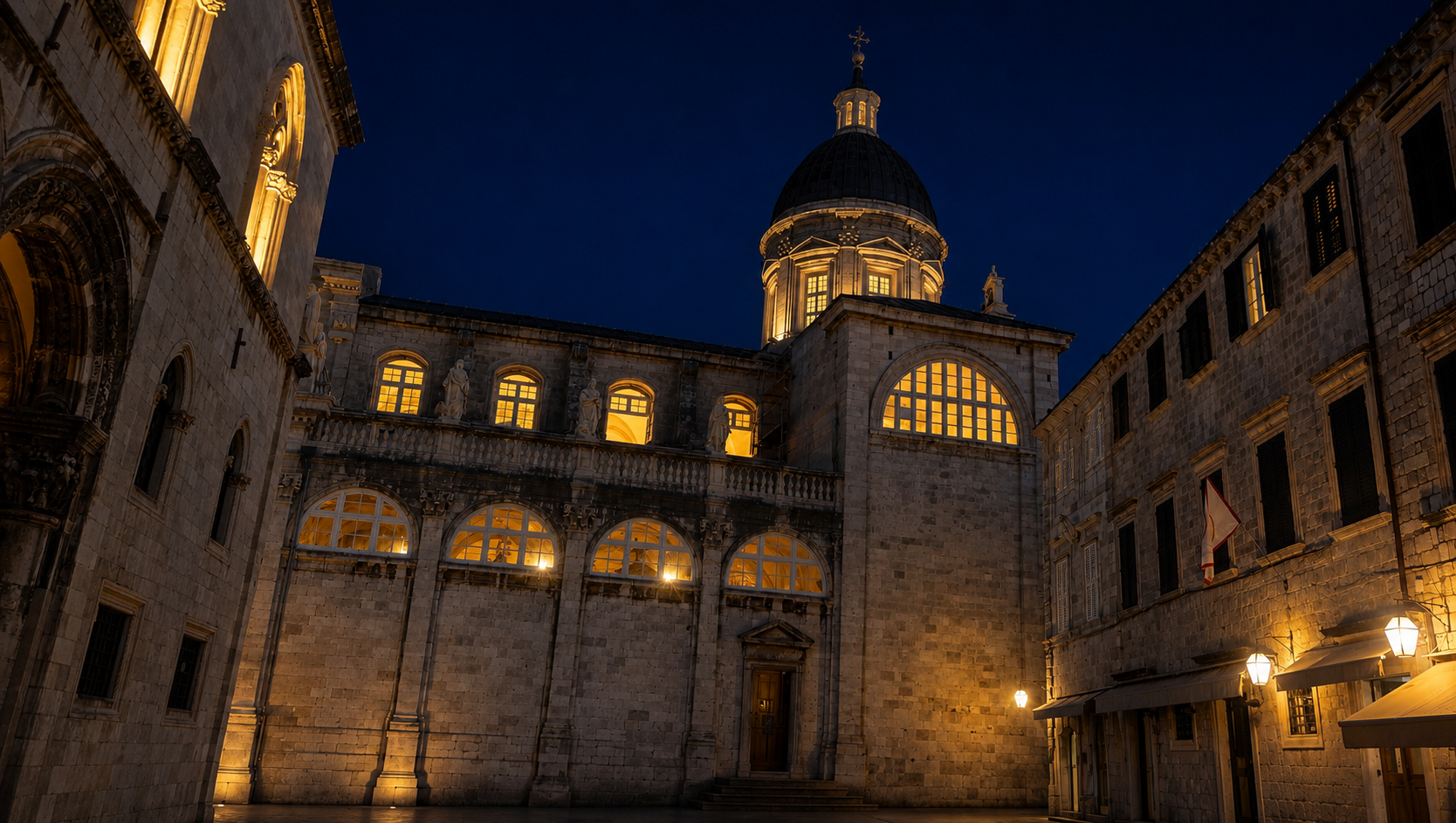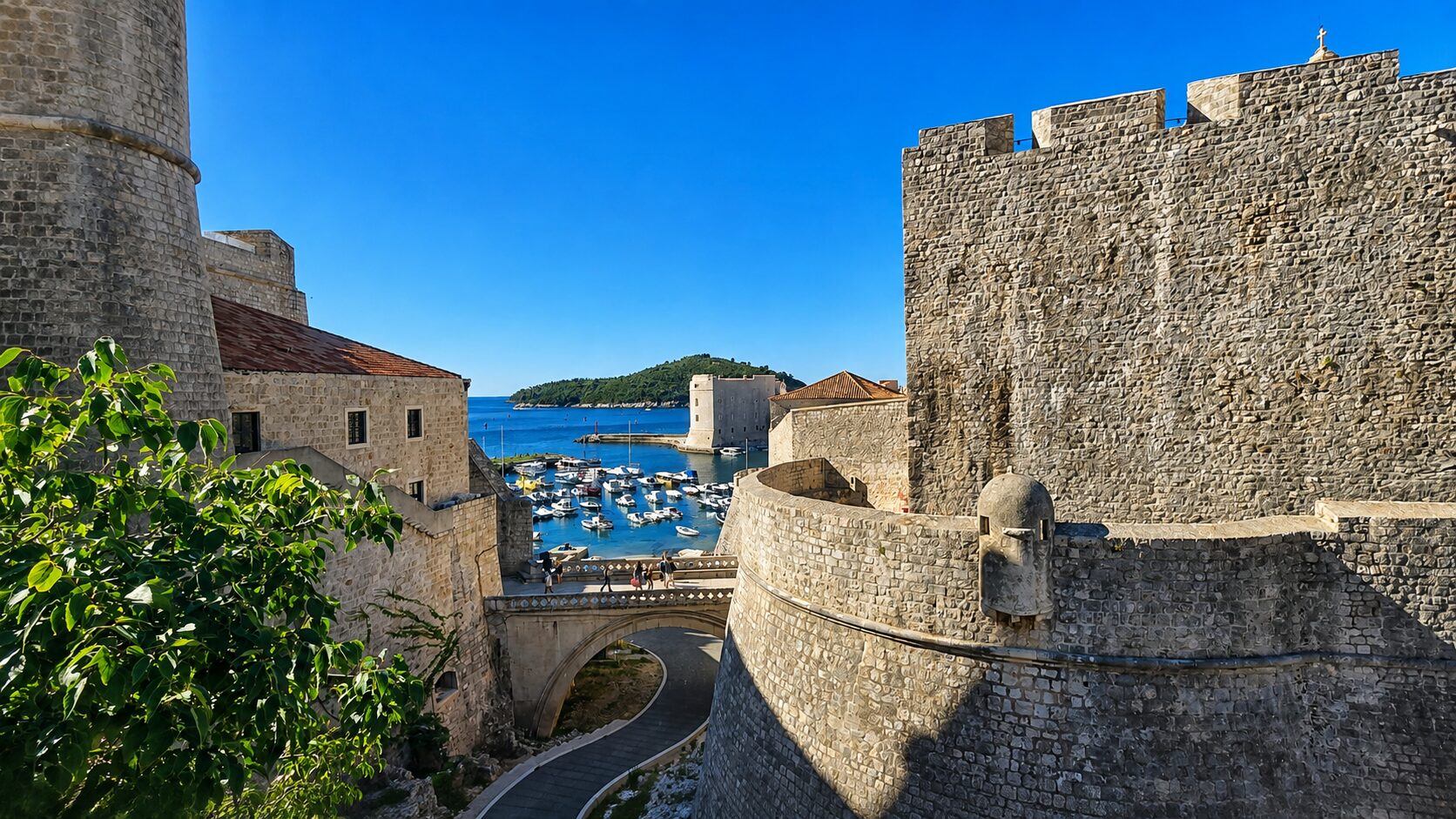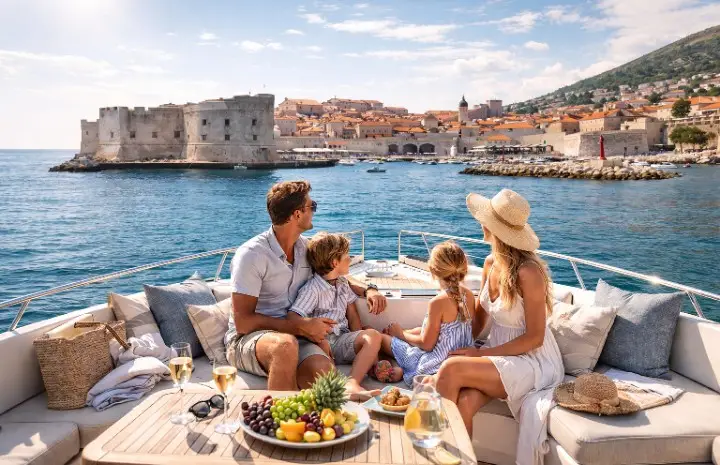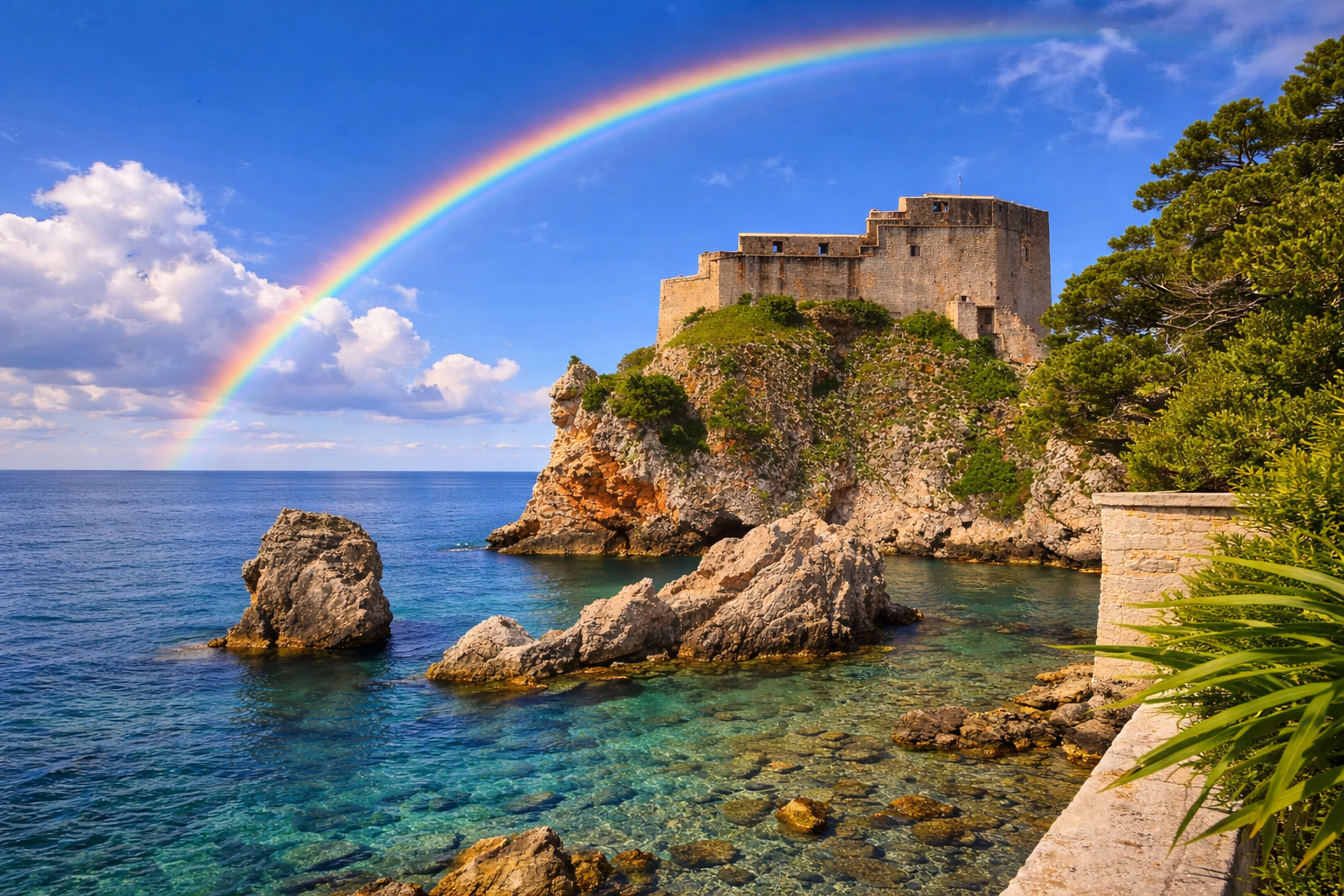
Dubrovnik’s LGBTQ+ appeal is less about having a gay district and more about combining LGBTQ-friendly travel with an extraordinary historic city, clear Adriatic water, romantic sunsets and a small but established nightlife scene.
After more than a decade of guiding international visitors—and many LGBTQ+ couples and private groups, including cruise guests from Australia, the United States and Canada—I have found that many fall in love with Dubrovnik for exactly that reason.
Dubrovnik is not Barcelona, Mykonos or Berlin. There is no large gay quarter and no long list of dedicated LGBTQ+ venues.
Instead, you have a compact historic Old Town, rocky and pebble swimming spots, Lokrum Island just offshore, long Mediterranean evenings and a city accustomed to welcoming people from around the world.
If I were planning one day here for LGBTQ+ travellers, I would spend the morning exploring the Old Town, head towards the sea after lunch, slow down for sunset and dinner, and decide later whether to finish the evening with Croatian wine, cocktails or dancing.
Quick Answer: Is Dubrovnik Good for LGBTQ+ Travellers?
Yes. In my experience, Dubrovnik is generally comfortable for LGBTQ+ travellers, particularly in the Old Town and main visitor areas.
There is no gay district or officially designated gay beach, and dedicated LGBTQ+ nightlife is limited. Milk is the best-known dedicated gay venue, while most other nightlife is mixed and international.
For swimming, Lokrum, Banje and Danče offer three very different experiences. For a first visit, the Old Town is the easiest base for history, restaurants and nightlife, while Lapad and Babin Kuk offer a more relaxed seaside stay.
In other words: come to Dubrovnik for Dubrovnik itself, with LGBTQ+ experiences forming a natural part of the trip rather than the whole reason for it.
Gay Dubrovnik at a Glance
| LGBTQ+ scene | Small, with limited dedicated venues |
| Gay district | No |
| Dedicated LGBTQ+ venue | Milk, Old Town* |
| LGBTQ+ nightlife | Limited dedicated scene; most venues are mixed |
| Official gay beach | No |
| Lokrum | Naturist/FKK area also familiar to LGBTQ+ visitors |
| Best area for nightlife | Old Town |
| Best for | History, swimming, couples, wine, nightlife and Mediterranean travel |
| LGBTQ+ atmosphere | Generally comfortable in main visitor areas, based on my local experience |
| Easiest period for swimming + nightlife | June–September |
*Nightlife venues and opening times can change. Check Milk’s current information before visiting.
For a quieter balance of swimming, sightseeing and evenings outdoors, June and September are personally my favourite months. July and August bring the liveliest summer atmosphere, but also the greatest heat and crowds.
A Perfect LGBTQ+ Day in Dubrovnik
If this is your first visit, this is roughly how I would structure one relaxed day:
| Time | Experience |
|---|---|
| 09:00 | Old Town and local history |
| 12:30 | Relaxed lunch |
| 14:00 | Lokrum Island or swimming |
| 17:30 | Return and take a break |
| 19:00 | Sunset |
| 20:30 | Dinner and Croatian wine |
| 22:00+ | Milk, cocktails or another evening venue |
These times are suggestions, not rules.
Dubrovnik tends to reward people who leave some space between the things they planned.
Is Dubrovnik LGBTQ+ Friendly?
In my experience, Dubrovnik is generally comfortable for LGBTQ+ travellers, particularly in the Old Town and areas most shaped by international tourism.
Hotels, restaurants, bars and tourism businesses here receive visitors from around the world every day. Same-sex couples are part of that international mix, particularly during the main travel season.
I have guided LGBTQ+ visitors travelling independently, as couples and in larger private groups.
Some of my favourite memories are surprisingly ordinary ones.
I have worked with LGBTQ+ cruise groups of around 30 guests from Australia, the United States and Canada. Very quickly, the day stops feeling like an “LGBTQ tour.”
It simply becomes a fun day in Dubrovnik.
We talk, laugh, take photographs and share stories. I have had guests walking through the Old Town proudly wearing rainbow T-shirts, relaxed and enjoying their holiday.
What they usually talk about afterwards is not whether Dubrovnik had enough explicitly gay attractions.
They talk about the Old Town, the history, the views, the sea and how much they enjoyed being here.
That is probably the most useful description I can give from my own experience.
A Short LGBTQ+ Timeline in Croatia
Croatia’s legal and social landscape has changed considerably over the past two decades.
2002 – The first Zagreb Pride
The first Croatian Pride March took place in Zagreb in 2002, becoming an important milestone in public LGBTQ+ visibility in Croatia.
2008 – Anti-discrimination protection
Croatia’s Anti-Discrimination Act prohibits discrimination on grounds that include sexual orientation, gender identity and gender expression.
2014 – Life Partnership Act
Croatia introduced a formal legal framework for same-sex life partnerships in 2014.
Croatian law also recognises qualifying informal same-sex life partnerships. Government information states that an informal life partnership generally requires at least three years of family life and can carry legal effects in areas including inheritance, taxation, pensions, social welfare, health care, employment and access to services.
2020 – Foster care
In 2020, an important Constitutional Court development concerned the position of same-sex life partners within Croatia’s foster-care framework.
Family-law rights have continued to develop through court and administrative decisions. Because areas such as foster care, adoption and parental rights are legally more complex than a short travel guide can responsibly explain, travellers who need detailed legal information should use current official Croatian sources.
For visitors, the broader point is more useful:
modern Croatia cannot be described accurately with a single label such as “conservative” or “liberal.”
The reality is more nuanced.
A Local Note About Public Affection
One question LGBTQ+ couples sometimes ask me is whether they should feel comfortable showing affection in public.
In the Old Town and Dubrovnik’s main visitor areas, I regularly see same-sex couples walking together, holding hands and behaving as other couples do.
The historic centre receives people from almost everywhere in the world, and that diversity is simply part of its normal rhythm during the travel season.
Outside the busiest visitor areas, my personal advice is slightly more conservative.
I would not describe other parts of Dubrovnik as unsafe. But in quieter residential or less tourism-oriented surroundings, I would personally be a little more discreet with very visible public displays of affection.
That is not a legal restriction.
It is simply the practical advice I would give friends who asked me how I read the local social atmosphere.
Arriving in Dubrovnik
Dubrovnik Airport is south of the city, and most visitors continue towards their accommodation by taxi, rideshare, shuttle or private transfer.
If you stay around the Old Town, Pile or Ploče, much of the rest of your visit can then be done on foot.
For more detail, my Getting to Dubrovnik: Flights, Airport Transfers, Cruise Arrivals & Private Walking Tours guide covers the practical options.
Arriving by Cruise Ship
Cruise visitors have one additional concern: time.
Most large cruise calls use Gruž, outside the historic centre, so reaching the Old Town efficiently and protecting enough time for the return matters.
Having guided LGBTQ+ cruise groups myself, I find that the best days have a simple balance: enough organisation that nobody worries about the ship, but enough flexibility that people actually enjoy Dubrovnik.
If you are organising the day independently, my Dubrovnik Cruise Port to Old City Guide explains the local bus, taxi, Uber, Bolt, walking and private-transfer options.
If you prefer to have transport, sightseeing and return timing arranged together, a Private Dubrovnik Shore Excursion can be customised for couples, friends or larger private groups.
Morning: Discover Dubrovnik’s Hidden LGBTQ+ History
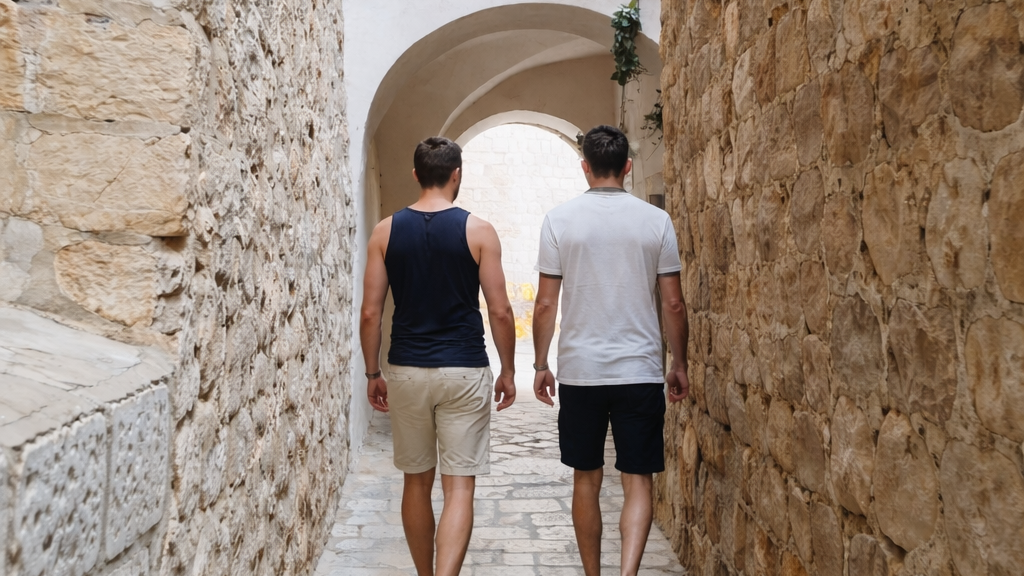
I would begin the day inside Dubrovnik Old Town.
Not because there is a row of obvious LGBTQ+ monuments.
There isn’t.
What makes this part of Dubrovnik interesting is looking beyond the official version of history.
Traditional Dubrovnik history naturally concentrates on maritime trade, diplomacy, aristocratic families, religion, earthquakes and the remarkable political independence of the former Republic.
But behind the palaces, churches and government buildings were people living private lives inside a small and highly structured society.
That raises more human questions.
How did people negotiate relationships and reputation?
How different could private behaviour be from public expectation?
And how should we interpret people who lived centuries before words such as gay, lesbian or queer acquired their modern meanings?
That last question matters.
Modern LGBTQ+ identities do not map neatly onto people who lived hundreds of years ago.
I do not believe in finding one fragment in an archive and declaring that a historical person was “gay” simply because it makes a better story.
Historical laws, court proceedings and other surviving records are more useful when they help us understand how a society dealt with sexuality, relationships, reputation and behaviour.
Where the surviving evidence is uncertain or open to interpretation, I say so rather than presenting speculation as fact.
Sometimes the evidence tells us something surprising.
Sometimes it is uncomfortable.
And sometimes the most responsible answer is simply that we cannot know everything about a person’s private identity.
If this side of Dubrovnik interests you, read Hidden Stories of Pride in Dubrovnik: LGBTQ+ History, Symbols and Openness Through the Centuries.
Experience It in Person: Dubrovnik Pride Walking Tour
These questions are also at the heart of my Dubrovnik Pride Walking Tour.
What I enjoy most about this private experience is that no two conversations are exactly the same.
Some guests are particularly interested in LGBTQ+ history. Others simply want to see Dubrovnik through stories that are rarely included in a conventional city tour.
Visitors naturally compare Dubrovnik’s past with their own countries, generations and experiences, and those conversations are often some of the most interesting moments of the walk.
We use real locations around the Old Town to discuss identity, relationships, reputation, social expectations and changing attitudes.
Because the experience is private, the conversation can adapt naturally to the people taking part.
You do not need to be LGBTQ+ to join.
You simply need to be curious about the people who lived here—not only the monuments they left behind.
Game of Thrones in Dubrovnik
Many LGBTQ+ guests I meet are also interested in Dubrovnik’s Game of Thrones connection.
The city became one of the series’ most recognisable filming locations as King’s Landing, with locations around Pile, the Jesuit Steps, Fort Lovrijenac and the City Walls.
I prefer connecting the filming story with the real Dubrovnik behind it.
Fort Lovrijenac may have represented the Red Keep, but its actual story is considerably older.
If your priority is understanding Dubrovnik itself rather than following a particular theme, the Private Old Town Walking Tour concentrates on the Republic, everyday life and the people behind the landmarks.
If you are still deciding what type of walking experience would suit you best, my Dubrovnik Walking Tours: Complete Guide to Exploring Dubrovnik Old Town compares the different ways to discover the historic centre.
Dining in Dubrovnik Old Town: Where I Would Slow Down
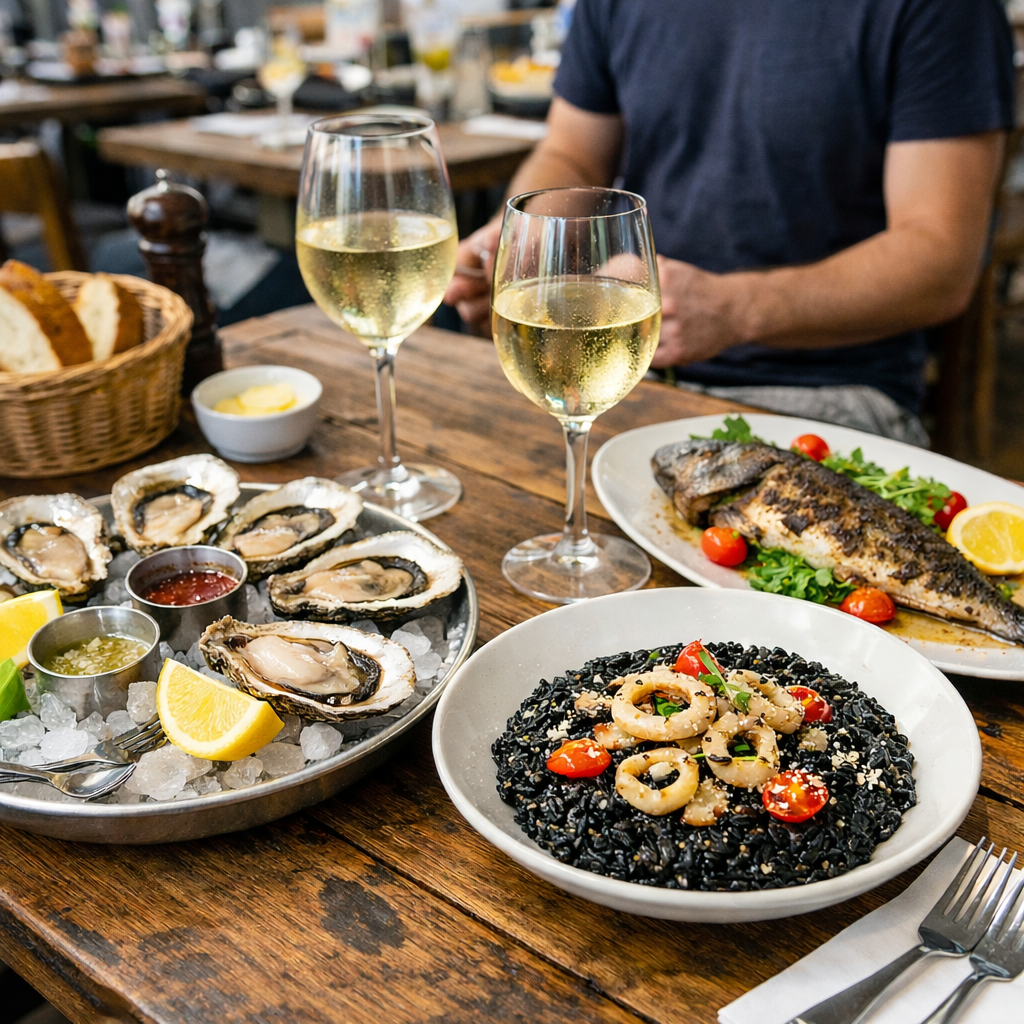
After a morning of walking, I would stop.
One of the easiest mistakes in Dubrovnik is turning lunch into another attraction that needs to be completed quickly.
Some guests want seafood and Croatian wine. Others want something light before heading to the sea. A couple may prefer a quiet table and two hours with nowhere else to be.
Traditional dishes you will regularly encounter include grilled fish, black risotto, octopus salad and seafood pasta.
If you enjoy red wine, Plavac Mali from southern Dalmatia is one local name worth remembering. If you would like to understand the local varieties before ordering, my Dubrovnik Wines Guide explains the wines, regions and traditions behind what you will see on restaurant menus.
But I would not choose a restaurant simply because someone online labelled it a “hidden gem.”
Choose according to what you actually want: seafood, vegetarian options, a romantic table, a quick lunch or somewhere to linger.
For LGBTQ+ couples, I approach dining exactly as I would for any other couple.
The atmosphere matters more than a “gay-friendly restaurant” label.
Afternoon Adventure: See Dubrovnik from the Sea
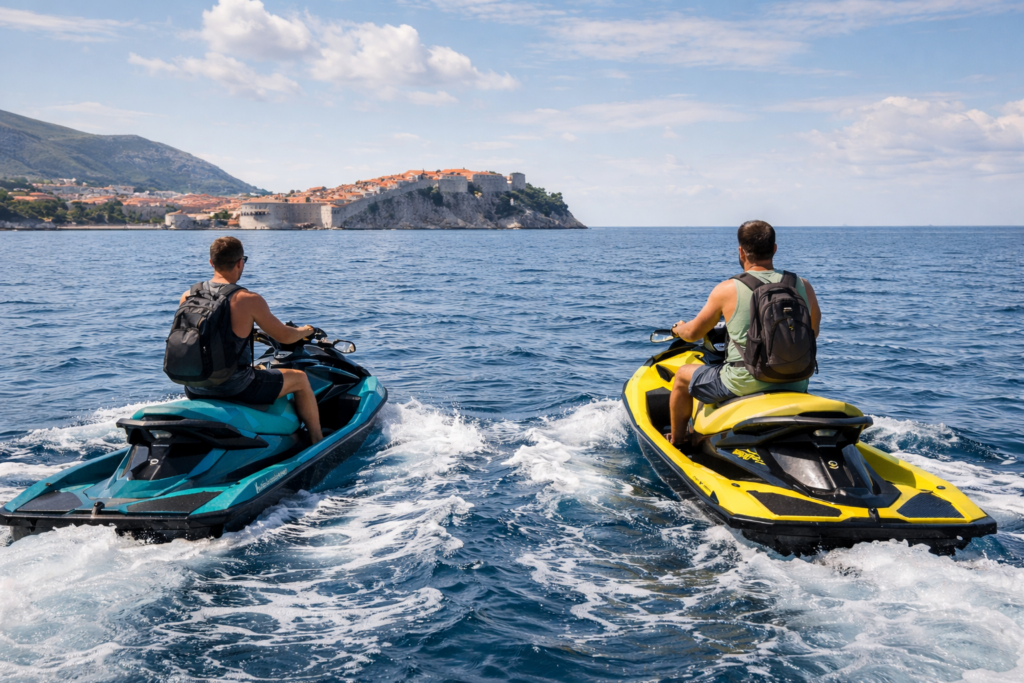
After several hours inside the walls, the sea completely changes the feeling of the day.
From the water, Dubrovnik’s fortifications suddenly make geographic sense, Lokrum sits directly opposite the Old Port and the limestone coastline becomes much more dramatic.
If you want something active, kayaking, a boat trip or a jet ski ride can give you a completely different perspective on Dubrovnik. Jet skis are especially fun if you want more freedom and speed, with the coastline opening up around you instead of following the city from street level.
I would still treat this part of the day as optional rather than another attraction you need to squeeze into the itinerary.
In July and August especially, your afternoon plan should depend partly on the heat, sea conditions and how you actually feel after lunch. Some days you may want the adrenaline of a jet ski or kayak; on others, Lokrum or a quiet swim will be exactly what you need.
Escape to Lokrum Island
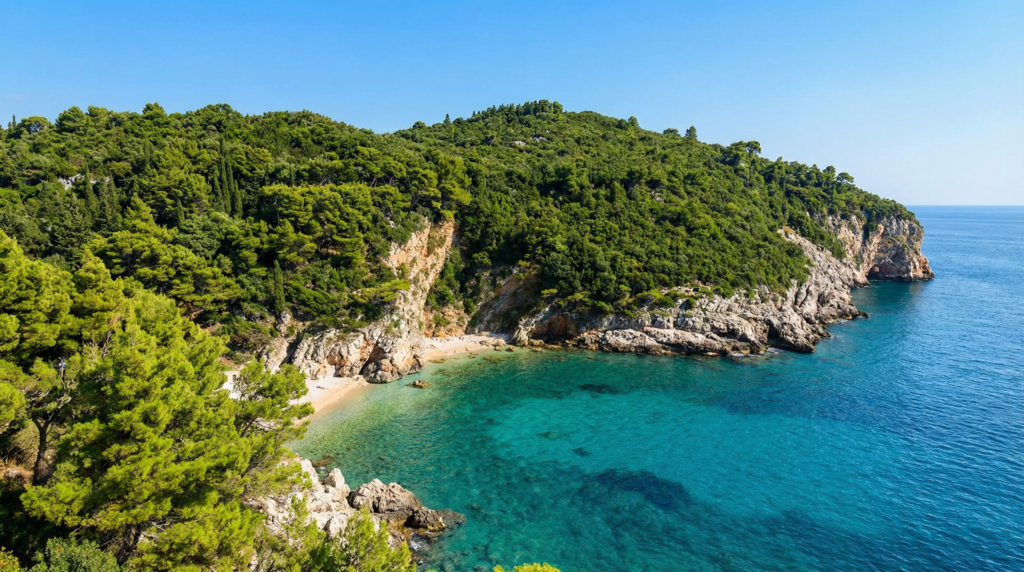
For many LGBTQ+ visitors, Lokrum is one of the most natural places to spend the afternoon.
The island lies directly opposite the Old Town and is reached from the Old Port when the seasonal boat service is operating.
Once there, the atmosphere changes quickly.
There are no cars. Instead, you have woodland paths, gardens, rocky swimming areas and clear Adriatic water.
You can explore, swim in the lagoon commonly called the Dead Sea or simply find somewhere beside the water and do very little.
Lokrum also has an established FKK/naturist area.
It is worth describing this accurately:
it is not an officially designated gay beach and it is not exclusively LGBTQ+.
From my experience and conversations with visitors, the naturist area is also familiar to LGBTQ+ travellers, but it remains a public naturist area used by different people.
Even without that association, I would recommend Lokrum because it is one of the easiest ways to exchange a busy Old Town afternoon for sea, shade and nature.
My Lokrum Island: A Local Escape from Dubrovnik Crowds guide covers the boat journey, what to see, swimming and how much time I would allow.
Dubrovnik’s Best Places to Swim
One thing worth knowing before arriving: Dubrovnik is not primarily a sandy-beach destination.
Many of our swimming places are pebble beaches, rocky platforms or direct access into wonderfully clear Adriatic water.
Each has a different atmosphere, so I would choose according to the kind of afternoon you actually want rather than looking for one “best beach.”
Banje Beach
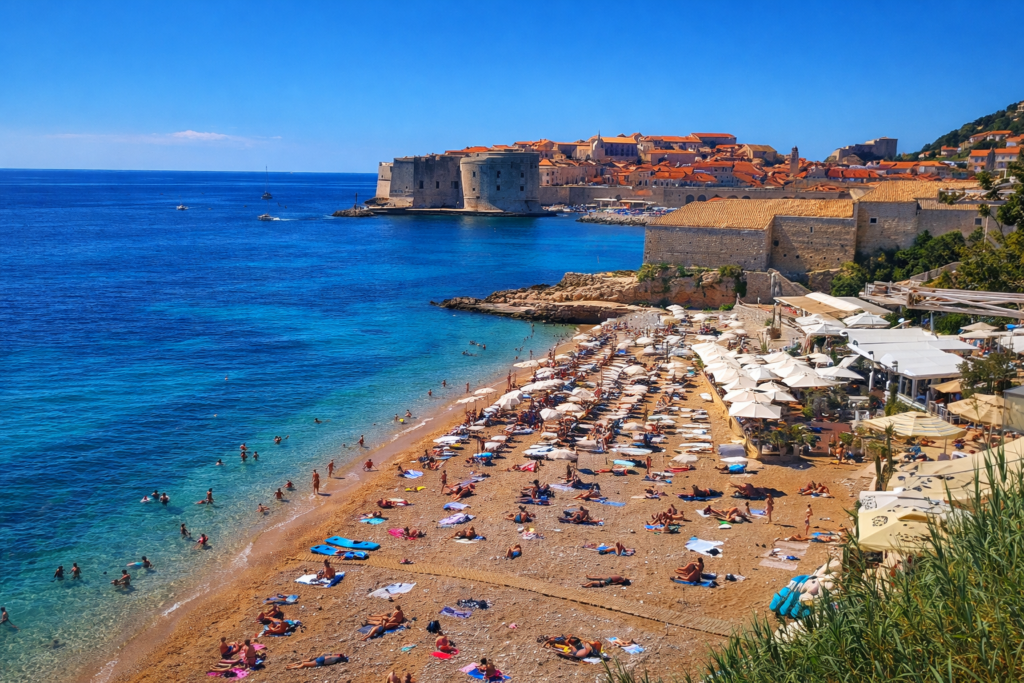
Banje is the easiest choice if convenience matters.
It lies just outside the Old Town and gives you one of Dubrovnik’s classic combinations: the sea in front of you and the historic city behind.
It is popular and lively in summer.
Choose it if you want sightseeing and swimming in the same part of town.
If you want more peace and space, I would look elsewhere.
Sveti Jakov Beach
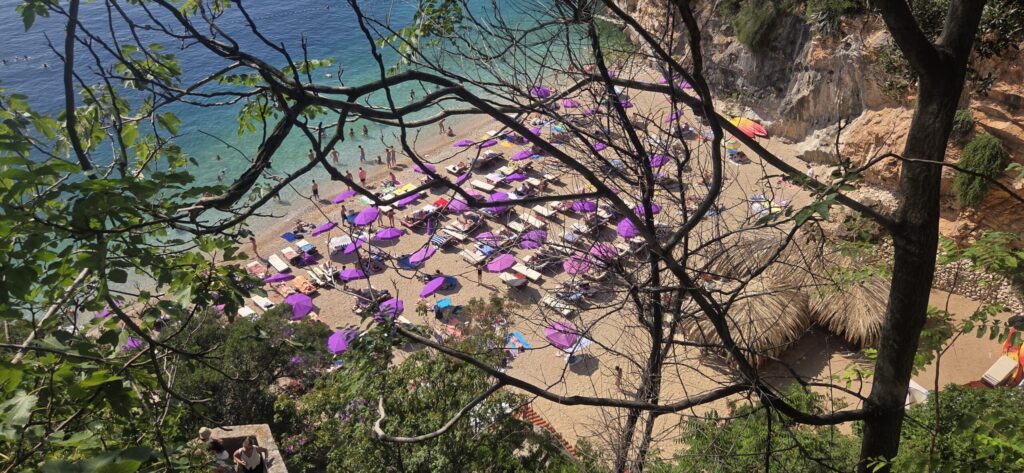
Sveti Jakov Beach is one of my favourite alternatives when you want beautiful views of Dubrovnik without staying immediately beside the Old Town.
It lies farther along the coast beyond Ploče, with views back towards the historic city and across the water towards Lokrum. The setting feels more secluded than Banje, especially once you are down at sea level.
The beach itself is mainly pebble, with clear water and a much more relaxed atmosphere than the busiest beaches closest to the Old Town.
There is one practical thing to know: you need to walk down a substantial number of steps to reach it—and climb them again when you leave. For travellers with mobility problems, it would not be my first recommendation.
For couples, however, I particularly like Sveti Jakov because the combination of the sea, Lokrum and Dubrovnik in the distance can be beautiful later in the day.
If Banje feels a little too busy but you still want that unmistakable Dubrovnik view, Sveti Jakov would be one of my first alternatives.
Danče Beach
Danče feels completely different.
It is one of Dubrovnik’s traditional local swimming places and has far less of a polished beach-club atmosphere.
You swim from rocks rather than rows of resort-style loungers.
Danče has long been part of local swimming culture, and that is what gives it its character.
Because the shoreline is rocky and the water becomes deep, I recommend it more to confident swimmers. Water shoes can also be useful.
If you prefer local character to beach-club style, Danče would be high on my list.
Copacabana Beach
Copacabana is farther from the Old Town, on the Lapad/Babin Kuk side of Dubrovnik.
The setting is broader and more resort-like, with open views towards the sea and the Elaphiti Islands.
It makes most sense if you are already staying in this part of Dubrovnik or want to dedicate a larger part of the afternoon to swimming and relaxing.
With only one day in the city, I would normally choose Lokrum, Banje, Sveti Jakov or Danče first.
Sunset Above the Adriatic
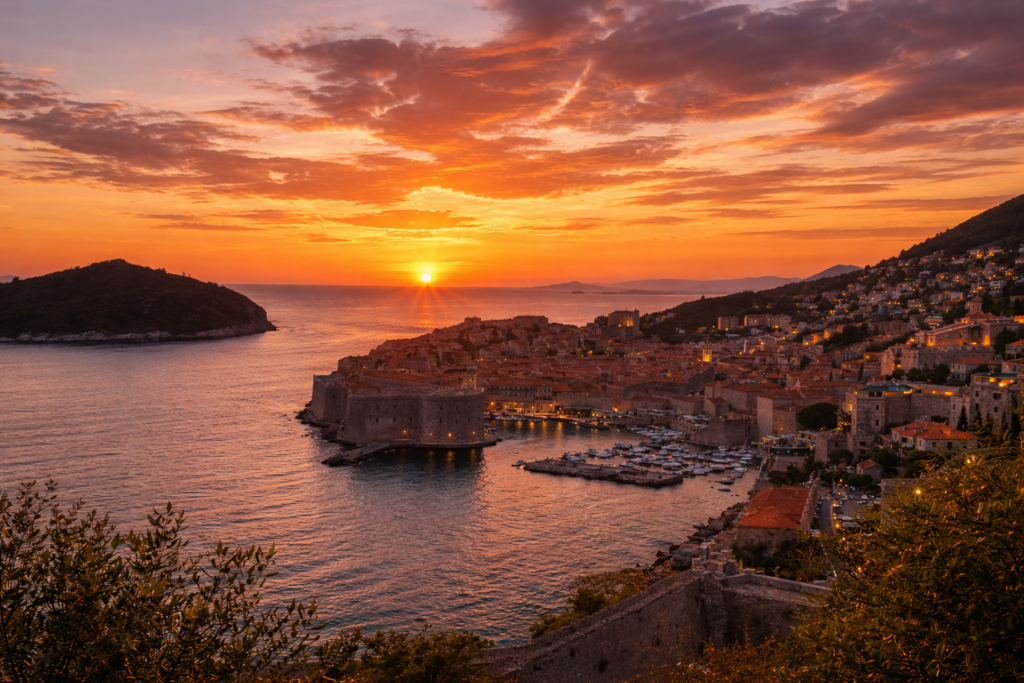
Do not rush directly from the beach into nightlife.
Dubrovnik around sunset deserves part of the day to itself.
The stone changes colour, the strongest heat begins to disappear and the city becomes much easier to enjoy again.
You can return to the Old Town for a drink, stay beside the sea or head somewhere higher for views over Dubrovnik, Lokrum and the Adriatic.
A Sunset in Cavtat I Still Remember
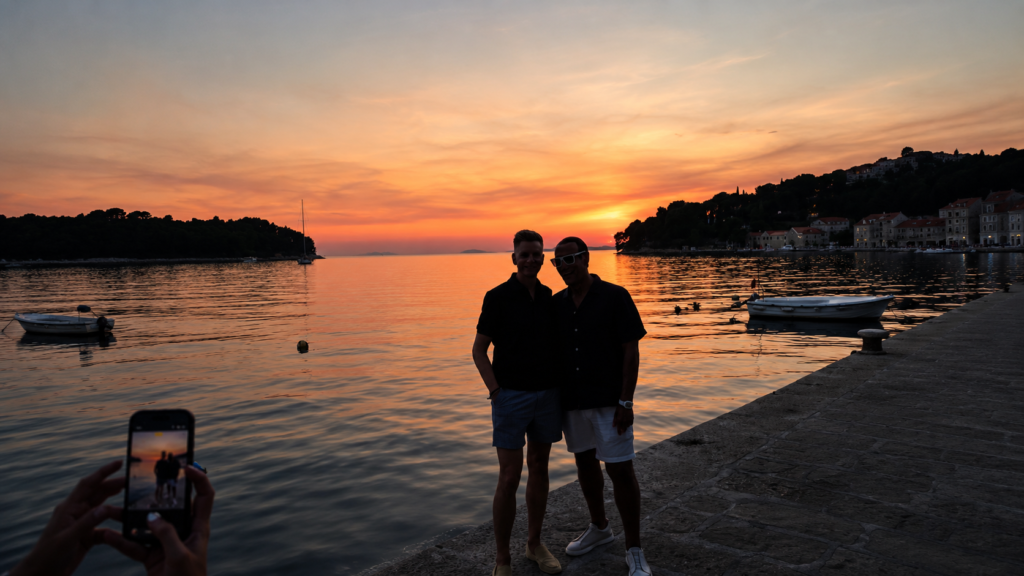
One evening I particularly remember was a private visit to Cavtat with a gay couple.
What surprised them most was not another monument. It was the atmosphere at sunset: boats moving quietly in the harbour, warm light over the stone houses and people strolling along the waterfront without rushing anywhere.
We stopped and simply enjoyed it.
They were amazed by how peaceful and romantic Cavtat felt.
It reminded me why private experiences need some breathing room.
Sometimes the hour when almost nothing is scheduled becomes the part of the day people remember most.
If sunset is important to you, my Best Sunset Spots in Dubrovnik: A Local Guide to 4 Views I Actually Recommend explains the places I genuinely use and recommend.
If you would rather experience Dubrovnik’s evening atmosphere with a guide, the Dubrovnik Old Town Sunset Walking Tour with Wine combines the softer evening hours with local stories and Croatian wine.
Couples planning a longer stay may also find useful ideas in Romantic Things to Do in Dubrovnik for Couples.
LGBTQ+ Nightlife in Dubrovnik: Wine Bars, Cocktails & Clubs
Dubrovnik’s evening scene is predominantly mixed and international, with limited dedicated LGBTQ+ nightlife.
For lesbian, bisexual, trans and queer travellers in particular, the experience is generally less about a separate nightlife infrastructure and more about Dubrovnik’s broader visitor environment. If specialised events matter to you, check current local listings for your dates.
Wine Bars in Dubrovnik Old Town
Personally, I like beginning an evening with wine rather than heading directly to a nightclub.
The Old Town has intimate places where you can discover Croatian wines from Dalmatia and other regions.
If you do not know Croatian wine, ask.
A good wine bar should be able to explain what you are drinking without turning your evening into a lecture.
If you want to understand what you are ordering before you arrive, my Dubrovnik Wines: A Complete Guide to Local Vineyards, Traditions and Wine Experiences goes deeper into local varieties and regions.
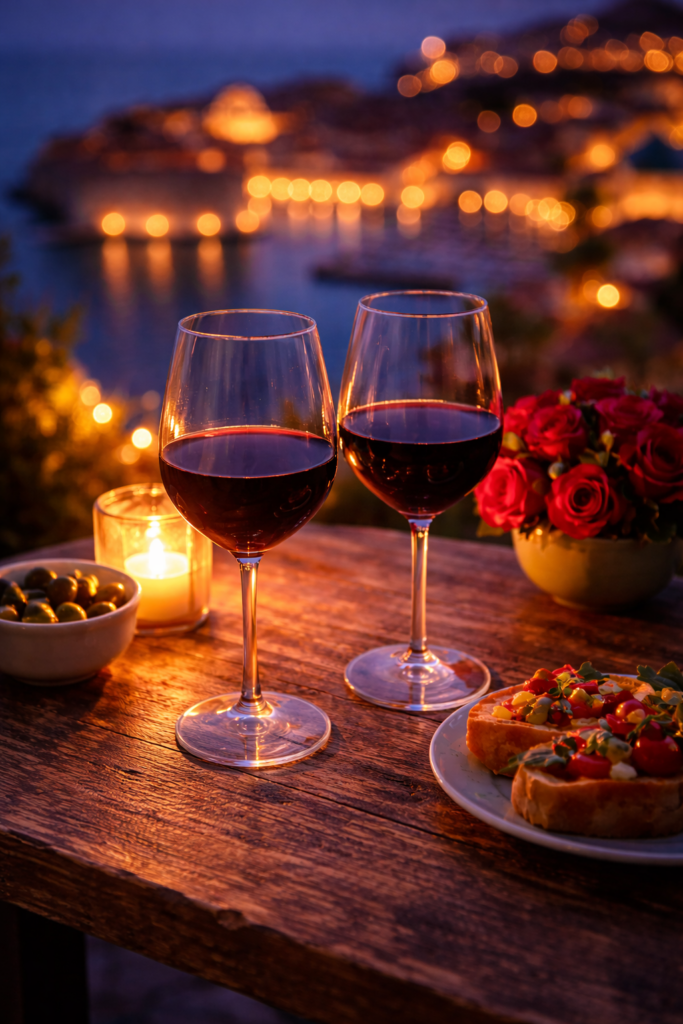
Milk: Dubrovnik’s Dedicated Gay Venue
If you specifically want gay nightlife in Dubrovnik, Milk is the venue to know.
Milk’s own website currently describes it as Dubrovnik’s first official gay bar and gives its address as Marojice Kaboge 8 in the Old Town. Because venue information can change, check the current information before going.
For visitors looking for an explicitly LGBTQ+ environment rather than another mixed bar, it is the clearest dedicated option.
I would make it part of the evening rather than the entire evening: have dinner, wander through the Old Town, stop somewhere that appeals to you and then head to Milk if you feel like continuing.
Revelin: Iconic Nightclub with a Gay-Friendly Atmosphere
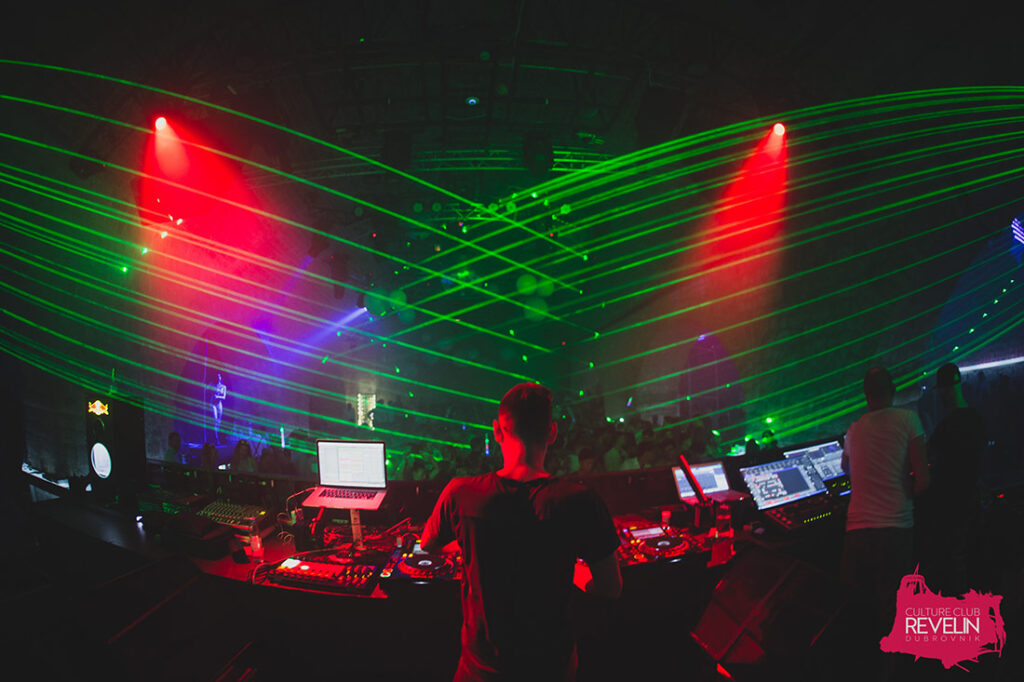
Located inside historic Revelin Fortress beside Ploče Gate, Culture Club Revelin is one of Dubrovnik’s best-known places for late-night dancing, international DJs and a lively summer crowd.
From my experience, I would also describe Revelin as LGBTQ-friendly. It is not a dedicated gay club like Milk, but LGBTQ+ visitors are part of its diverse international crowd.
If you want a larger mainstream club rather than a specifically LGBTQ+ venue, Revelin is one of the strongest nightlife options in the Old Town.
Choosing a Private Experience in Dubrovnik
A private experience should depend on why you came to Dubrovnik, not on how many tours you can fit into one itinerary.
If you mainly want to understand the city itself, the Private Old Town Walking Tour focuses on Dubrovnik’s Republic, history and everyday stories.
Cruise guests who want transport, guiding and return-to-ship timing handled together can choose a Private Dubrovnik Shore Excursion.
Couples who prefer Dubrovnik during its softer evening hours may enjoy the Sunset Walking Tour with Wine.
And if you are still comparing different ways to explore Dubrovnik, the informational Dubrovnik Walking Tours Guide can help you decide what actually fits your interests and available time.
Then leave part of the day for whatever feels right: Lokrum, swimming, lunch, wine or simply sitting beside the Adriatic.
LGBTQ+ Travel Tips for Dubrovnik
A few practical things I would tell LGBTQ+ guests before they arrive:
- Old Town is the easiest base for nightlife and evening walking.
- Lokrum deserves more than a rushed visit if swimming and nature interest you.
- Do not expect sandy beaches everywhere. Pebbles, rocks and deeper clear water are part of the Dubrovnik swimming experience.
- June to September is the easiest period for combining swimming, long evenings and summer nightlife.
- June and September are my personal favourites for a calmer balance.
- Early morning and evening can feel completely different from midday in summer.
- In my experience, the Old Town and main visitor areas feel the most internationally oriented.
- In quieter residential surroundings, I personally recommend a little more discretion with very visible public affection.
Where Should LGBTQ+ Travellers Stay in Dubrovnik?
I do not think LGBTQ+ visitors need to restrict themselves to hotels specifically advertised as “gay friendly.”
Choose the area according to the type of trip you want.
Old Town is best if nightlife and walking everywhere matter most.
Ploče works beautifully for couples who want sea views and easy access to the historic centre.
Pile is extremely convenient for access to the Old Town without necessarily staying inside the walls.
Lapad is a good choice if beaches, restaurants and a more relaxed seaside atmosphere matter more.
Babin Kuk suits visitors who prefer larger hotels and a resort-style stay.
The better question is not:
“Which hotel is gay?”
It is:
“Which part of Dubrovnik suits the way we want to travel?”
Frequently Asked Questions About Gay Dubrovnik
Is Dubrovnik gay friendly?
In my experience, Dubrovnik is generally comfortable for LGBTQ+ travellers, particularly in the Old Town and main visitor areas.
The dedicated scene is limited, but the city’s tourism environment is strongly international.
Is Dubrovnik generally safe for LGBTQ+ travellers?
I would distinguish general travel safety from social comfort.
LGBTQ+ travellers are part of Dubrovnik’s international visitor mix, but no travel guide can guarantee how every individual in every setting will behave.
Normal travel awareness remains sensible.
Can gay couples hold hands in Dubrovnik?
In the Old Town and major visitor areas, I regularly see same-sex couples together and generally consider holding hands unremarkable.
In quieter residential surroundings, I personally advise slightly more discretion with very visible public affection.
This is local social advice, not a legal restriction.
What rights do same-sex couples have in Croatia?
Croatia has formally recognised same-sex life partnerships since 2014, while the legal framework also recognises qualifying informal same-sex life partnerships.
Croatia’s Anti-Discrimination Act also prohibits discrimination on grounds including sexual orientation, gender identity and gender expression.
Family-law questions involving foster care, adoption and parental rights are more complex and have continued to develop through legal and administrative decisions, so detailed questions should be checked against current official Croatian sources.
Are there gay bars in Dubrovnik?
Yes.
Milk in the Old Town currently describes itself as Dubrovnik’s first official gay bar.
Most other nightlife in Dubrovnik is mixed.
Is there a gay beach in Dubrovnik?
There is no officially designated gay beach.
Lokrum’s FKK/naturist area is familiar to some LGBTQ+ visitors, but it is neither exclusively gay nor officially designated as a gay beach.
Is Lokrum worth visiting?
Yes.
Even without any LGBTQ+ association, Lokrum is one of my favourite easy escapes from the Old Town for swimming, nature and a slower afternoon.
For practical planning, see my complete local guide to Lokrum Island.
What are the best things to do for LGBTQ+ travellers in Dubrovnik?
For a first day, I would keep it simple:
Old Town → lunch → Lokrum or swimming → sunset → dinner → wine bar or Milk.
That gives you history, the Adriatic and Dubrovnik after dark without spending your day rushing between attractions.
Are there LGBTQ+ events in Dubrovnik?
Dubrovnik has a relatively small dedicated LGBTQ+ event calendar compared with Croatia’s larger cities.
If a Pride or queer event matters to your trip, check current listings for your travel dates because programmes can change from year to year.
Croatia’s modern Pride history began with Zagreb’s first Pride March in 2002.
When is the best time for LGBTQ+ travellers to visit Dubrovnik?
June to September is the easiest period for combining swimming, long evenings and summer nightlife.
For my own guests, I particularly like June and September, when you can enjoy the sea and outdoor evenings without quite the same intensity as peak July and August.
If you are deciding between seasons rather than only looking for nightlife, my broader Best Month to Visit Dubrovnik guide compares Dubrovnik month by month.
Local Concierge Support
One advantage of booking a private experience with VipWalk Dubrovnik is that guests receive complimentary local concierge support before and during their stay.
Sometimes the question you really want answered is too specific for a generic travel guide:
Where would you send us for a romantic dinner?
Which area would you choose for our hotel?
Is Lokrum realistic with our itinerary?
Would you choose Milk or a quieter wine bar tonight?
Where would you go for sunset?
Can our cruise group have a private experience instead of a standard excursion?
Those are the kinds of questions where local knowledge is genuinely useful.
I can also help with restaurant suggestions and reservations, itinerary ideas and practical recommendations.
Read more about VipWalk Dubrovnik’s Local Concierge Service.
Start Your Perfect Gay Day in Dubrovnik
A perfect gay Dubrovnik day does not need to feel like a packaged LGBTQ+ itinerary.
It can begin with stories inside a centuries-old walled city, continue with a swim in clear Adriatic water and finish with a sunset you did not rush and a glass of Croatian wine.
If the city’s less visible LGBTQ+ and social history particularly interests you, the Dubrovnik Pride Walking Tour is the private experience I created around those stories.
Or simply use this guide to create your own day.
The street, sunset or conversation you did not schedule can easily become the part of Dubrovnik you remember most.
About the Author
Ajla Hadžić is a licensed Dubrovnik tourist guide, English teacher and founder of VipWalk Dubrovnik.
With more than a decade of professional guiding experience, she works with international visitors on private historical, cultural and customised Dubrovnik experiences.
Her guests have included LGBTQ+ couples, independent travellers and private cruise groups from the United States, Canada, Australia and other countries.
Her approach to LGBTQ+ travel is simple: avoid stereotypes, distinguish historical evidence from modern interpretation, be accurate about what Dubrovnik does and does not offer, and allow guests to experience the city comfortably in their own way.