Introduction: A Different Kind of Pride in a Diplomatic City
Dubrovnik is globally celebrated for its fortified walls, maritime legacy, and refined architectural harmony. Yet beyond the polished limestone streets lies a quieter, more complex narrative — one shaped by diplomacy, discretion, coded identities, and gradual cultural evolution. Travelers searching for LGBTQ Dubrovnik history, hidden Pride stories in Dubrovnik, or a Pride walking tour Dubrovnik are not looking for spectacle. They are searching for context.
Unlike cities known for large Pride parades or highly visible activist movements, Dubrovnik developed within the disciplined political structure of the Republic of Ragusa — a state built on neutrality, survival, and carefully managed public order. In such a society, identity was rarely expressed through confrontation. It was navigated through subtlety.
Today, Dubrovnik is increasingly welcoming to LGBTQ+ travelers. Gay-friendly venues operate openly. Regional Adriatic tours receive international guests professionally and respectfully. Yet the city’s Pride story is not loud — it is layered. To understand it requires historical intelligence, local knowledge, and sensitivity to context.
This guide explores that evolution.
The Republic of Ragusa: Diplomacy, Survival and the Culture of Discretion
To understand hidden LGBTQ+ narratives in Dubrovnik, one must first understand the Republic of Ragusa (1358–1808).
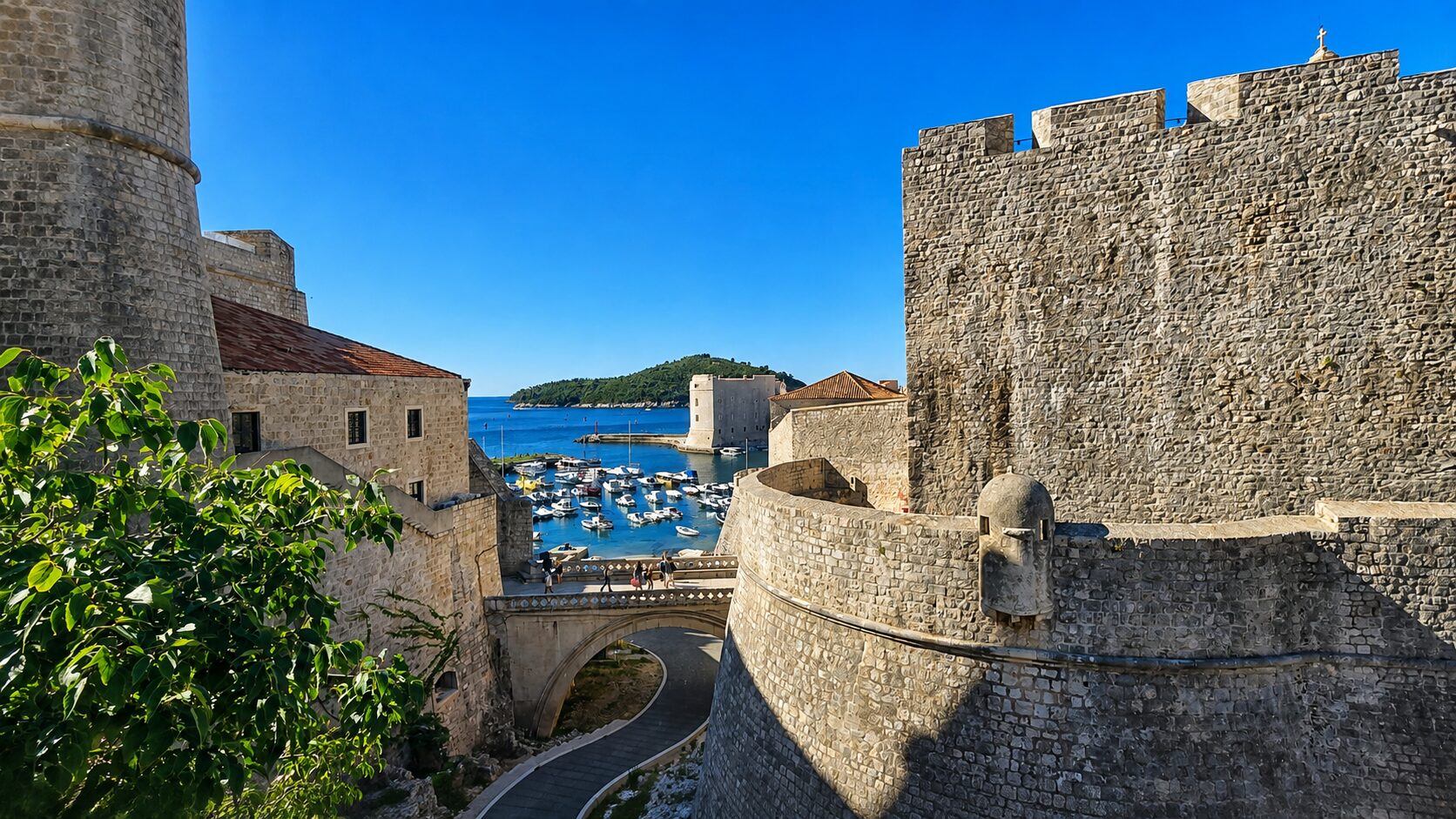
Unlike Venice or Florence, Ragusa did not dominate through military expansion. It survived between powerful empires — particularly Venice and the Ottoman Empire — through calculated diplomacy. Tribute payments, trade agreements, and strict neutrality ensured autonomy.
This political structure shaped social culture.
Public behavior was regulated not only by law but by necessity. Stability protected trade. Trade ensured survival. Reputation was geopolitical currency.
In such an environment:
- Noble families were bound by strict codes.
- Public scandal carried political consequences.
- Moral discipline reinforced diplomatic credibility.
- Silence was often strategic.
This does not mean complexity did not exist. Maritime societies across the Mediterranean historically fostered layered private lives. Long voyages, male-dominated governance, and exposure to cosmopolitan ports created fluid social environments. However, official documentation reflects regulation more than lived experience.
Diplomatic societies do not erase complexity — they manage it.
Understanding LGBTQ+ history in Dubrovnik therefore requires recognizing that visibility was not historically rewarded. Discretion was.
Reading Between the Stones: Symbolism Without Spectacle
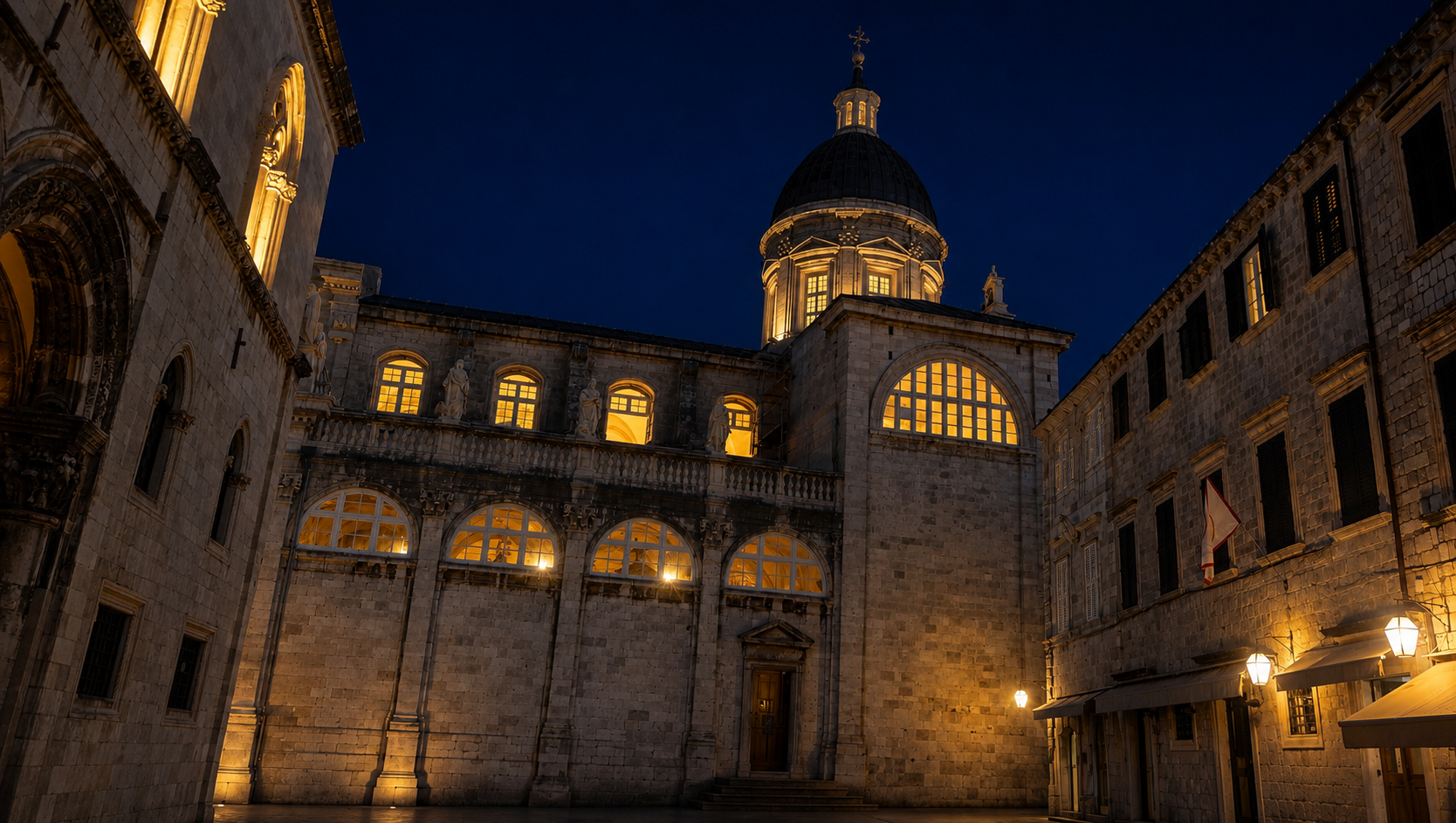
Dubrovnik’s Old Town is an architectural manuscript.
Coats of arms mark noble lineage. Monasteries and cloisters reflect religious authority. Private courtyards signal controlled domestic space. Even the urban layout reflects defensive strategy and social order.
When modern readers look for LGBTQ+ symbolism, they often expect direct visual markers. Medieval and early modern Europe did not function that way.
Communication frequently occurred through:
- Literary allegory
- Patronage networks
- Artistic nuance
- Symbolic dualities
- Coded social alliances
In Mediterranean port cities, identity often existed in nuance rather than declaration. Dubrovnik was no exception.
However, interpreting hidden narratives requires caution. Without historical context, symbolism becomes projection. Without understanding Ragusan diplomacy, silence becomes misread.
A Pride-focused interpretation of Dubrovnik is therefore not about rewriting history. It is about reading it intelligently — within the political and cultural realities of its time.
Maritime Culture: Exposure Beyond the Walls
Dubrovnik’s fleet connected it to Venice, Naples, Istanbul, Barcelona, and beyond. Maritime trade meant exposure to diverse cultures, languages, and social systems.
Port cities historically function as exchange zones — not only for goods, but for ideas and identities.
Comparatively:
- Venice documented moral tribunals.
- Florence enforced social discipline through civic structures.
- Ottoman cities navigated their own layered cultural norms.
Dubrovnik’s model differed. Its priority was containment rather than confrontation. Public disruption was avoided whenever possible.
Maritime life often allowed broader private expression during voyages. Yet public reintegration into the city required conformity.
This pattern — fluidity abroad, discretion at home — appears consistently in diplomatic maritime societies.
Dubrovnik’s LGBTQ+ narrative gradual adaptation., therefore, is best understood not through overt declarations, but through cultural exchange, rumor networks, and
Legal Evolution: Yugoslavia and Modern Croatia
In 1977, homosexuality was decriminalized in Croatia under Yugoslav law — earlier than in several Western European nations.
This is an important milestone.
However, legal reform does not immediately transform social perception. Dubrovnik remained socially conservative, shaped by Catholic heritage and close-knit community dynamics. The 1990s war shifted priorities toward reconstruction and economic stability.
Then tourism reshaped the city.
The Two Dubrovniks: Cruise Timing and Social Rhythm
Understanding modern LGBTQ+ openness in Dubrovnik requires logistical awareness.
Cruise ships typically arrive between 7:00 and 9:00 AM and depart in the late afternoon. During peak hours, the Old Town becomes performance-driven and commercially intense.
After 5:00 PM, the atmosphere changes.
Local rhythms return. Restaurants slow down. Conversations deepen. Public spaces feel more personal.
This dual structure has influenced how openness develops.
Daytime Dubrovnik is high-volume.
Evening Dubrovnik is relational.
Within this second environment, gradual LGBTQ+ visibility has strengthened — not through spectacle, but through normalization.
Gay-friendly venues such as Club Milk operate within this framework. They are integrated into the social fabric rather than positioned as activist centers.
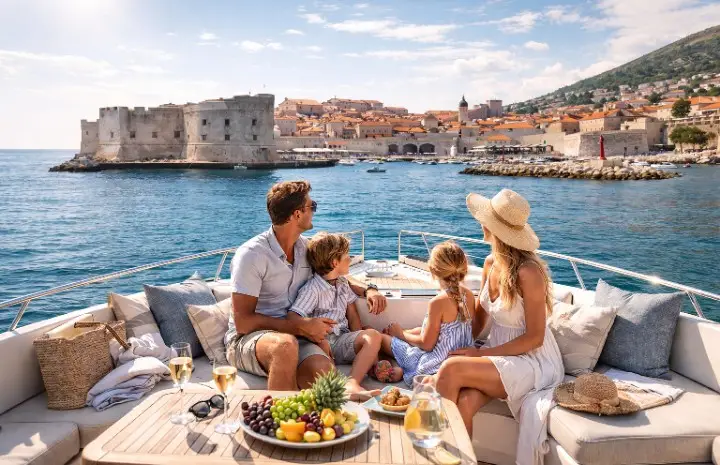
Regional land and Adriatic sea tours increasingly welcome LGBTQ+ travelers with professional neutrality and international hospitality standards.
Openness here is evolutionary.
Dubrovnik Today: Inclusive Without Exhibition
Dubrovnik does not market itself as a Pride capital. It does not host large parades dominating its historic center. Its appeal lies elsewhere.
It offers:
- Cultural depth
- Maritime history
- Architectural grandeur
- Discretion
- Private and premium experiences
- Sophisticated hospitality
For LGBTQ+ travelers seeking safety, elegance, and meaningful context rather than party tourism, Dubrovnik presents a distinct alternative.
Search patterns increasingly reflect interest in:
- Gay friendly Dubrovnik tours
- LGBTQ travel Croatia
- Pride walking tour Dubrovnik
- Hidden stories Dubrovnik
This signals demand for cultural interpretation — not nightlife alone.
Yet structured LGBTQ+ historical interpretation remains rare.
Currently, only one walking experience in Dubrovnik explicitly frames the city’s layered diplomatic and maritime past through a Pride lens, offering historically grounded interpretation without sensationalism.
The details belong within the experience itself.
Why Interpreting LGBTQ+ History in Dubrovnik Requires Expertise
Interpreting Pride in a city shaped by diplomatic restraint is complex.
It requires:
- Understanding Republic of Ragusa governance
- Awareness of maritime trade dynamics
- Sensitivity to Catholic institutional influence
- Knowledge of Yugoslav-era legal shifts
- Operational awareness of cruise timing logistics
Without this framework, narratives risk becoming superficial.
There is a difference between inventing symbolism and contextualizing silence.
Serious cultural interpretation acknowledges that:
- Absence of overt record does not equal absence of lived complexity.
- Diplomatic states historically prioritized order over expression.
- Cultural change in Dubrovnik has been gradual, not dramatic.
For travelers seeking a Pride walking tour in Dubrovnik, intellectual structure matters. Context matters. Discretion matters.
Cultural Exploration Beyond Surface Tourism
Visitors interested in refined cultural interpretation and private formats may explore private cultural walking experiences in Dubrovnik designed around timing strategy and historical depth.
Early-morning Old City exploration aligned with cruise arrivals offers quieter, more intimate conditions for understanding layered narratives.
Dubrovnik rewards those who approach it thoughtfully.
Conclusion: Pride in Subtlety, Strength in Continuity
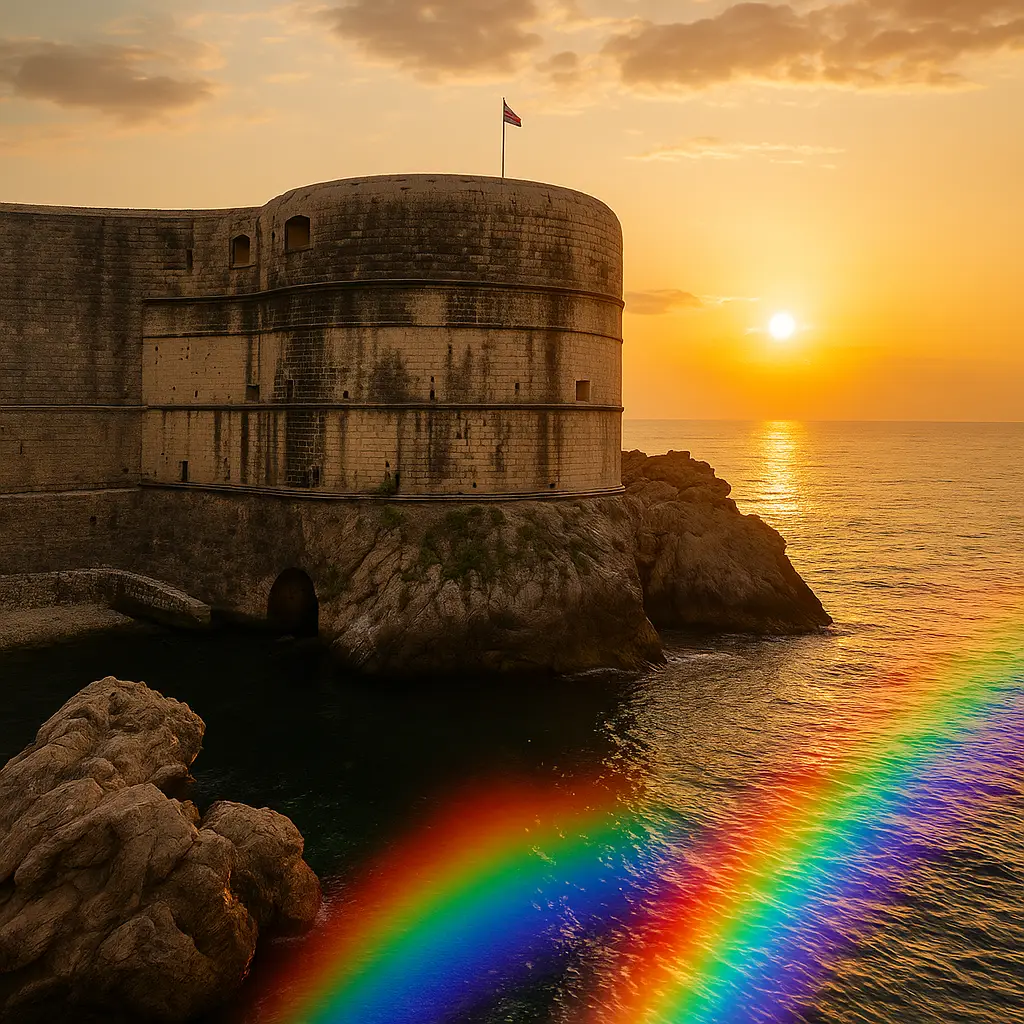
Dubrovnik’s Pride narrative is not defined by volume. It is defined by endurance.
From the disciplined diplomacy of the Republic of Ragusa to maritime cultural exchange, from Yugoslav legal reform to modern gay-friendly spaces such as Club Milk, the city reflects gradual transformation.
It is a story of subtlety rather than spectacle.
For travelers seeking LGBTQ+ history in Dubrovnik, the city offers something distinctive: a layered cultural experience shaped by diplomacy, resilience, and evolving openness.
Not loudly proclaimed.
But present.
And today, interpreted with greater clarity than ever before — through informed, respectful, and intelligently curated cultural experiences.
For travelers seeking a culturally intelligent, discreet and thoughtfully curated Pride experience in Dubrovnik, private inquiries are welcome.
VipWalk Dubrovnik
Email: info@vipwalk-dubrovnik.com
Phone: +385 91 984 2664
Web: www.vipwalk-dubrovnik.com