The best month to visit Dubrovnik for most first-time visitors is September, but the better answer depends on what you want from your trip. May is my top choice for sightseeing, while June is ideal if you want an early-summer combination of the Old Town, beaches and swimming before peak season reaches its height.
That is the distinction I make most often when guests ask me when they should come.
September = best overall. May = best for the historic city. June = best early-summer city-and-sea balance.
After years of guiding visitors through Dubrovnik in every season, I have also learned that weather statistics tell only part of the story.
In May, the limestone streets are warm but usually still comfortable under your feet. In August, those same streets can radiate heat in the middle of the day. By late September, the Adriatic can still feel beautifully summery while the city has already begun to lose some of its peak-season intensity.
So this guide is not simply about finding the warmest month.
It is about what Dubrovnik actually feels like throughout the year — and which version of the city is right for you.
Best Month to Visit Dubrovnik: My Local Ranking
If your dates are flexible, this is the simple ranking I would use:
- September — best overall
- May — best for sightseeing
- June — best for city + sea before peak summer
- October — best quieter alternative
- July and August — best for full Adriatic summer
That does not mean January, February, March, November or December are bad months.
They simply offer a different type of Dubrovnik.
Dubrovnik at a glance
- ⭐ Best overall: September
- 🚶 Best for sightseeing: May
- 🌊 Best balance of city + swimming: June and September
- ☀️ Best for peak Adriatic summer: July and August
- 👨👩👧👦 Best for family trips: June and September
- 📷 Best for quieter photography: November to March
- 💰 Best chance of lower accommodation prices: November to March
- 🎭 Best for major summer cultural events: July and August
- ⛪ Best for traditional local culture: February
- 🍂 Best quieter alternative with pleasant weather: October
If you are still at the early stage of planning your trip, my Ultimate Dubrovnik Travel Guide for 2026 is a useful place to continue.
Dubrovnik in 2026: Dates Worth Knowing
If you are specifically planning Dubrovnik in 2026, one important event is the 77th Dubrovnik Summer Festival, running from July 10 to August 25, 2026.
The 2026 programme includes more than 70 drama, music, dance, folklore and other events across historic venues such as Rector’s Palace, Lovrijenac Fortress and St Blaise’s Church.
This is one of the things I love about Dubrovnik in summer.
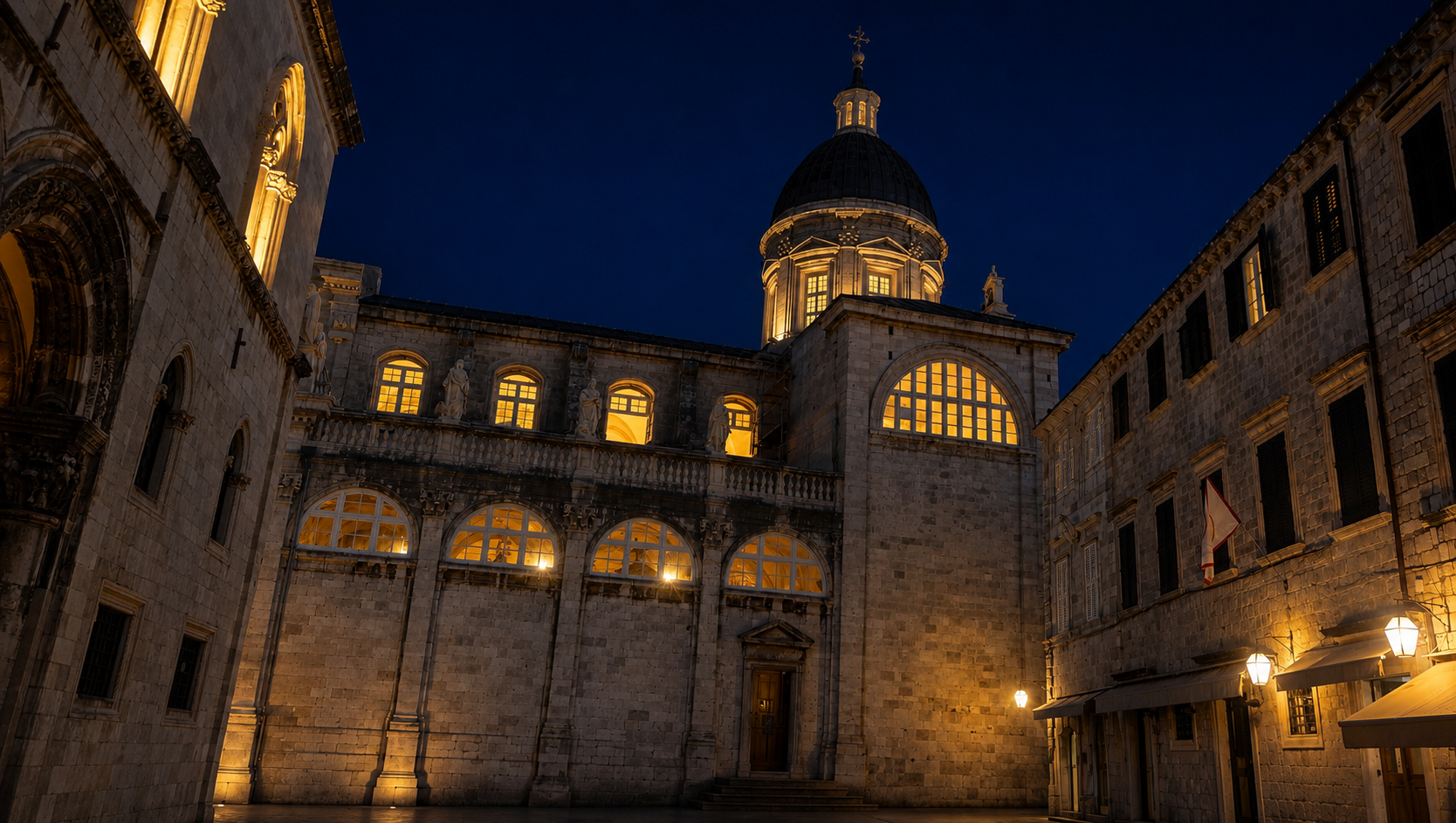
You can walk through the Old Town in the evening and suddenly hear music coming from a palace courtyard or see an audience gathering somewhere you visited earlier simply as a historical monument.
The buildings become part of the performance.
It is a very different atmosphere from visiting Dubrovnik in May or October.
Of course, there is another side to this. July and August are also peak season, bringing stronger heat, higher demand and more visitors.
For 2026, the basic choice therefore remains simple:
Come in July or August for maximum summer atmosphere and events; choose May, June or September for a better overall balance.
February also has a particularly strong cultural reason to visit in 2026. The wider Festa Dubrovnik programme runs from January 25 to February 2, leading into the traditional celebrations of Dubrovnik’s patron saint, St Blaise.
Dubrovnik Month by Month: Quick Comparison
For most travellers, the real decision is between late spring, summer and early autumn.
| Month | Long-term mean air temperature* | Average sea temperature | Crowds | Best for |
|---|---|---|---|---|
| May | ~18.7°C | ~18.8°C | Moderate | ⭐ Sightseeing |
| June | ~22.7°C | ~23.1°C | Moderate–high | ⭐ City + sea |
| July | ~25.3°C | ~25.5°C | Very high | Festivals & summer |
| August | ~25.4°C | ~25.4°C | Very high | Beaches & swimming |
| September | ~21.9°C | ~24.3°C | Moderate–high | ⭐ Best overall |
| October | ~18.0°C | ~20.8°C | Low–moderate | Culture & walking |
Air figures are long-term monthly means rather than daytime maximums. Individual days can be considerably warmer or cooler, and sea temperatures naturally vary from year to year.
For the rest of the year:
| Month | General feel | Crowds | Best for |
| January | Cool winter | Very low | Local atmosphere |
| February | Cool | Very low | St Blaise & culture |
| March | Early spring | Low | Walking & value |
| April | Mild spring | Low–moderate | Sightseeing |
| November | Cool | Very low | Quiet city break |
| December | Cool and festive | Very low | Winter atmosphere |
This is why I prefer thinking about Dubrovnik month by month rather than simply using the terms “high season” and “low season.”
April and October are both shoulder-season months, for example, but they do not feel identical.
And September sits immediately after August on the calendar, yet for many visitors the overall experience is noticeably easier.
Dubrovnik Monthy by Month (Detailed Guide)
January in Dubrovnik – Quiet Streets and Local Life
January shows you Dubrovnik without most of the rhythm associated with peak tourism.
The Old Town becomes much quieter. Local residents reclaim cafés and streets, and everyday life becomes easier to notice.
You hear things in January that disappear under the sound of summer crowds: church bells, conversations between neighbours and footsteps along almost-empty side streets.
For someone who guides in the Old Town, it is almost strange how different familiar places can feel.
But January requires realistic expectations.
This is not a beach month. Weather can be cool, rainy or windy, and seasonal restaurants, excursions and other tourism services may operate on reduced schedules or close during winter.
January is best for:
- History enthusiasts
- Photography
- Quiet city breaks
- Repeat visitors
- Travellers who do not need a beach holiday
I would not normally recommend January for someone’s only Croatian holiday if the blue Adriatic is part of the dream.
But if your priority is Dubrovnik itself rather than summer Dubrovnik, January can be fascinating.
February in Dubrovnik – St Blaise and Local Tradition
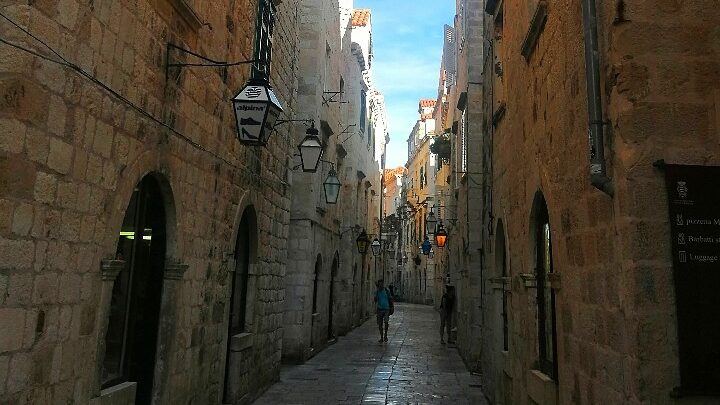
February is one of the most culturally interesting winter months because of the Festivity of St Blaise, Dubrovnik’s patron saint.
St Blaise is everywhere in Dubrovnik once you know where to look.
His image appears above gates and on buildings throughout the historic centre, usually holding a model of the city in his hand.
During summer tours, I often point him out to guests several times before they suddenly start spotting him themselves.
After that, it almost becomes a game:
There he is again.
In February, however, St Blaise is not simply part of an architectural story.
He becomes part of a living tradition.
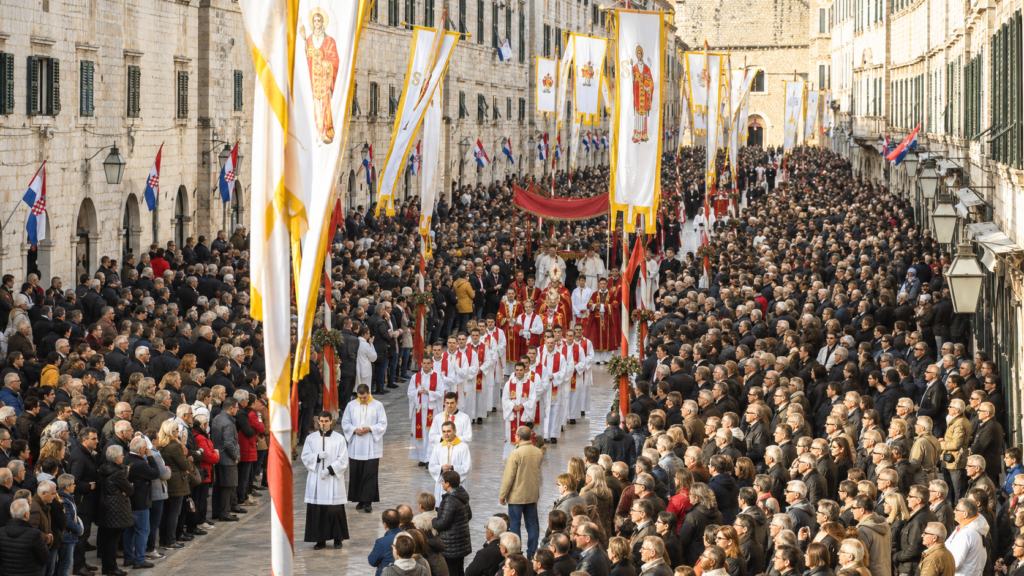
For 2026, the wider Festa Dubrovnik programme runs from January 25 to February 2, leading into the St Blaise celebrations. The main Feast of St Blaise is celebrated on February 3, when a solemn procession through Dubrovnik’s Old Town brings together local families, clergy and visitors in one of the city’s most important annual traditions.
That makes February particularly interesting for travellers who want to see Dubrovnik as a living city rather than simply as a summer destination.
February suits:
- Cultural travellers
- History enthusiasts
- Local traditions
- Quiet couples’ trips
- Photography
For a first-time beach holiday, I would choose another month.
But for someone who wants to understand why Dubrovnik’s identity has survived for centuries, February offers something no weather table can explain.
March in Dubrovnik – The City Starts Waking Up
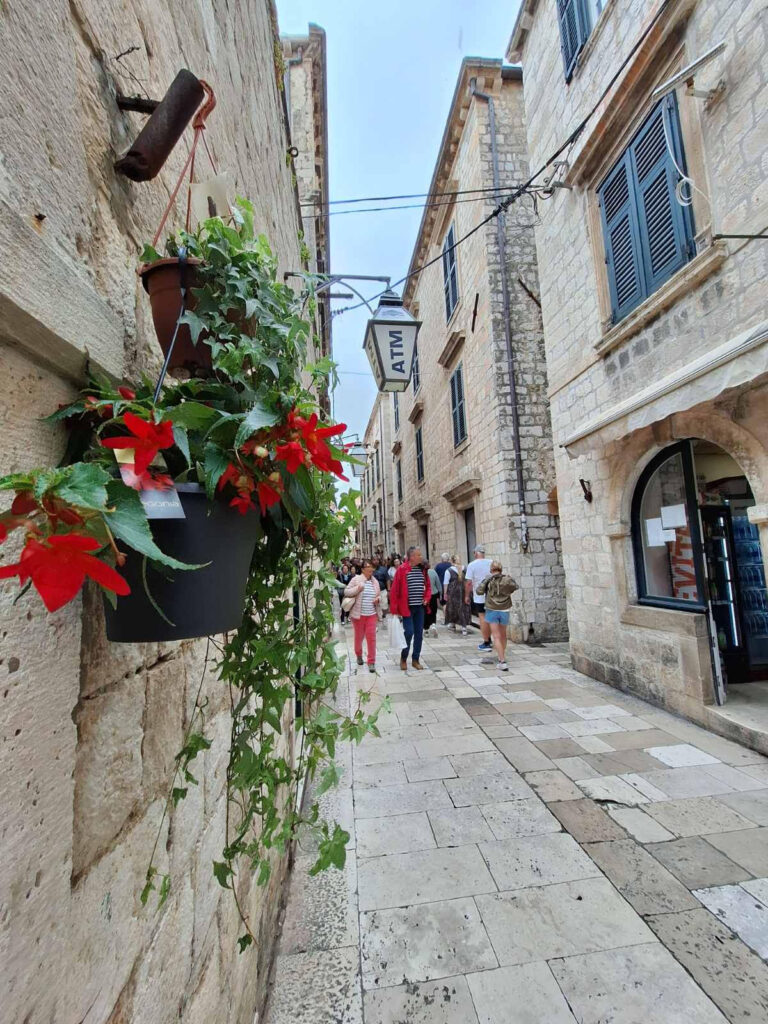
March is transitional.
Winter has not entirely disappeared, but daylight is increasing and Dubrovnik slowly begins preparing for the main visitor season.
On pleasant days, conditions can be very comfortable for walking.
The great advantage is space.
You can explore Stradun, churches, museums and historical streets without constantly thinking about summer heat.
Seasonal operations are still building toward spring, however, so restaurants, boats and excursions may have more limited availability.
Choose March for:
- Old Town sightseeing
- Lower visitor numbers
- Walking
- History and architecture
- Better-value travel
The Adriatic is still cold for most visitors.
Think of March primarily as a sightseeing month rather than the beginning of beach season.
April in Dubrovnik – Spring and Excellent Sightseeing

April is one of the most underrated times of year to visit Dubrovnik.
Spring is clearly underway, days become longer and outdoor terraces start feeling attractive again.
More importantly, walking is comfortable.
That matters more here than visitors sometimes realise.
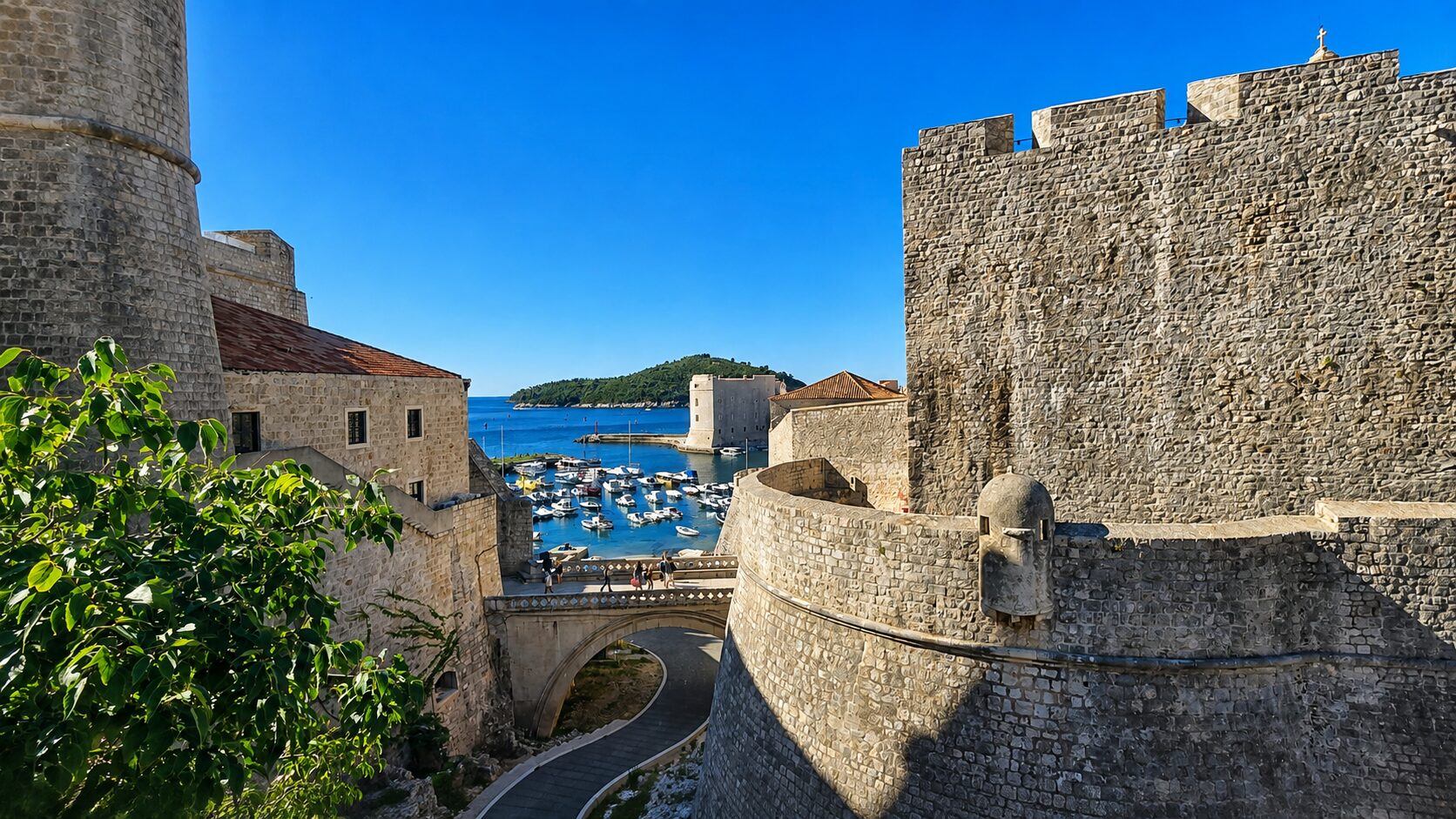
The Old Town is compact, but exploring it properly means stone streets, steps, open squares and often a walk around the City Walls.
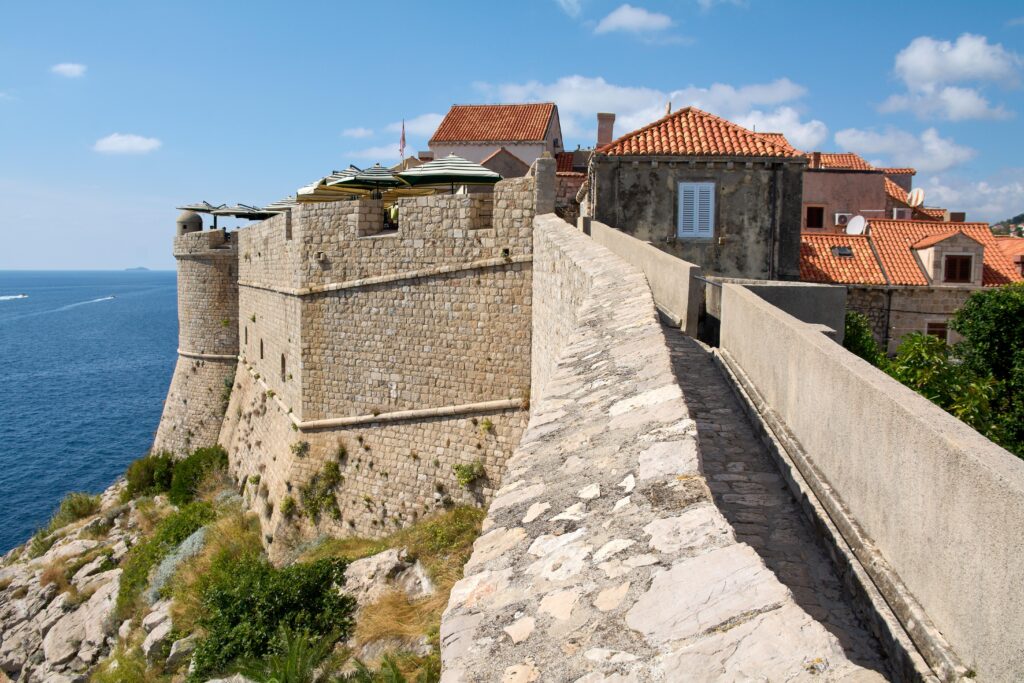
There is very little shade on some sections of the walls.
I have seen guests arrive imagining that the roughly two-kilometre walk around the walls will feel easy because the distance looks short on a map.
In April, it often does.
In the strongest August heat, the exact same route can feel completely different.
April is particularly good for:
- City Walls
- History
- Walking
- Couples
- Cultural trips
- Travellers who dislike strong heat
The sea remains cool for most visitors, so choose April primarily for Dubrovnik itself rather than for a dedicated beach holiday.
If walking the walls is high on your list, read Dubrovnik City Walls for First-Time Visitors before deciding how to include them in your trip.
May – My Top Choice for Sightseeing

If the historic city is the main reason for your trip, May is my top choice.
Most seasonal tourism services are operating by this point, the days are long and conditions are generally much more comfortable for walking than during midsummer.
May’s long-term mean air temperature is around 18.7°C, compared with approximately 25.4°C in August.
That does not mean every May afternoon is cool or every August day is extreme.
But it helps explain why long walks through the Old Town and around the City Walls can feel very different in the two months.
May is also one of my favourite periods for guiding.
There is a practical reason.
In strong summer heat, the weather begins dictating the rhythm of a tour. Guests naturally start looking for shade, water and places to sit.
In May, you have more freedom.
You can stop in front of Sponza Palace for another few minutes. You can wander into a side street because something caught your attention. You can spend longer discussing one detail because somebody asked a good question.
I remember many tours where a guest asked something that took us five or ten minutes away from the original route.
Those spontaneous moments are often the most interesting part of the tour.
May gives you the freedom to have them.
May is ideal for:
- First-time visitors
- Old Town sightseeing
- City Walls
- Couples
- Families interested in history
- Walking
- Photography
- Day trips
The Adriatic can still feel fresh, especially earlier in May.
So if swimming is central to your holiday, June or September is a safer choice.
But if someone tells me:
“We mainly want to see Dubrovnik properly.”
May is usually my answer.
Want to explore the Old Town with a local guide?
My Private Dubrovnik Old Town Walking Tour is a flexible private walk through Dubrovnik’s Republic, landmarks and smaller stories that are easy to miss when exploring alone.
June – City and Sea Before Peak Summer
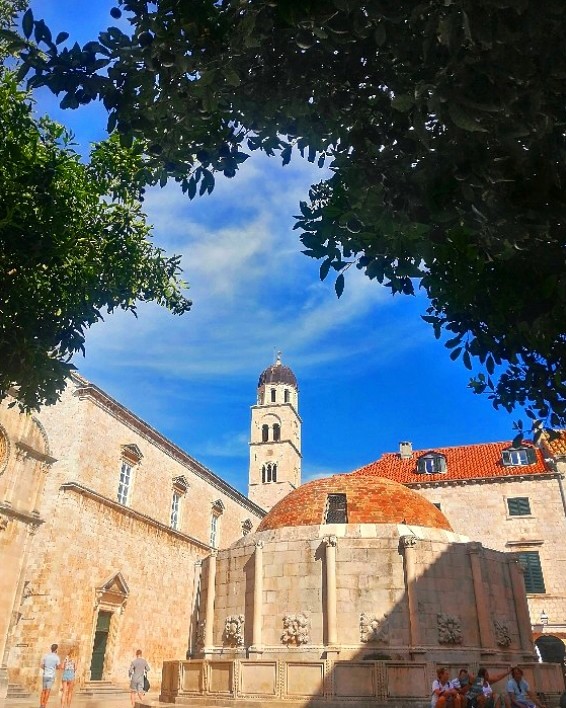
June is when Dubrovnik properly begins to feel like summer.
The sea becomes increasingly comfortable for swimming, days are long and most seasonal tourism services are operating.
For many travellers, June is actually the easiest month to plan.
You do not have to choose between a historical trip and a seaside holiday.
You can do both.
Explore the Old Town, have lunch, swim later in the day, take a boat excursion on another morning and still enjoy long evenings outside.
Visitor numbers increase throughout the month, so I would not call June quiet.
But it often provides a better balance than the height of July and August.
June is excellent for:
- City + beach holidays
- Swimming
- Boat trips
- Family trips
- Couples
- First visits to Croatia
- Longer Dubrovnik stays
When guests tell me they want real summer but not necessarily peak summer, June is one of the first months I suggest.
Families can also use Dubrovnik With Kids: Is Dubrovnik Family Friendly? when deciding how much sightseeing to combine with the sea.
Visiting with children?
A Private Dubrovnik Family Walking Tour lets us adapt the stories, pace and breaks to your family instead of expecting children to follow a standard adult group-tour rhythm.
May vs September: Which Is Better for Dubrovnik?
If your travel dates are flexible, May vs September is one of the most useful Dubrovnik comparisons to make.
I recommend both months frequently, but for very different reasons.
| Choose May if you want… | Choose September if you want… |
| Comfortable sightseeing | Sightseeing + swimming |
| City Walls and long walks | A much warmer Adriatic |
| Spring atmosphere | Late-summer atmosphere |
| More focus on history | More balance between city and sea |
| Less dependence on beaches | Beach and boat days as part of the trip |
Why I prefer May for sightseeing
May gives you more freedom to walk.
That may sound like a small advantage until you remember that Dubrovnik is experienced largely on foot: Stradun, residential streets, stairs, viewpoints, fortresses and the exposed City Walls.
When I am guiding in May, we can stop because someone notices an inscription, asks another question or wants to look inside a courtyard.
In strong summer heat, the weather starts making some of those decisions for you.
Why September wins overall
September has one major advantage May cannot fully match:
the sea has had the entire summer to warm up.
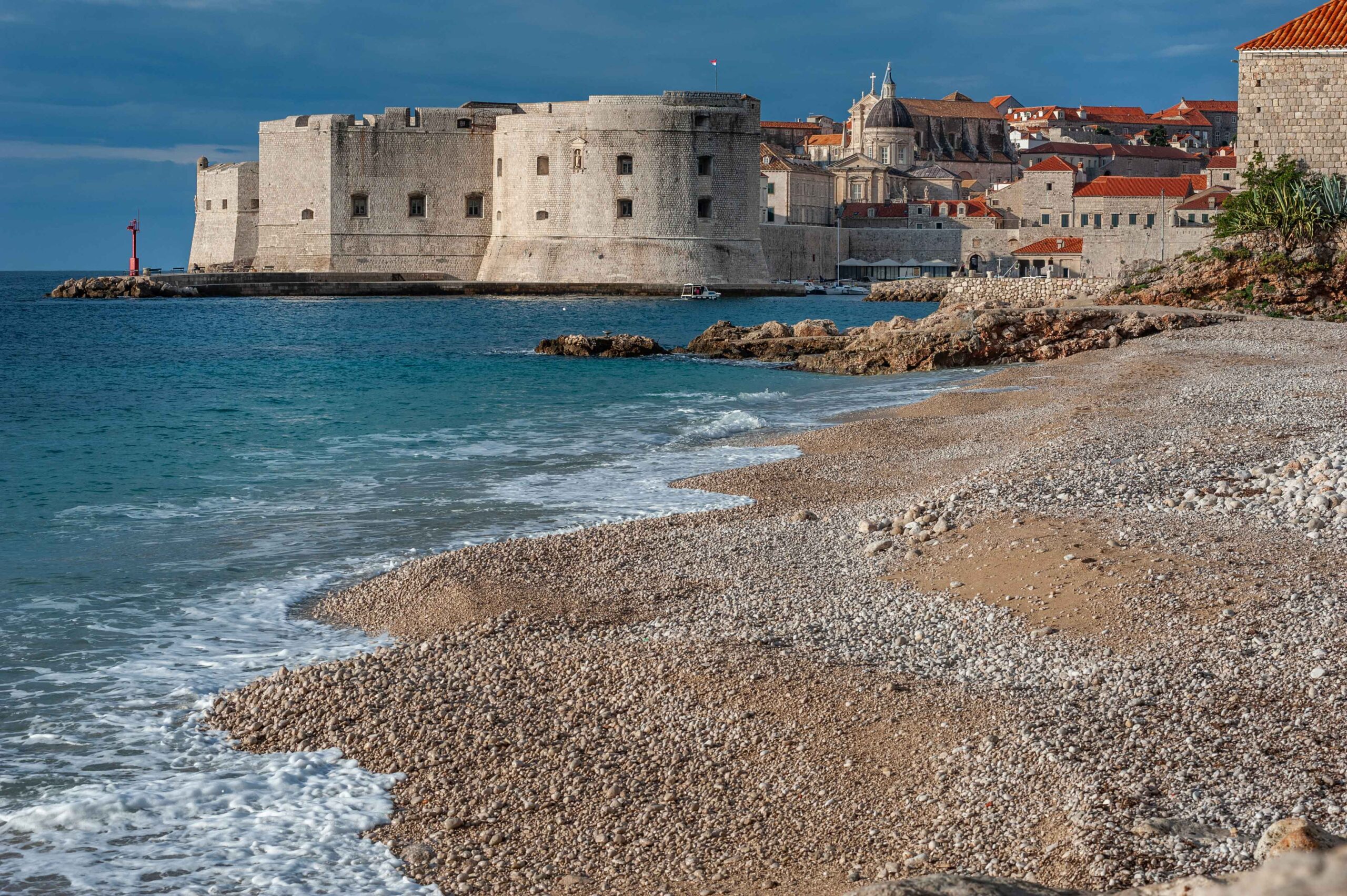
Average sea temperature is around 24°C in September, compared with roughly 19°C in May, so for most visitors the swimming experience is very different.
And this is where one of my favourite descriptions of September comes from:
The sea does not know the school holidays have ended.
The city starts moving away from the intensity of peak summer while the Adriatic is still very much in summer mode.
My verdict
Choose May if Dubrovnik itself is the main reason for your trip.
Choose September if you want the most complete combination of Dubrovnik and the Adriatic.
For first-time visitors who want history, swimming, restaurants, boat trips and warm evenings in the same holiday, September has the advantage.
For travellers who care primarily about the Old Town, City Walls and exploring comfortably on foot, I would choose May.
July in Dubrovnik – Peak Season and Festival Atmosphere

July is Dubrovnik at full energy.
It is hot, busy and unmistakably Mediterranean.
The sea is warm, beaches are active, boat traffic increases and evenings remain lively well after sunset.
In 2026, the Dubrovnik Summer Festival begins on July 10, giving the Old Town another dimension.
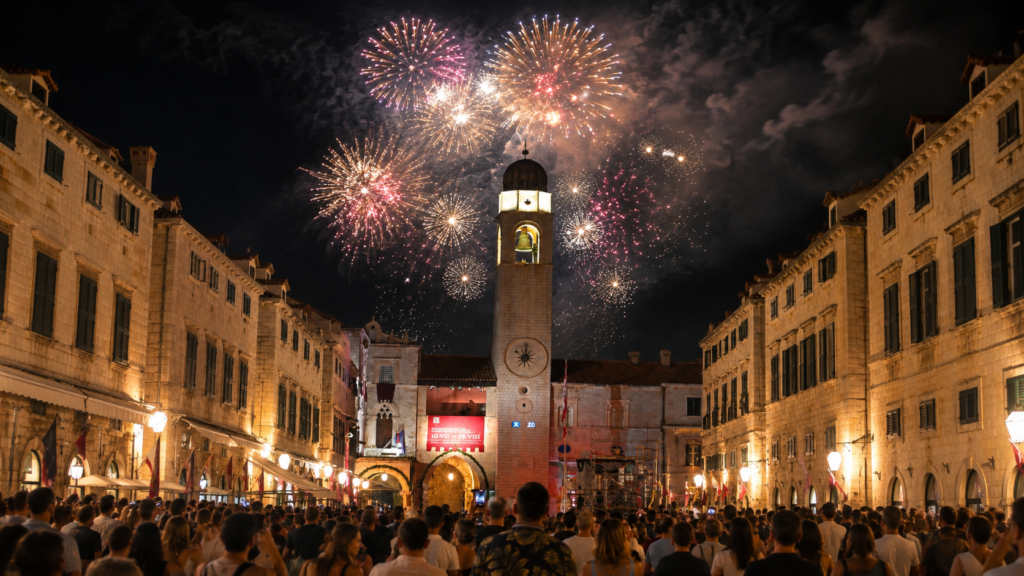
Historic squares, courtyards and fortresses become stages.
That can be magical, particularly if culture is part of the reason you travel.
But July also requires more planning.
A traveller visiting on a relatively light cruise day may have a completely different experience from someone arriving when several large ships are in port.
I see this difference constantly.
You can walk through the Old Town one day and think:
This is busy, but manageable.
Then a few days later, at almost the same hour, the same street can feel completely different.
That is why I would never judge Dubrovnik’s summer crowds by one photograph or one person’s experience.
July works well for:
- Dubrovnik Summer Festival
- Warm sea
- Beaches
- Boat excursions
- Nightlife
- Long evenings
- Travellers who enjoy energy
Think carefully about July if you dislike:
- Strong heat
- Peak-season accommodation prices
- Crowds
- Busy attractions
If crowd levels matter to you, read How to Avoid Crowds in Dubrovnik before arriving.
Cruise visitors should pay particular attention to their individual ship schedule rather than planning purely by month.
Arriving by cruise ship?
A Custom Private Dubrovnik Shore Tour can be planned around your actual docking and departure times, which matters much more in peak season than following a fixed generic itinerary.
August in Dubrovnik – The Classic Adriatic Summer
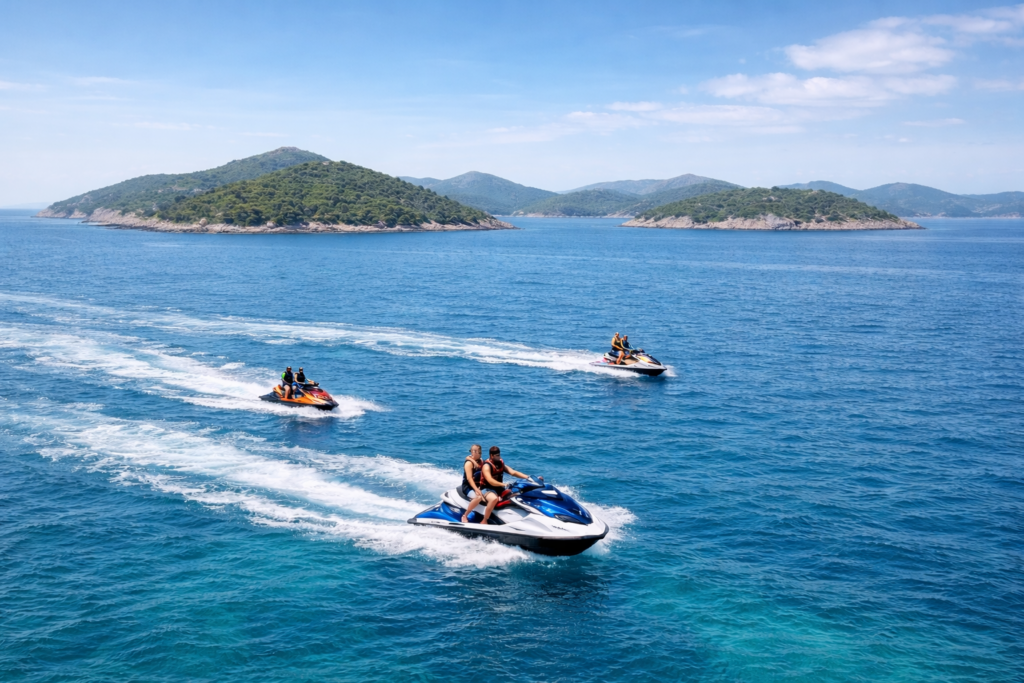
August is the month closest to the image many people have in mind when they imagine Croatia.
Bright sun.
Warm Adriatic water.
Busy beaches.
Boats heading toward the islands.
People dining outside late into the evening.
It can be beautiful.
It can also be demanding.
August is normally among the hottest and busiest periods of the year.
I often notice that visitors plan Dubrovnik as if temperature has no effect on an itinerary.
They want the City Walls, Old Town, viewpoints, museums and a long lunch compressed into one continuous block.
With children in particular, that can become exhausting.
In August, I much prefer dividing the day into different types of experiences.
History followed by swimming works.
Walking followed by lunch works.
Old Town plus several hours by the sea works.
Eight uninterrupted hours of sightseeing usually does not.
August is best for:
- Warm sea
- Beaches
- Boat trips
- Families tied to school holidays
- Island excursions
- Classic Mediterranean summer
If low prices and quiet streets are your priorities, choose another month.
One of the smartest things you can do in August is reconsider what time of day you explore the Old Town.
That is a separate question from choosing the right month, which is why I cover it in Best Time to Visit Dubrovnik Old Town: Morning, Afternoon or Evening?.
September – Best Overall for Most Travellers

For the widest range of travellers, September is my strongest overall recommendation.
The Adriatic has been warming all summer and remains genuinely warm, while most restaurants, boat excursions and seasonal activities are still operating. At the same time, the intensity of the main European holiday period gradually starts to ease.
And the sea does not know the school holidays have ended.
You still have summer.
It simply has softer edges.
That is what I like about September.
You can spend part of the day exploring history, swim later, return for dinner and feel that you have experienced both sides of Dubrovnik rather than choosing between them.
September is also a particularly pleasant month for visiting Dubrovnik’s Game of Thrones filming locations. Places around Pile, the Old Town and Lovrijenac Fortress are all outdoors, so exploring them is much more enjoyable when the strongest summer heat has started to ease.
What I find interesting is that many guests arrive wanting to recognize King’s Landing and end up equally fascinated by the real Dubrovnik behind the scenes. Lovrijenac may be instantly familiar from the series, but its actual history as a fortress protecting the Republic is just as compelling.
If you would like to explore these locations privately, my Game of Thrones Walking Tour combines the best-known filming spots with the real stories behind Dubrovnik.
I also remember doing a tour in Cavtat with a couple on one of those September evenings when nobody wanted the day to end.
We had finished most of what we had planned, but the light over the bay kept changing. Instead of rushing away, they simply stayed for a while, watching the boats and enjoying the late-summer atmosphere.
Those moments are one reason I like September so much.
September is especially good for:
- First-time visitors
- Couples
- Swimming
- Sightseeing
- City Walls
- Game of Thrones locations
- Boat trips
- Longer stays
- Travellers combining Dubrovnik with islands
September is not secret low season, and there can still be busy days.
But for the combination of weather, sea, atmosphere and sightseeing, it is difficult to beat.
Couples planning a September visit may also enjoy my Romantic Things to Do in Dubrovnik for Couples and Best Sunset Spots in Dubrovnik.
October in Dubrovnik – Quieter and Underrated

October sits between summer Dubrovnik and winter Dubrovnik.
That makes it interesting.
Early in the month you can still encounter beautiful, almost summery days.
Later, autumn becomes much more obvious.
The advantage is that visitor pressure drops and walking becomes easier.
If your priorities are culture, food, history and relaxed sightseeing, October can be excellent.
The disadvantage is predictability.
You should not book October expecting guaranteed beach weather.
Swimming may still be possible, particularly during warm periods earlier in the month, but I consider it a bonus rather than something on which to build the entire holiday.
October is particularly good for:
- History
- Culture
- Couples
- Food and wine
- Walking
- Fewer crowds
- Relaxed itineraries
There is something very pleasant about Dubrovnik in October when the sun is still warm enough for an outdoor coffee but the city around you is no longer moving at August speed.
November in Dubrovnik – A Return to Local Rhythm
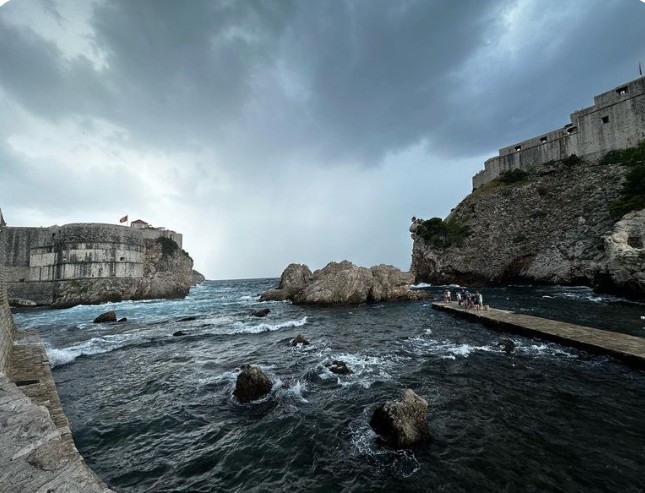
By November, Dubrovnik has clearly entered the quieter part of the year.
Weather is cooler and more variable, and some seasonal businesses reduce hours or close until spring.
This practical limitation is important.
A winter trip should not be planned as though every summer ferry, restaurant or excursion will automatically be available.
What you gain is space.
November is excellent for noticing details.
There is less pressure to move because another group is behind you. You can stand in a square, look at a façade or photograph a street without waiting for dozens of people to pass.
November suits:
- Quiet city breaks
- Architecture
- History
- Photography
- Repeat visitors
- Travellers looking for lower-season rates
Choose November because you want a quieter historical city, not because you expect summer Croatia at a lower price.
December in Dubrovnik – Winter Festival Atmosphere
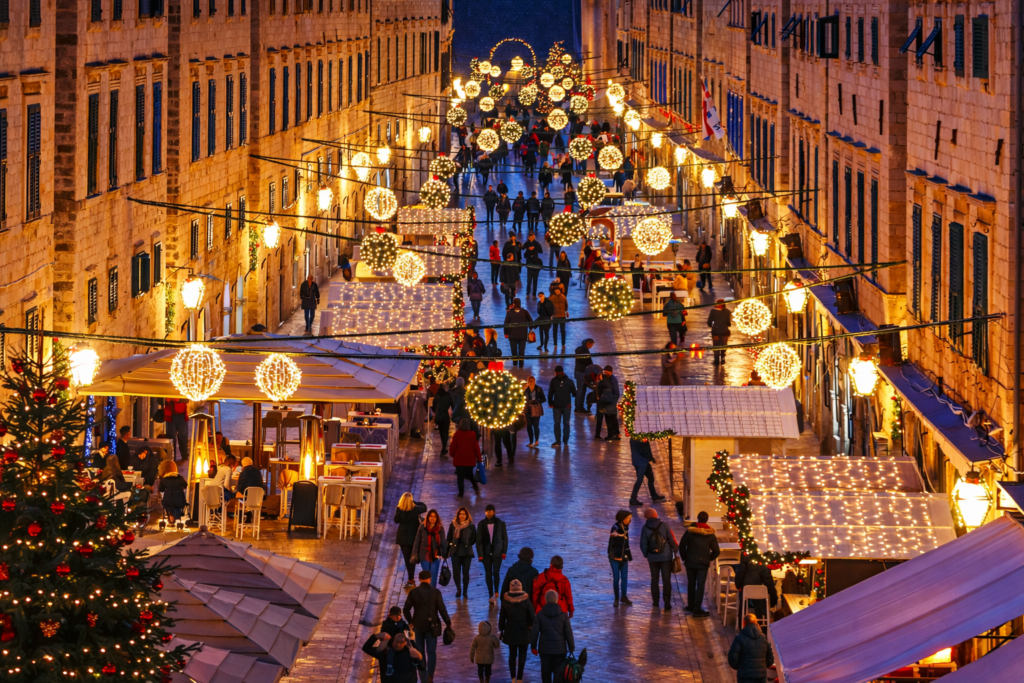
December replaces summer energy with a completely different type of activity.
Dubrovnik’s winter and festive programming brings decorations, seasonal events and local gatherings into the historic centre.
The beaches are no longer the focus.
The city itself is.
For visitors who have previously seen Dubrovnik only in summer, the transformation can be surprising.
Squares that feel intensely busy in August can suddenly become intimate in winter.
Restaurants and other tourism businesses may have more limited opening schedules, so it is worth checking individual places before travelling.
December is good for:
- Winter city breaks
- Couples
- Festive atmosphere
- Culture
- Photography
- Returning visitors
It is not a substitute for a Croatian beach holiday.
It is a different Dubrovnik entirely.
Best Month by Traveller Type
If you do not want to compare all twelve months, this table gives you the simplest answer.
| If you want… | Choose |
| Best overall experience | September |
| Best sightseeing | May |
| City + swimming before peak season | June |
| Warmest sea period | July / August |
| Swimming + sightseeing | September |
| Fewer crowds + pleasant weather | May / late September / October |
| Dubrovnik Summer Festival | July / August |
| Family summer trip | June / September |
| Best chance of lower prices | November–March |
| Christmas atmosphere | December |
| Traditional local culture | February |
Best Time for Swimming in Dubrovnik
If your main priority is water temperature and a classic beach holiday, July and August are the safest choices.
This is when the Adriatic is typically at its warmest.
But the best swimming month and the best overall holiday month are not necessarily the same thing.
Warmest sea
July and August
Choose these if swimming and beach time dominate your itinerary.
Best swimming + sightseeing combination
September
The sea remains warm, while sightseeing usually becomes easier as peak summer starts to soften.
Best early-summer compromise
June
The Adriatic becomes increasingly comfortable while you avoid some of the intensity associated with late July and August.
May can produce lovely beach days, but the water may still feel cool to many visitors.
October can also surprise you with excellent conditions, particularly earlier in the month, but it is less predictable.
Best Time of Year for Dubrovnik Sightseeing
For sightseeing, my answer is May.
April, late September and October are also excellent.
The reason has less to do with one temperature statistic and more to do with how Dubrovnik is physically experienced.
This is a walking city.
Even if you never take a formal tour, you will spend a lot of time on your feet.
The City Walls add exposed sections, slopes and stairs.
That is why weather that feels “nice enough” while sitting beside a hotel pool can feel completely different after two hours of walking over stone.
My sightseeing ranking:
- May
- Late September
- April
- October
- June
For a trip built primarily around history and architecture, I would take May over August every time.
When Is Dubrovnik Least Crowded?
If you want Dubrovnik at its quietest, November through March is generally the best period.
But most travellers asking about crowds also want pleasant weather.
In that case, the more useful options are:
- April
- May
- Late September
- October
Even then, no month guarantees an empty Old Town.
Cruise schedules, holidays, events and weather can change the feel of individual days considerably.
That is why I separate the two questions.
This guide helps you choose which month to visit.
My guide to avoiding crowds in Dubrovnik explains how to structure individual days once you are here.
When Is Dubrovnik Cheapest?
Your best chance of finding lower accommodation prices is generally during the quieter period from November through March, although Christmas, New Year, special events and individual properties can affect prices.
But I would not choose a month based on room price alone.
Winter brings compromises:
- Fewer seasonal restaurants
- Reduced excursion schedules
- Less frequent tourism services
- Cooler and less predictable weather
- Limited beach and island activities
For travellers interested in value rather than simply the absolute lowest price, I would also investigate:
- Late April
- May
- October
These periods can provide a better balance between price and having access to the experiences that brought you to Dubrovnik in the first place.
For a more detailed look at costs, see Is Dubrovnik Expensive in 2026? Real Prices, Daily Budgets & Smart Local Tips.
Best Season to Visit Dubrovnik
Spring: March to May
Spring becomes progressively better as the season develops.
March is transitional, April is excellent for walking, and May is one of the strongest months of the year.
Best for: sightseeing, history, walking and couples.
Summer: June to August
Summer is Dubrovnik at maximum activity.
Swimming, boats, restaurants, beaches, events and long evenings dominate the experience.
June is the most balanced.
July and August bring peak summer.
Best for: sea, beaches, family trips, boating and nightlife.
Autumn: September to November
September remains strongly summery.
October becomes calmer and more variable.
November marks the return of low season.
Best for: September all-round travel and October cultural trips.
Winter: December to February
Winter Dubrovnik is quieter, more local and less tourism-focused.
The compromise is reduced seasonal availability.
Best for: photography, culture, city breaks and returning visitors.
Which Month Should You Choose?
Still unsure?
Here is how I would decide.
Choose May if…
You mainly want Dubrovnik the historic city.
Think City Walls, Old Town streets, palaces, churches, viewpoints and comfortable walking.
Choose June if…
You want the city and the Adriatic in roughly equal measure, with proper summer conditions before the absolute peak.
Choose July if…
You actively enjoy festivals, energy, warm evenings and full summer atmosphere.
Choose August if…
Your holiday is mainly about swimming, boating, beaches and Mediterranean summer.
Choose September if…
You want a little of everything.
History, swimming, restaurants, boats, warm evenings and a slightly softer version of peak summer.
Choose October if…
You prefer culture, food, relaxed walking and fewer visitors and are willing to accept more variable weather.
Choose November to March if…
You care more about local atmosphere, history and quiet streets than beaches and seasonal excursions.
Frequently Asked Questions
What is the best month to visit Dubrovnik?
For most travellers, September is the best month to visit Dubrovnik overall because the sea remains warm, most summer tourism services are still operating and the city gradually becomes less intense than during peak summer.
For sightseeing specifically, I prefer May.
Is May or September better for Dubrovnik?
Choose May if history, walking and sightseeing are your main priorities.
Choose September if you want sightseeing plus swimming.
For the broadest first-time Dubrovnik experience, I would choose September.
Is June a good time to visit Dubrovnik?
Yes.
June is one of the best times of year for travellers who want warm weather, swimming and sightseeing without deliberately choosing the busiest part of peak summer.
Visitor numbers still increase considerably as the month progresses.
Is Dubrovnik too crowded in July and August?
It can be very busy, particularly on certain cruise-ship days and around major attractions.
But crowd levels vary significantly by date and time.
July and August remain excellent choices for travellers who value summer atmosphere, warm sea and events more than quiet streets.
Is September a good time to visit Dubrovnik?
Yes.
September is my strongest all-round recommendation.
The Adriatic remains warm, most summer activities are still operating and the city usually becomes easier as the month progresses.
Can you swim in Dubrovnik in October?
Sometimes.
Warm periods, especially earlier in October, can still provide excellent swimming conditions.
But October is less reliable than September, so I would not choose it if swimming every day is essential.
When is Dubrovnik least crowded?
Dubrovnik is generally quietest from November through March.
For a better balance of pleasant weather and fewer visitors, consider April, May, late September or October.
When is Dubrovnik most expensive?
July and August usually bring the strongest accommodation demand.
Prices vary by property, event dates and booking timing, but peak summer is generally the period when travellers should expect the least flexibility.
Is Dubrovnik worth visiting in winter?
Yes, if you want history, architecture, culture and local atmosphere.
Winter is not the right choice if your priorities are beaches, island hopping and a wide range of seasonal excursions.
My Local Recommendation
After seeing Dubrovnik through every month of the year, I would not reduce the answer to one supposedly perfect month.
Instead, I would remember three.
September is the best overall choice for most first-time visitors.
You still have a warm Adriatic, summer atmosphere, boat trips and outdoor evenings, while the peak holiday season has started to soften.
May is better if Dubrovnik itself is the priority.
For the Old Town, City Walls, history, photography and long days of walking, it is my favourite.
June is the middle ground.
It gives you proper summer conditions and increasingly comfortable swimming without deliberately choosing the height of July or August.
So if your dates are completely flexible, ask yourself one question:
Am I coming mainly for the historic city, mainly for the Adriatic, or for both?
- Historic city → May
- City + sea before peak summer → June
- Best overall city + sea experience → September
- Full peak-summer Croatia → July or August
- Quieter cultural trip → October
That is a much more useful way to choose when to visit Dubrovnik than simply looking for the hottest month.
Once you have decided when to come, the next question is usually how long to stay. My How Many Days Do You Need in Dubrovnik? guide compares shorter and longer stays.
And if you would like to experience the city privately with a local guide, you can browse my private tours in Dubrovnik, including Old Town, family, Game of Thrones, romantic, early-morning and sunset experiences.