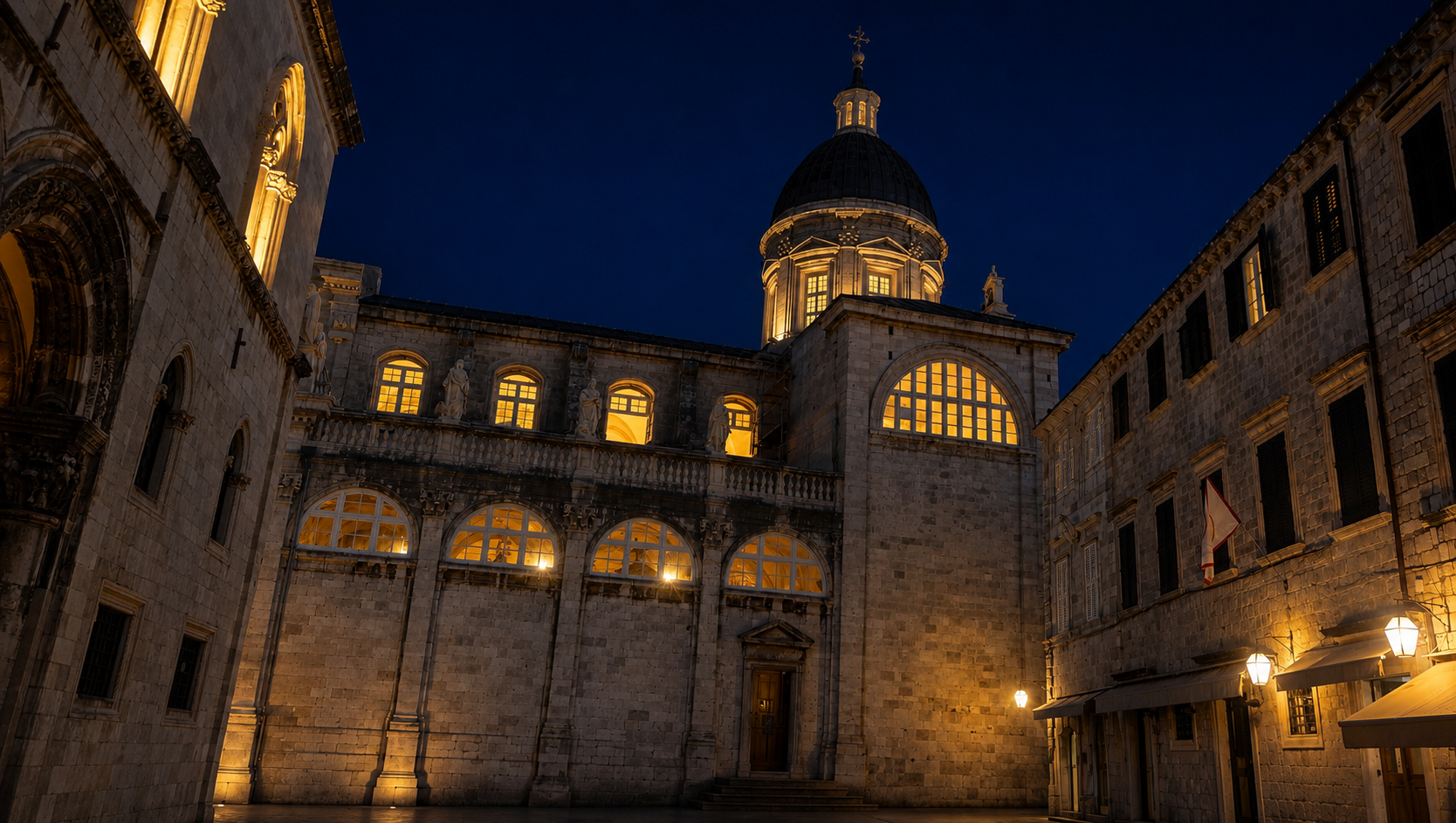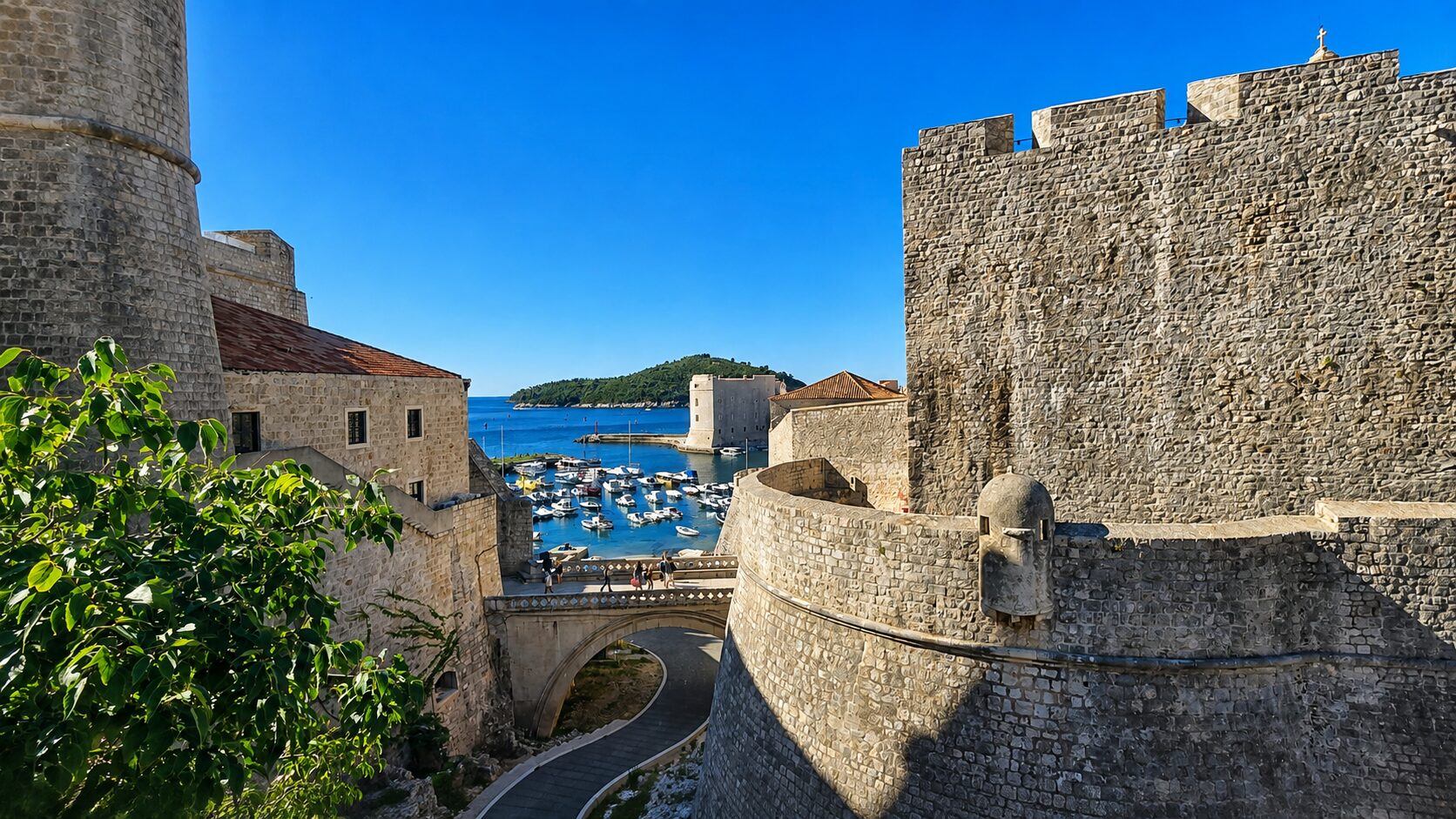
Dubrovnik with kids is generally a very good choice for families. As a local Dubrovnik guide who regularly welcomes parents and children, I have learned that the best family visits are not the ones that include the most sights, but the ones where children become curious about the city.
They rarely remember the longest historical explanation. They remember discovering a hidden staircase, looking through an ancient gate, watching boats in the Old Port or imagining themselves as explorers inside a real fortress.
The pedestrian Old Town is compact and many of the main sights are close together, but parents should also plan for steps, polished stone streets, summer heat and busy cruise-ship periods.
A relaxed Old Town walk, stories adapted to the children’s ages and time for swimming, play or ice cream usually work much better than trying to visit every major attraction in one day.
Quick Answer: Is Dubrovnik Family Friendly?
Yes, Dubrovnik is family friendly for children who enjoy walking, exploring and discovering history. The central Old Town is compact and closed to regular vehicle traffic, but families should be prepared for stairs, heat and crowds during the busiest periods.
| Family travel question | Quick answer |
|---|---|
| Best ages | Particularly enjoyable from around age five, although toddlers can visit with a suitable route |
| Best months | April to June and September to October |
| Best summer time | Early morning or later afternoon |
| Ideal stay | Two or three days |
| Biggest challenges | Heat, steps and crowds |
| Best nearby swim | Banje Beach |
| Best local family beach | Mandrač Beach |
| Best family excursion | Lokrum Island |
| Best for teenagers | Kayaking, City Walls and panoramic viewpoints |
Planning Dubrovnik with kids is easiest when families balance sightseeing with swimming, breaks and activities suited to their children’s energy levels.
Dubrovnik is not a traditional family resort built around amusement parks. Its appeal comes from discovering a real fortified city, exploring hidden streets, watching boats in the Old Port and turning history into an adventure.
Is Dubrovnik Good for Kids?
The main part of Dubrovnik’s Old Town is relatively easy to explore. Stradun, the central street, is wide and mostly level, while Onofrio’s Fountain, Luža Square, the Rector’s Palace, the Cathedral and the Old Port are all within a short walking distance.
Regular vehicle traffic is not permitted inside the historic centre, which makes it easier for families to move between the main sights. However, Pile Gate, Stradun and the central squares can become crowded when large groups arrive, so younger children should remain close to their parents.
The city becomes more demanding away from the central streets. Residential areas contain many staircases, the limestone pavement can be slippery, and neither the City Walls nor Fort Lovrijenac can be visited with a stroller.
For most families, the challenge is not the size of the Old Town but combining walking with heat, steps and busy visitor periods.
Parents who would like a broader practical overview can also read Is Dubrovnik Safe? A Local Guide for Visitors.
Best Things to Do in Dubrovnik With Kids
Explore the Old Town at a Family-Friendly Pace
The Old Town is the natural starting point for most families. Children can see fountains, palaces, churches, fortifications and the historic harbour without travelling between distant locations.
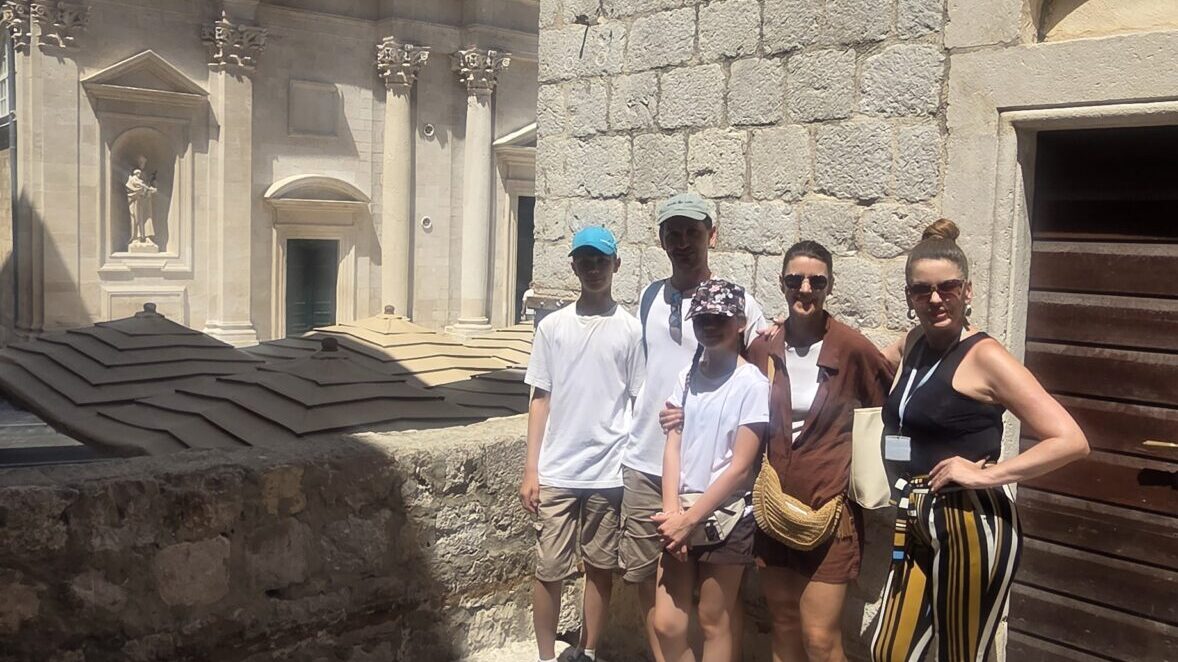
A family visit should not become a shortened adult history lecture. Children usually respond better when stories are connected to questions they understand:
- How did people get drinking water inside the walls?
- What happened when the city gates closed at night?
- How were ships protected?
- Where did children live and play?
- Why are animals and faces carved into buildings?
- How did a small city protect itself from stronger neighbours?
These questions turn Dubrovnik into a place to investigate rather than a series of monuments children are expected to admire.
Stradun is usually the easiest place to begin. It is broad, mostly level and connects many of the Old Town’s most important sights. Families who would like to understand what they are seeing can read my local guide to Stradun.
For younger children, approximately 60 to 90 minutes may be enough. School-age children and teenagers can usually enjoy a longer route when the stories are interactive and there is time for questions and photographs.
Families who would like the route and storytelling adapted specifically to their children can explore the Dubrovnik Family Walking Tour.
Walk the Dubrovnik City Walls
The City Walls can be one of the most exciting experiences for school-age children and teenagers. The route includes lookout towers, cannons, rooftops, sea views and the feeling of walking around a real fortified city.
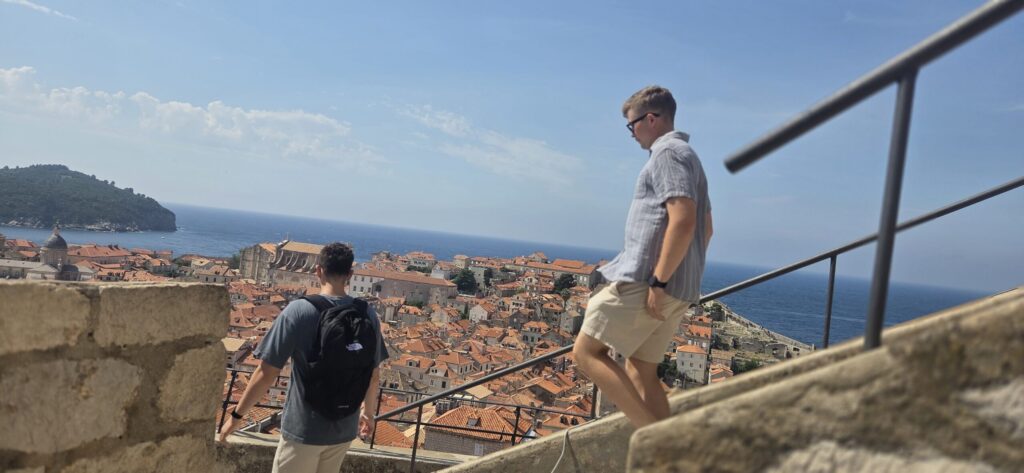
The full circuit generally takes between one and two hours, depending on stops. There are numerous staircases and long exposed sections with limited shade.
The walls are not suitable for strollers and may be too demanding for toddlers or children who are already tired. During July and August, an early start or later afternoon visit is generally more comfortable.
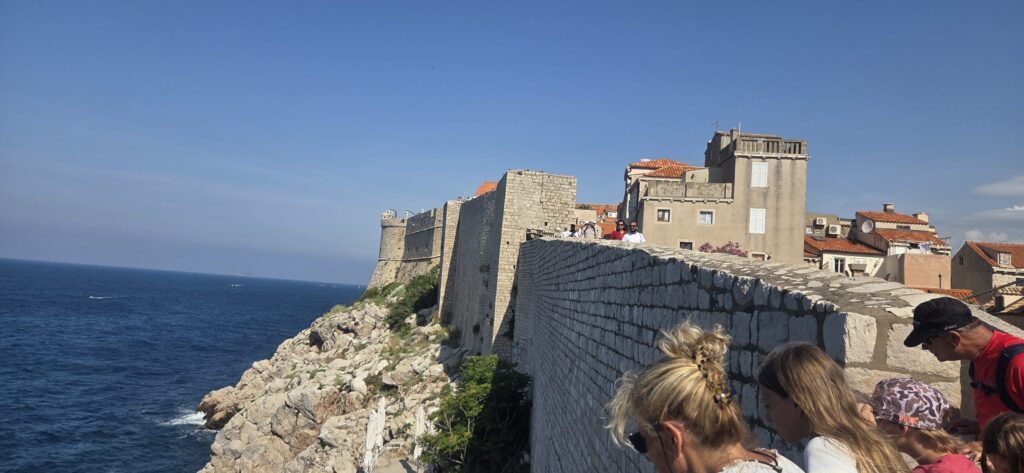
For entrances, walking time and practical preparation, see my Dubrovnik City Walls guide for first-time visitors.
Explore Fort Lovrijenac
Fort Lovrijenac often appeals to children because it feels like a real castle.
The fortress stands on a high rock outside the western side of the Old Town and offers dramatic views towards the City Walls and the small bay below.
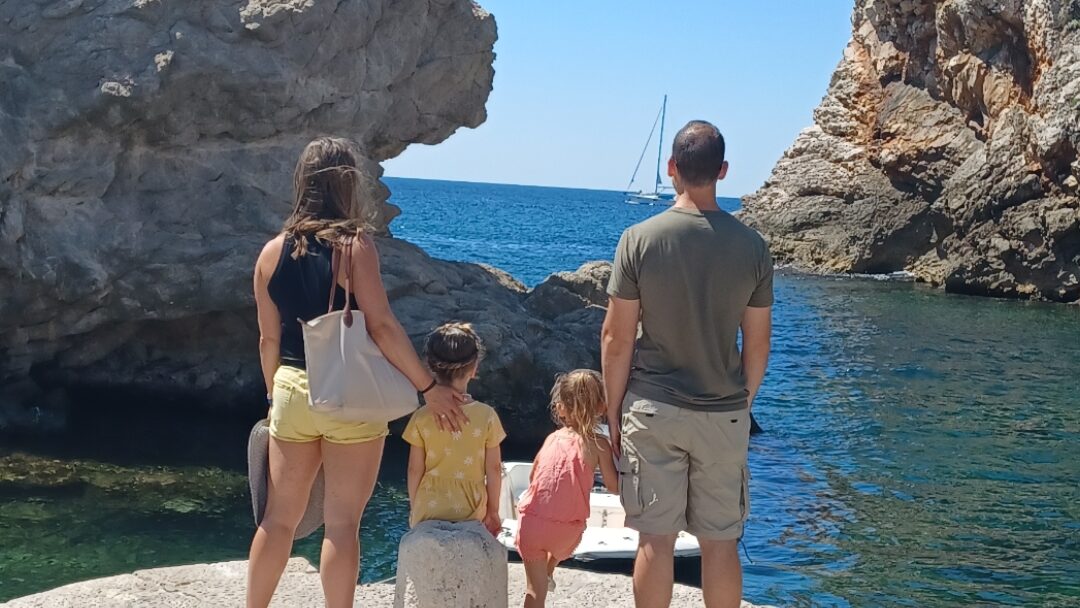
Children can imagine guards, ships and attacks while exploring its terraces and stone passages. Older children and teenagers may also recognise it as an important Game of Thrones filming location.
There are many steps leading to the entrance, so it is not suitable for strollers. It can nevertheless be a good alternative for families who want a shorter fortress experience instead of completing the entire City Walls circuit.
Visit the Old Port
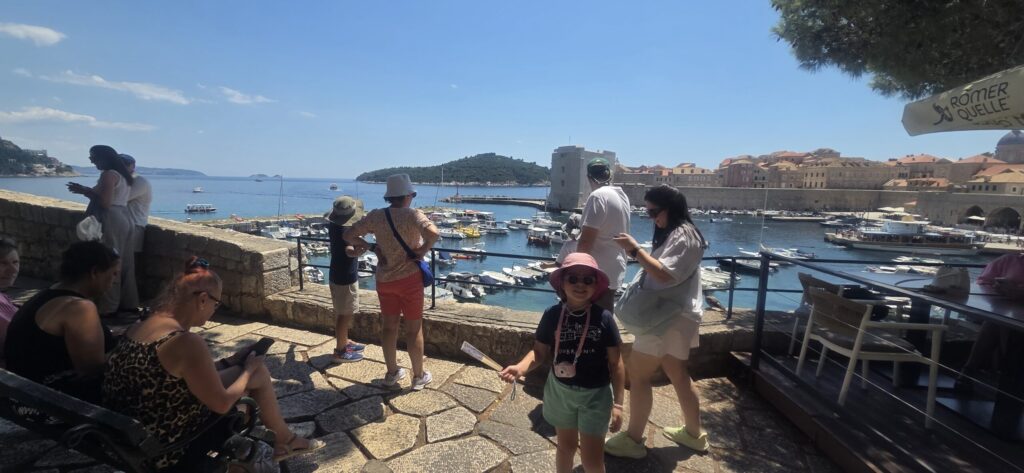
The Old Port is one of the easiest places to make Dubrovnik’s maritime history feel real.
Children can watch excursion boats arrive and depart, look back towards the walls and imagine the merchant ships that once connected Dubrovnik with other Mediterranean ports.
It is also the departure point for boats to Lokrum, making it easy to combine an Old Town walk with an island visit.
Take a Boat to Lokrum Island
Lokrum is one of my favourite recommendations for families after a morning in the Old Town. The short boat journey creates an immediate change of atmosphere, moving from stone streets to trees, shaded pathways and the sea.
During a recent family visit, the children were fascinated by the island’s peacocks. While adults often focus on the monastery, gardens and scenery, children frequently connect with smaller discoveries—an animal, a hidden path or a place where they can explore freely.
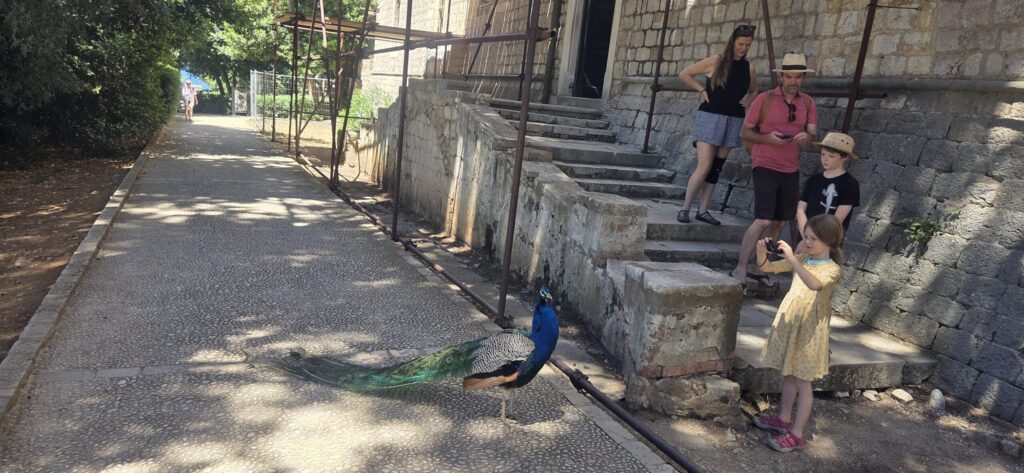
Lokrum also offers monastery ruins and several places for swimming. Most swimming areas are rocky, so water shoes are useful.
Families should bring drinking water, keep food securely packed around the animals and check the return boat schedule before exploring farther from the harbour.
My local guide to Lokrum Island includes more practical information about swimming and planning the visit.
Swim at Banje Beach—or Choose a More Local Family Beach
Banje Beach is the most convenient choice for families who want to swim immediately after visiting the Old Town.
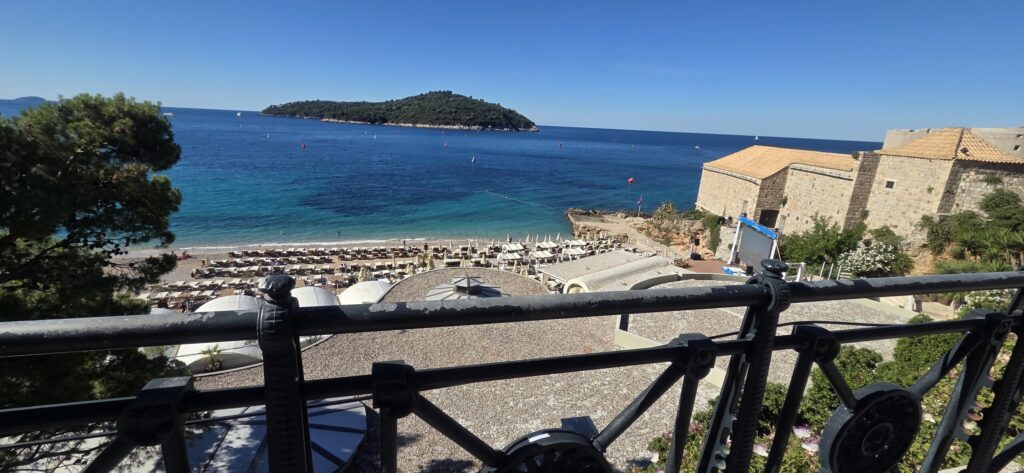
It is located just outside Ploče Gate and can be reached on foot. This makes it easy to combine a morning walking tour with lunch and an afternoon by the sea.
The beach is pebbly, and families need to use steps to reach it. Water shoes can be helpful for younger children. Banje offers a beautiful view of the City Walls and Lokrum, although it can become crowded during the busiest summer weeks.
Families staying longer may prefer the beaches around Lapad and Babin Kuk, where the atmosphere is more residential and it is easier to plan a slower afternoon.
One practical local option that many visitors overlook is Mandrač Beach, in the Solitudo and Babin Kuk area.
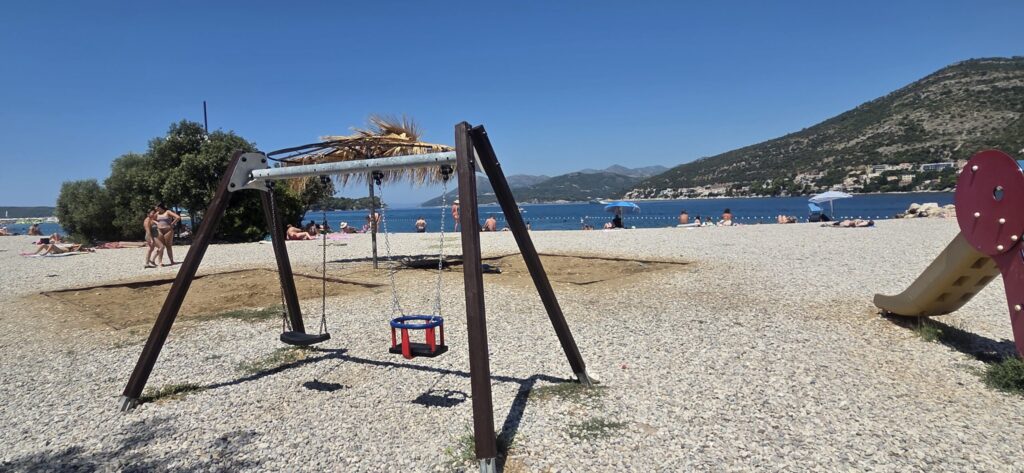
Mandrač is popular with local families and has a small children’s playground beside the beach. There is also a sandpit with fine sand where children can dig and play between swims—something that is not common on Dubrovnik’s mainly pebbly and rocky beaches.
Children can alternate between swimming and playing without the family needing to move to another location, making Mandrač a practical choice for younger children.
Best Family Beaches at a Glance
| Beach | Best for | What families should know |
|---|---|---|
| Banje Beach | Swimming after visiting the Old Town | Beautiful views, but steps and summer crowds |
| Mandrač Beach | Younger children and local family time | Playground and sandpit beside the beach |
| Lapad beaches | Families staying several days | Promenade, cafés and useful facilities |
| Copacabana Beach | A longer beach afternoon | Farther from the Old Town |
| Lokrum swimming spots | Combining swimming with an island visit | Mostly rocky access; water shoes are useful |
Families can compare these and other options in my guide to the best beaches in Dubrovnik for families.
Take the Cable Car or Choose a Panoramic Drive
Seeing Dubrovnik from above can be one of the most memorable parts of a family visit.
The cable car offers an exciting short ride and a famous view from Mount Srđ. A private panoramic drive provides several viewpoints, private transportation and greater flexibility for photographs and breaks.
The cable car may appeal more to children who enjoy the ride itself, while a panoramic drive can be easier for toddlers, multigenerational families and cruise guests with limited time.
Try Kayaking With Older Children
Kayaking offers older children and teenagers a completely different perspective of Dubrovnik.
From the sea, they can see the City Walls as sailors once saw them when approaching the city. The activity combines movement, scenery and adventure.
Minimum-age requirements vary between operators, so parents should check the conditions before booking. Swimming confidence, sea conditions and strong summer sun also need to be considered.
Leave Time for Ice Cream and Free Exploration
Not every part of a family day needs to be organised.

Children may remember choosing an ice cream, watching boats or deciding which narrow street to explore more clearly than a formal monument visit.
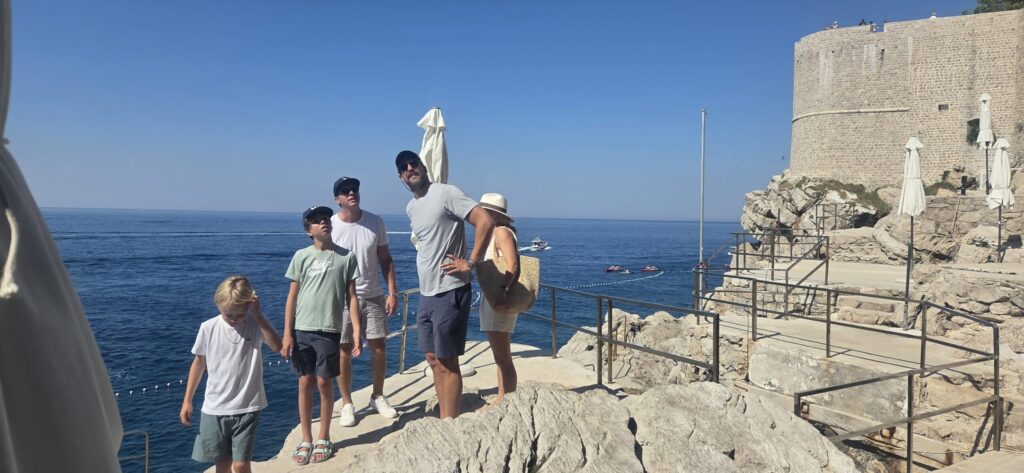
Unplanned time also allows parents to respond to heat, tiredness or a child becoming unexpectedly interested in one particular place.
Notice the Cats and Pigeons of the Old Town
Children often notice Dubrovnik’s cats and pigeons long before they become interested in its architecture.
Cats can be seen resting on warm stone steps, hiding in shaded doorways or sitting beside restaurant terraces as if they belong there. Many streets, shops and restaurants seem to have “their” own familiar cat, recognised by local staff and regular visitors.
During one recent family tour, we were passing Ciao restaurant when the children stopped to look at the cat that is often seen outside. We paused and took a photograph, and that small encounter became one of the most enjoyable moments of the walk.
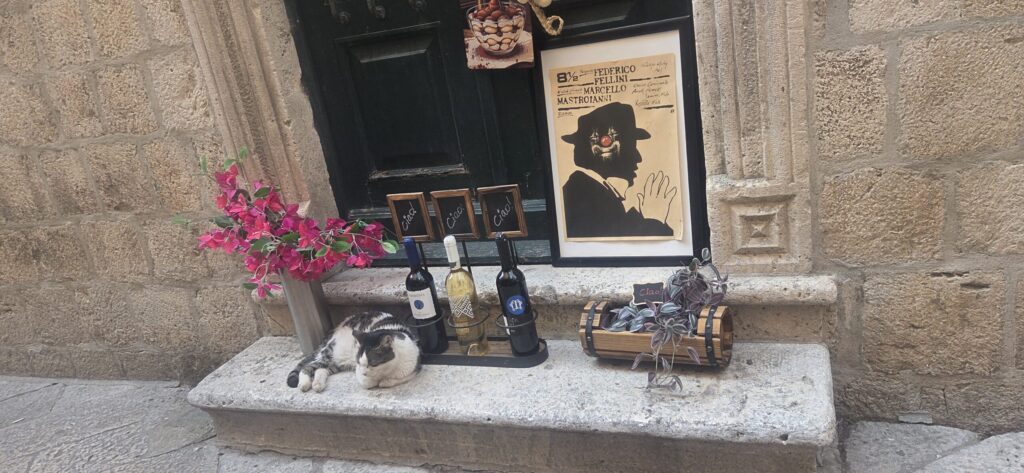
Pigeons are also part of everyday Old Town life, particularly around squares, fountains and quieter courtyards. For younger children, noticing the animals can provide a welcome break between historical stories and monuments.

These moments may seem small, but they help children experience Dubrovnik as a living city rather than only a collection of famous buildings. Children should be encouraged to observe the animals calmly rather than chase or feed them.
Dubrovnik With Toddlers and Strollers
A stroller works reasonably well in the flatter central area of the Old Town, including:
- Stradun
- Luža Square
- the Rector’s Palace area
- the Cathedral
- Gundulić Square
- the Old Port
- several lower connecting streets
It becomes difficult in the residential areas above and below Stradun, where staircases are common. A stroller cannot be used on the City Walls or at Fort Lovrijenac.
A lightweight stroller is generally easier than a large travel system. A baby carrier may help in stepped streets, although carrying a child can become uncomfortable in summer heat.
For toddlers, plan one main cultural activity followed by something easier, such as a playground, lunch, swimming or a boat ride.
The Playground Near Pile Gate
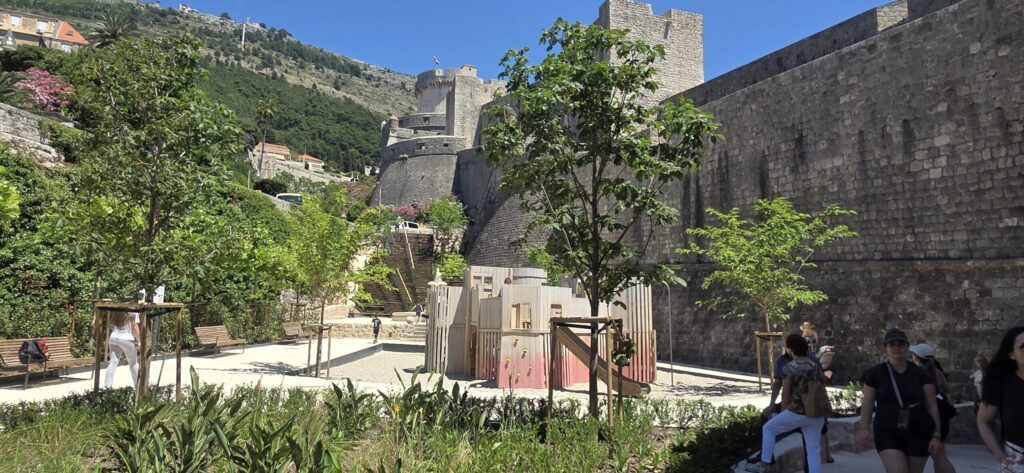
There is a small children’s playground in the park outside the Old Town, on the left-hand side when walking away from Pile Gate.
It can be useful before a tour when children need to release some energy or afterwards while adults rest nearby. There are no large public playgrounds inside the historic centre itself.
What I Would Skip With Young Children
With toddlers or very young children, I would avoid combining the complete City Walls circuit, Fort Lovrijenac and a long Old Town walk on the same hot summer day.
Choose one main historical experience and follow it with something lighter, such as swimming, a playground, ice cream, a boat ride or time watching boats in the Old Port.
Common Mistakes Families Make in Dubrovnik
Even well-planned family visits can become tiring when too much is included in one day.
The most common mistakes I see are:
- starting the City Walls close to midday in summer
- combining the complete walls, Fort Lovrijenac and a long Old Town tour
- booking accommodation without checking how many steps lead to it
- assuming Dubrovnik’s beaches are sandy
- forgetting water shoes
- planning every hour without leaving time for rest
- choosing activities based only on what adults want to see
A family day generally works better when one main sightseeing experience is combined with one relaxed activity.
What to Bring When Visiting Dubrovnik With Kids
Bring:
- comfortable shoes with good grip
- refillable water bottles
- sun hats and sunscreen
- water shoes for pebbly or rocky beaches
- a lightweight stroller or carrier
- simple snacks
- swimwear
- a light change of clothes for younger children
During summer, water, shade and suitable footwear matter more than packing for every possible activity.
Dubrovnik With Older Children and Teenagers
School-age children are often at an ideal stage for exploring Dubrovnik. They are old enough to follow a story but still young enough to become excited by castles, ships, legends and hidden passages.
Subjects that often work well include:
- life inside a walled city
- ships and maritime trade
- earthquakes and rebuilding
- spies and diplomacy
- punishments and unusual laws
- the closing of the city gates
- how water reached the city
Teenagers often prefer a mixture of sightseeing and activity. Good options include kayaking, the City Walls, swimming, Lokrum, Game of Thrones locations, photography and some independent time around Stradun.
They may not want every minute organised. Allowing time for photographs, shopping or a drink can make the entire family visit more relaxed.
Exploring Dubrovnik’s Hidden Streets Like an Adventure
During one of my recent family tours, we moved away from Stradun and entered quieter residential streets and narrow passages.
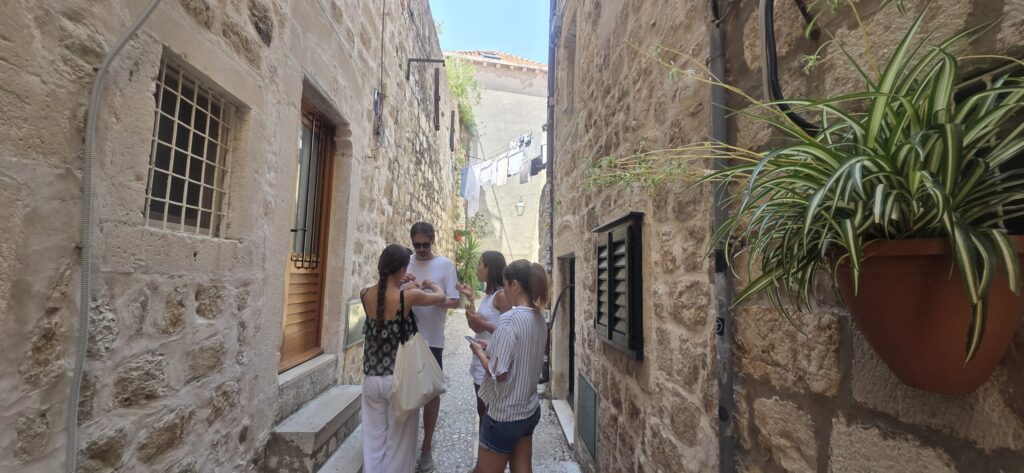
The children began to treat the walk as an adventure. They wanted to know where each staircase led, looked for unusual details on houses and imagined who had once lived behind the stone façades.
This is often when Dubrovnik becomes most memorable for younger visitors.
Adults may arrive focused on important buildings and historical names. Children can connect more strongly with an unusual doorway, a stone animal, a hidden courtyard or a narrow lane they have chosen themselves.
That curiosity is not a distraction from the experience. It is one of the best ways for children to discover the Old Town.
Families who enjoy discovering quieter corners beyond Stradun can continue with my local guide to Dubrovnik’s hidden streets.
The Hidden Lesson of Dubrovnik: The Republic of Ragusa
One of Dubrovnik’s most interesting family stories is the history of the former Republic of Ragusa.
For centuries, this small maritime republic survived beside much larger neighbours. It did not rely only on walls and weapons. It also used diplomacy, trade and careful negotiation.
This can be introduced to children through one memorable question:
How do you solve problems without fighting?
Standing near the Rector’s Palace, families can discuss how the city was governed. At the Old Port, children can imagine merchants arriving with goods and information from across the Mediterranean.
They do not need to memorise political dates to understand that a small community can survive through intelligence, rules and cooperation.
When Is the Best Time to Visit Dubrovnik With Kids?
Best Time of Year
April, May, early June, late September and October are generally comfortable periods for family sightseeing.
July and August remain popular for families combining Dubrovnik with a beach holiday, but sightseeing should be arranged around the heat.
Best Time of Day
In summer, early morning is generally the easiest time to explore Dubrovnik with children.
The streets are cooler, children often have more energy and the largest visitor groups may not yet have arrived. Stradun is calmer, the stone has not absorbed the strongest heat, and children have more space to look around.
Families visiting during warmer months may find my guide to exploring Dubrovnik Old Town early in the morning useful.
Later afternoon can also work well, particularly when followed by dinner, swimming or an evening walk.
Cruise Ship Crowds
When several cruise ships or organised groups arrive at similar times, Pile Gate, Stradun and the central squares can become crowded.
Families benefit from visiting early, later in the afternoon or using quieter residential streets during the busiest periods.
How Many Days Do You Need in Dubrovnik With Kids?
One Day
One day is enough to see the main Old Town highlights and include one additional activity.
A realistic combination might be:
- Old Town and Banje Beach
- Old Town and Lokrum
- Old Town and a panoramic drive
- Old Town and the City Walls
Two Days
Two days allow a more comfortable pace. The first can focus on the Old Town, Fort Lovrijenac or the City Walls, while the second can include Lokrum, swimming or Lapad.
Three or More Days
With three or more days, families have time for beaches, kayaking, playgrounds, museums or a day trip without rushing.
For most families, two or three days offers the best balance.
Best Areas to Stay in Dubrovnik With Kids
| Area | Best for | Possible downside |
|---|---|---|
| Old Town | First visits and families with older children | Steps, limited vehicle access and possible noise |
| Lapad | Beaches, restaurants and a relaxed stay | Less historic atmosphere |
| Babin Kuk | Resorts, younger children and family facilities | Farther from the Old Town |
| Gruž | Port, bus and ferry connections | Less scenic |
Old Town
The Old Town offers immediate access to Dubrovnik’s main landmarks and a memorable historic atmosphere. Steps, limited vehicle access and buildings without lifts can make it less practical for toddlers, large strollers and heavy luggage.
Lapad
Lapad is one of the easiest areas for families, with beaches, restaurants, a pedestrian promenade and play areas. It offers less historic atmosphere than the Old Town but more everyday convenience.
Babin Kuk
Babin Kuk suits resorts, younger children and families who want more beach time and space. It is farther from the Old Town but offers family facilities, walking paths, Mandrač Beach and Maro World.
Playgrounds and Indoor Activities
Families who need a break from sightseeing can find playgrounds in Lapad and Gruž. The small playground near Pile Gate is useful before or after an Old Town visit, while Maro World in Babin Kuk provides indoor and outdoor activities during very hot or rainy weather.
Opening times and access conditions may vary seasonally, so check current information before visiting.
A Relaxed One-Day Family Itinerary
Morning
Begin at Pile Gate before the busiest part of the day. Walk along Stradun, stop at Onofrio’s Fountain and continue towards Luža Square, the Rector’s Palace and the Old Port.
Allow approximately 90 minutes to two hours, depending on the children’s ages.
Choose One Historical Highlight
Choose one:
- Fort Lovrijenac
- the City Walls
- a longer Old Town exploration
Lunch or Snack
Stop for a relaxed lunch, bakery snack, pizza, pasta or ice cream.
Afternoon
Choose one relaxed activity:
- Banje Beach
- Mandrač Beach
- Lokrum
- the playground near Pile Gate
- the cable car
- a panoramic drive
- Lapad or Babin Kuk
- rest at the accommodation
Visiting Dubrovnik With Kids From a Cruise Ship
Families arriving by cruise ship usually have limited time, so the day needs to be planned around the ship’s arrival, departure and port location.

A comfortable family shore day might combine:
- port pickup
- a cable-car experience or panoramic drive
- a relaxed Old Town tour
- lunch, ice cream or a refreshment break
- some independent time
- return to the ship
The Old Town and one additional experience will usually create a more enjoyable day than trying to include the walls, Lokrum, kayaking and panoramic viewpoints together.
My guide to spending one day in Dubrovnik from a cruise ship explains how to organise the time ashore and return comfortably before departure.
Families arriving by ship can request a custom private Dubrovnik shore tour adapted to their schedule and children’s ages.
Should You Book a Private Family Tour?
A private family tour is valuable when the route, pace and stories need to be adapted.
Children may become tired earlier than expected or suddenly become fascinated by one particular boat, animal, street or historical detail.
During my family tours, I adapt the storytelling to the children’s ages and interests. Some enjoy answering questions, while others prefer looking for symbols, animals and hidden corners.
This personal approach is at the heart of VipWalk Dubrovnik.
Frequently Asked Questions About Dubrovnik With Kids
Is Dubrovnik family friendly?
Yes. The historic centre is compact, pedestrian and close to beaches and boat excursions. Parents should still plan for steps, crowds and slippery stone surfaces.
What age is best for visiting Dubrovnik?
Dubrovnik can be enjoyed by children of all ages, but many families find it easiest from around five years old, when children can walk longer distances and engage with stories.
Toddlers can also visit successfully with shorter routes and regular breaks.
Is Dubrovnik suitable for toddlers?
Yes, provided that the route is short and focused on the flatter central streets.
Is Dubrovnik stroller friendly?
Dubrovnik is partly stroller friendly. Stradun and much of the lower Old Town are manageable, but the City Walls, Fort Lovrijenac and many residential streets are not.
How long should families spend in the Old Town?
Younger children may be comfortable with 60 to 90 minutes. Older children can enjoy two hours or more when the visit is interactive.
Are the Dubrovnik City Walls suitable for children?
They are often suitable for school-age children and teenagers who are comfortable with steps. Bring water and avoid the hottest part of the day.
Is Fort Lovrijenac good for children?
Yes, particularly for children who enjoy castles and dramatic views. However, there are many steps.
Is Lokrum Island good for children?
Yes. Children often enjoy the boat journey, peacocks, shaded paths and swimming. Suitable footwear and water are recommended.
Is Dubrovnik too crowded for children?
It can feel crowded during peak summer and major cruise arrivals. Visit early, later in the afternoon or explore quieter streets away from the busiest part of Stradun.
Are there sandy beaches in Dubrovnik?
Most Dubrovnik beaches are pebbly or rocky. Mandrač is practical for younger children because there is a sandpit and playground beside the beach.
Is Dubrovnik good for teenagers?
Yes. Teenagers may enjoy kayaking, the City Walls, Game of Thrones locations, swimming and panoramic viewpoints.
Are there playgrounds inside the Old Town?
There are no large public playgrounds inside the historic centre. A small playground is located outside Pile Gate.
Is there an indoor play area in Dubrovnik?
Maro World in Babin Kuk offers indoor and outdoor entertainment. Opening conditions may vary seasonally.
Is Dubrovnik expensive for families?
Dubrovnik is one of Croatia’s more expensive destinations, particularly during July and August.
Families can reduce costs by visiting in the shoulder seasons and combining paid attractions with free experiences such as the Old Port, local streets, playgrounds and viewpoints.
My guide to Dubrovnik prices and realistic daily budgets provides more detailed information.
Is one day enough in Dubrovnik with kids?
Yes, for the main Old Town highlights and one additional activity. Two or three days allow a much more relaxed pace.
Final Thoughts
Dubrovnik is most rewarding for families when the day is kept realistic.
Choose a comfortable time and leave room for swimming, play, ice cream or an unexpected discovery.
Children often remember Dubrovnik most clearly when they are allowed to investigate it.
A staircase becomes a mystery. A fortress becomes a castle. A narrow street becomes an adventure.
About the Author and Private Family Experiences
Ajla Hadžić is a licensed local Dubrovnik guide, educator and founder of VipWalk Dubrovnik. With more than ten years of guiding experience, she specialises in private Dubrovnik experiences for families, couples, cruise visitors and multigenerational groups.
Choose the Dubrovnik Family Walking Tour for a private Old Town experience, or request a custom private Dubrovnik shore tour if your family is arriving by cruise ship.
Families can also compare the Dubrovnik Cable Car and Old Town Tour with the Dubrovnik Panoramic and Old Town Tour.
Email: info@vipwalk-dubrovnik.com
Telephone/WhatsApp: +385 91 984 2664
Website: www.vipwalk-dubrovnik.com