Dubrovnik for American travelers is easier to reach than ever, with growing U.S. interest in Croatia and seasonal direct flights making the journey simpler. The Croatian National Tourist Board identifies the United States as Croatia’s most important long-haul tourism market and says American arrivals and overnight stays have increased by more than 30% compared with 2019.
Social media, the extraordinary Adriatic coastline and Dubrovnik’s worldwide visibility have certainly helped.
But after more than ten years of guiding visitors here, I find that American guests often remember something beyond the postcard views.
They talk about how safe Dubrovnik feels, how well people speak English, the food and Croatian wine, the incredibly clear sea — and our rather different relationship with time.
American guests are often among the most carefully organized travelers I meet. Many reserve restaurants, transfers and experiences months in advance.
We Croatians usually leave a little more room for improvisation.
This guide answers the questions I hear most often from American guests before they arrive — when to visit, what to book, how much to plan and what tends to feel different once they are here.
My advice is simple:
Book what you would genuinely be disappointed to miss. Then leave some space.
If you want a complete sightseeing schedule rather than practical cultural advice, see my Perfect 4-Day Dubrovnik Itinerary for First-Time Visitors.
About the author:
Written by Ajla Hadžić, a licensed Dubrovnik local guide and English teacher with more than 10 years of experience guiding international visitors. Through VipWalk Dubrovnik, she specializes in private walking tours, shore experiences and personalized local support before and during guests’ stays.
Updated: August 2026
Dubrovnik for American Travelers at a Glance
| Topic | What to Know |
|---|---|
| Currency | Euro (€) |
| Language | Croatian; English is widely spoken |
| Old Town | Completely pedestrian |
| Cards | Widely accepted |
| Tipping | Appreciated, usually more moderate than U.S. levels |
| Electricity | 230V, Type C and Type F outlets |
| Water | Tap water is generally safe to drink |
| Safety | Croatia is U.S. State Department Level 1 |
| Coffee | Sit down and take your time |
| Summer flights | Seasonal direct U.S.–Croatia connections |
| Day trips abroad | Bring your passport |
Why More Americans Are Discovering Dubrovnik
It is easy to understand why Croatia has become so popular with American travelers.
The country combines historic cities, islands, Mediterranean food, wine, beaches and dramatic landscapes within a relatively small area.
Dubrovnik adds something particularly memorable: a medieval walled city surrounded by the Adriatic.
Social media has played a role too. Many guests first encounter Dubrovnik on Instagram, Pinterest or TikTok, or through friends who have already visited.
Travel has also become easier. In summer, United Airlines offers seasonal nonstop service between Newark (EWR) and Dubrovnik (DBV), with operating days varying by date.
But what interests me more is what Americans say once they actually arrive:
“The water really is that clear.”
“Everyone speaks such good English.”
“It feels incredibly safe.”
“We thought it would be more expensive.”
Those are the reactions I hear repeatedly while guiding.
When Is the Best Time to Visit Dubrovnik?
For many American visitors, I particularly like May, June, September and early October.
| Period | What to Expect |
| May–June | Warm weather, long days and improving swimming conditions |
| July–August | Peak season, hottest weather and generally highest prices |
| September | Warm sea and usually a softer pace |
| October | Excellent sightseeing, with less predictable beach and boat weather |
July and August are beautiful, but timing matters.
One mistake I see first-time visitors make is scheduling the City Walls around midday simply because it fits neatly into the itinerary.
The Dubrovnik City Walls are one of the city’s highlights, but they involve many steps and long exposed sections with limited shade.
In summer, early morning or later afternoon is much more comfortable.
Bring water, a hat and sun protection.
For planning the best light and views, see my Best Sunset Spots in Dubrovnik and Best Panoramic Views in Dubrovnik.
Is Dubrovnik Expensive for Americans?
This is one of my favorite conversations with guests.
European visitors often tell me:
“Dubrovnik is very expensive.”
Many American guests tell me exactly the opposite.
The truth is probably somewhere in the middle.
Dubrovnik is expensive by Croatian standards, particularly for prime accommodation and restaurants inside the historic centre.
But visitors arriving from New York, Boston, Miami, California or other expensive U.S. destinations may find restaurants, Croatian wine and private experiences more reasonably priced than expected.
So whenever someone asks me:
“Is Dubrovnik expensive?”
my first thought is:
Compared with where?
What Should You Book in Advance?
This is where American planning habits are useful.
| Book Ahead | Leave Flexible |
| Accommodation | Coffee |
| Flights | Casual lunches |
| Private guide | Shopping |
| Special restaurants | Beach time |
| Private boat | Wandering the Old Town |
| Important transfers | Spontaneous sunset stops |
For July, August and major cruise dates, I would reserve anything you would genuinely be disappointed to lose.
But I would not schedule every hour.
Sometimes the view is better than expected.
Sometimes lunch lasts longer.
Sometimes children want another swim.
That is not a failed itinerary.
Do People Speak English in Dubrovnik?
Yes — and this surprises some American visitors.
English is widely spoken, particularly in hotels, restaurants, shops and tourism businesses.
As both a Dubrovnik guide and an English teacher, I see the reaction regularly. Guests arrive prepared for a language barrier and discover that everyday communication is very easy.
You do not need Croatian to travel comfortably.
Still, learn two words:
Dobar dan — Good day
Hvala — Thank you
A small effort is always appreciated.
Is Dubrovnik Safe for American Travelers?
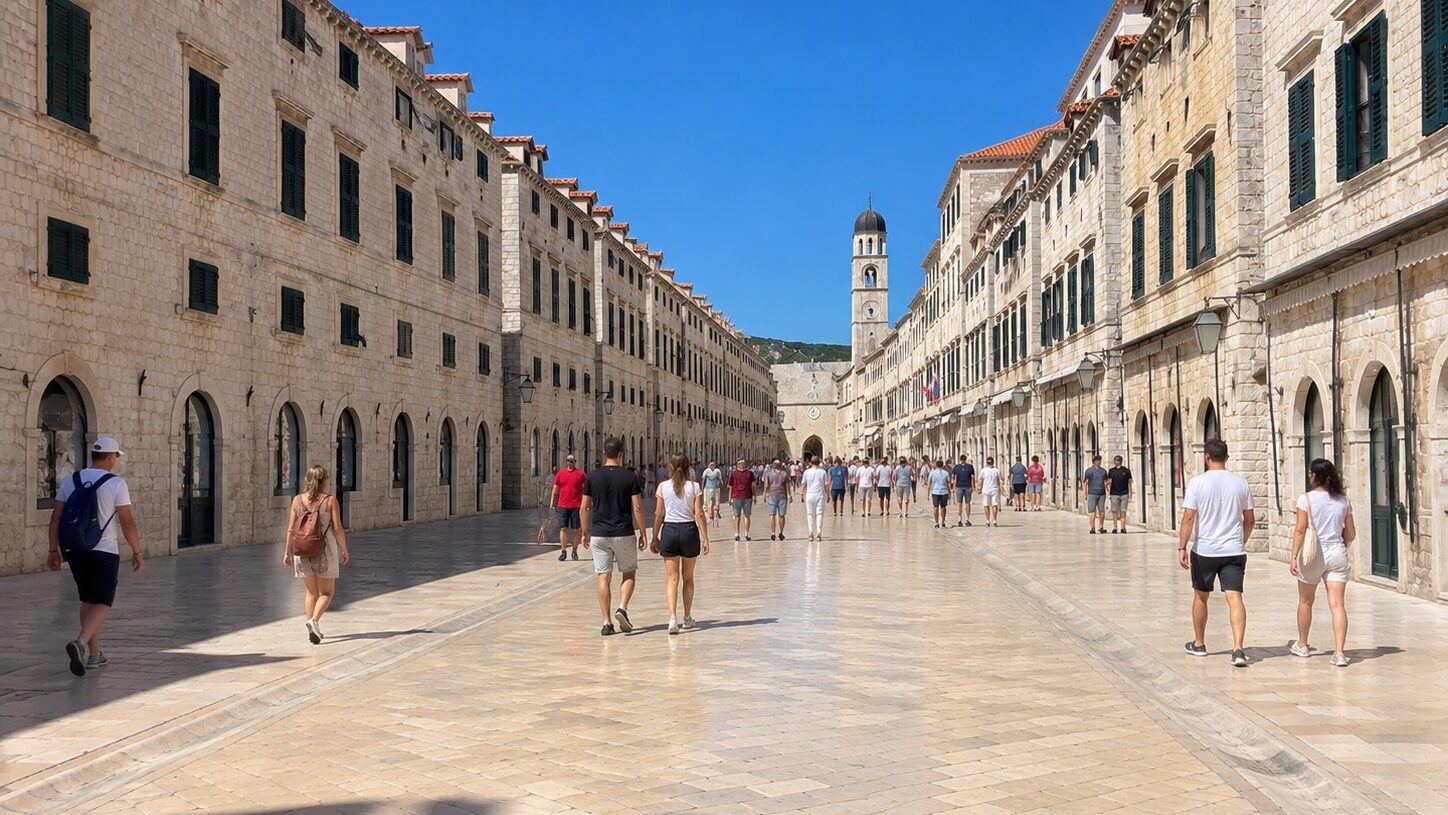
Croatia currently has a Level 1 — Exercise Normal Precautions advisory from the U.S. Department of State, its lowest advisory level.
What statistics do not completely explain is the atmosphere.
Dubrovnik generally feels calm and low-pressure.
Persistent street selling is uncommon. You can look at a menu and continue walking, browse a market stall without buying anything or enter a shop simply to look around.
Of course, Dubrovnik is a major tourist destination and normal precautions still apply, particularly in busy areas.
But American guests frequently tell me how comfortable they feel walking through the Old Town, including in the evening.
Coffee Culture: Forget the Grab-and-Go Habit
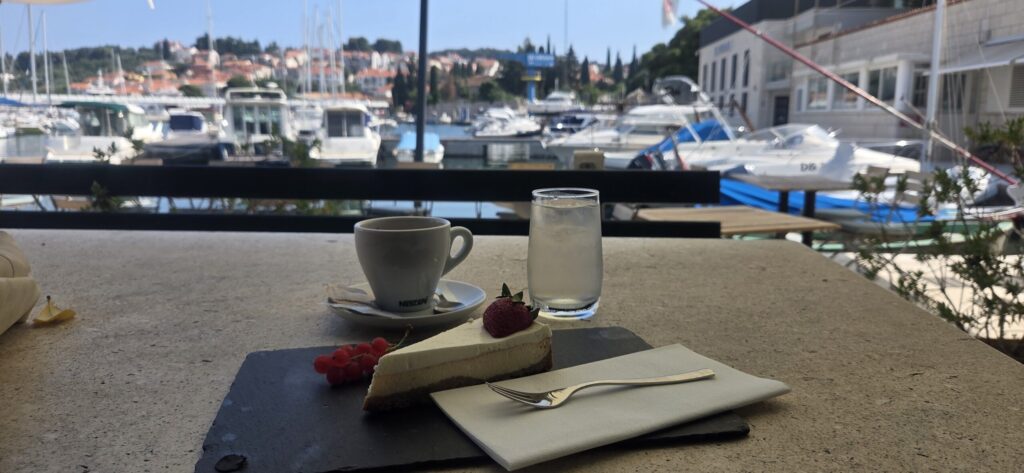
One of the easiest ways to understand Croatian life is through coffee.
Coffee here is not simply caffeine.
It is an activity.
You sit down, order, talk, watch the street and stay.
Some American guests initially feel that stopping for coffee means losing sightseeing time.
I tell them:
Sitting over coffee is part of the sightseeing.
Dubrovnik’s historic centre is built around the tradition of sitting, talking and lingering over coffee rather than grabbing one on the way to the next attraction.
At least once, put the schedule away and simply sit.
For more of the local life behind Dubrovnik’s famous main street, read my local guide to Stradun.
Small Everyday Details American Visitors Notice
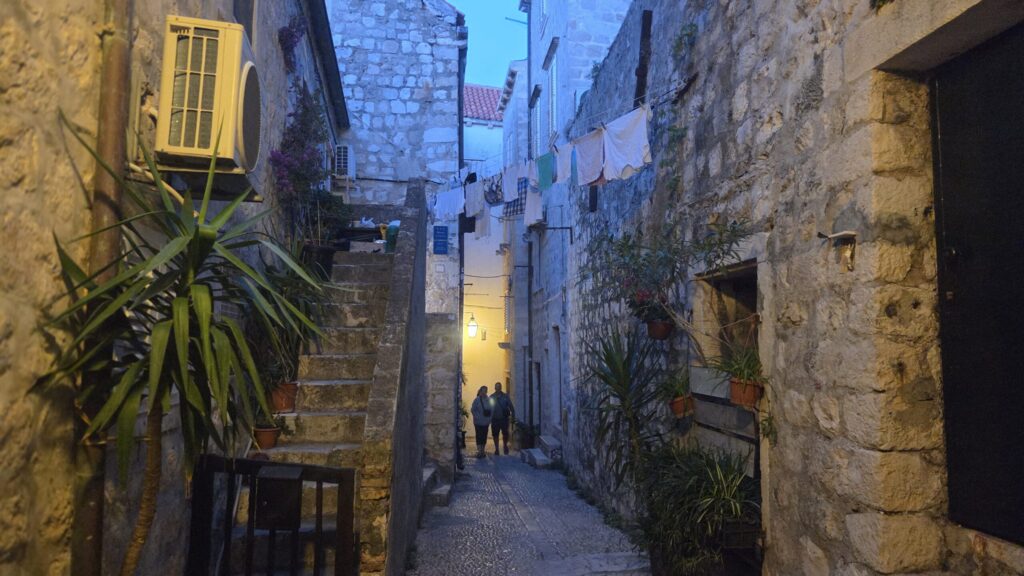
One small detail that surprises some American guests is seeing laundry drying outside windows, on balconies and above narrow stone streets.
In Dubrovnik, this is completely normal.
People still live inside and around the Old Town, and seeing sheets, towels or clothes drying above a centuries-old lane is a simple reminder that Dubrovnik is not only a historic monument.
It is still a living city.
Another comment I hear often is how clean Dubrovnik feels.
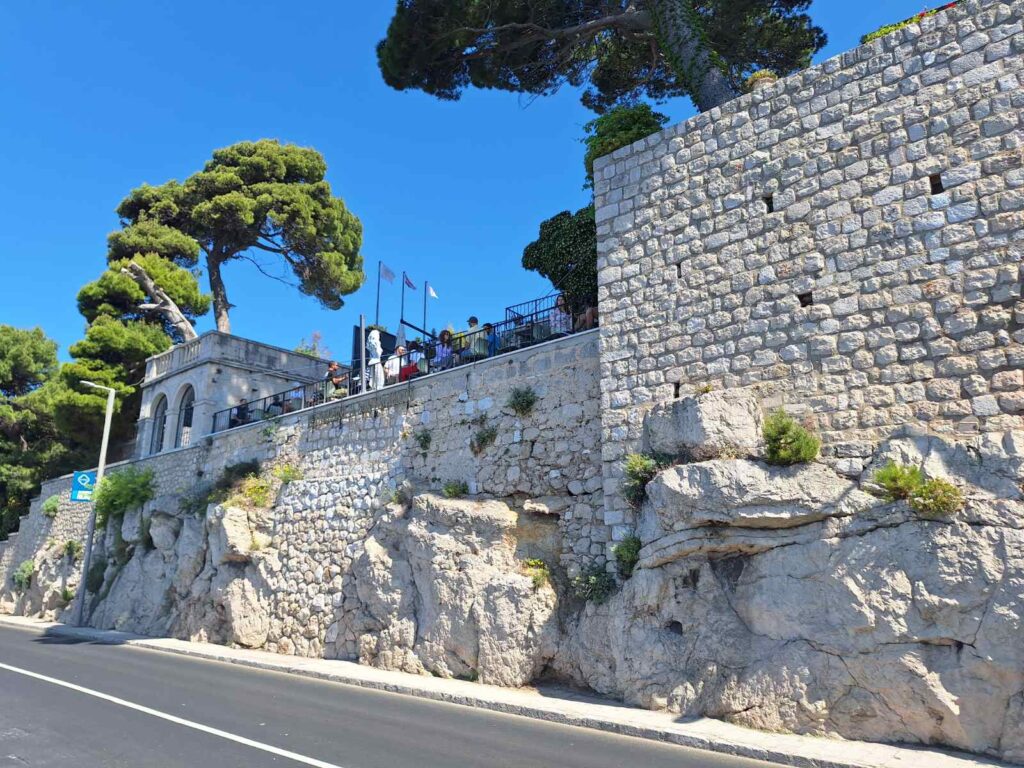
Visitors notice the stone streets, the Old Town, the public spaces and especially the clarity of the Adriatic. Even during the busiest part of the season, many American guests tell me they are surprised by how orderly and well-kept the city feels.
These small everyday impressions often stay with visitors just as much as the famous monuments.
Food, Olive Oil and Croatian Wine
Food is one of the things American guests fall in love with fastest.
Southern Croatian cooking is Mediterranean and ingredient-focused.
Expect plenty of:
- fresh fish and seafood;
- olive oil;
- tomatoes and seasonal vegetables;
- prosciutto and cheese;
- figs and almonds;
- herbs;
- pasta and risotto.
I avoid describing everything as “organic,” because that should mean something specific.
What I can say is that local olive oil, seafood and seasonal ingredients remain central to the food culture here.
What to Buy at Gundulić Square
Visit Gundulićeva poljana, the market square just behind the Rector’s Palace area.
Depending on the season and vendors, look for dried figs, almonds, local preserves and arancini — traditional candied orange peel.
Croatian olive oil also makes a practical souvenir that you can enjoy after returning home.
Try Croatian Wine
Croatian wine remains surprisingly unfamiliar to many American visitors.
If you enjoy reds, remember Plavac Mali.
When ordering dinner, instead of immediately choosing a grape you recognize, ask:
“Which Croatian wine would you recommend with this?”
You can explore local varieties further in my Dubrovnik wine guide.
The Adriatic Really Is That Clean
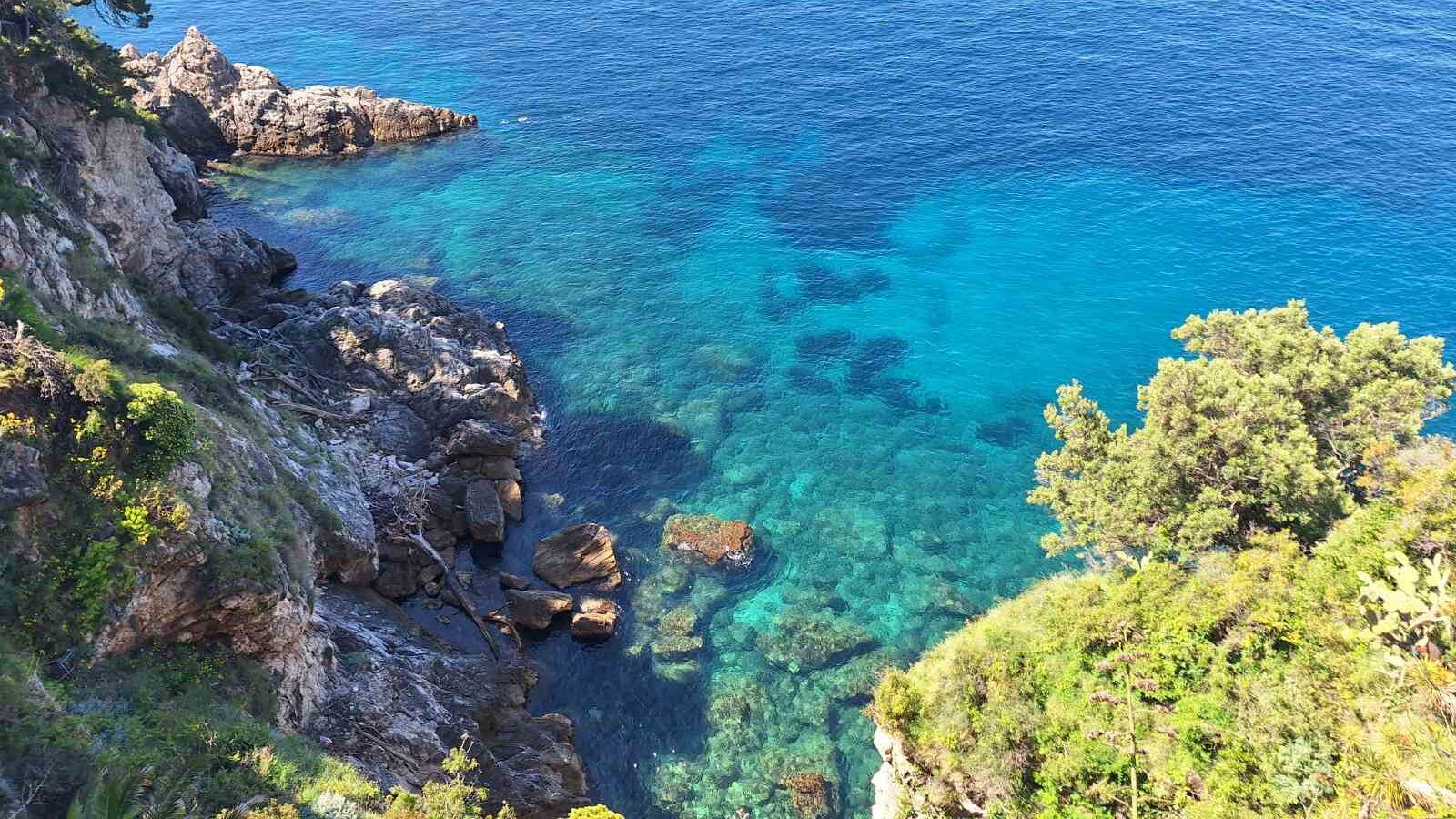
Guests sometimes arrive wondering whether Croatian sea photographs have been heavily edited.
Then they see the water.
Around Dubrovnik, you can often see directly through the sea to the rocks below.
Our coastline is primarily rock and pebble rather than enormous sandy beaches, so water shoes can be useful.
American visitors can also be surprised by Croatia’s relationship with the coast. Public use of maritime domain is strongly protected, although particular areas can have regulated commercial activities and concessions.
So a beach club may charge you for a lounger or service.
The lounger may cost money. The Adriatic does not.
Dubrovnik Is Small — But It Is Not Flat
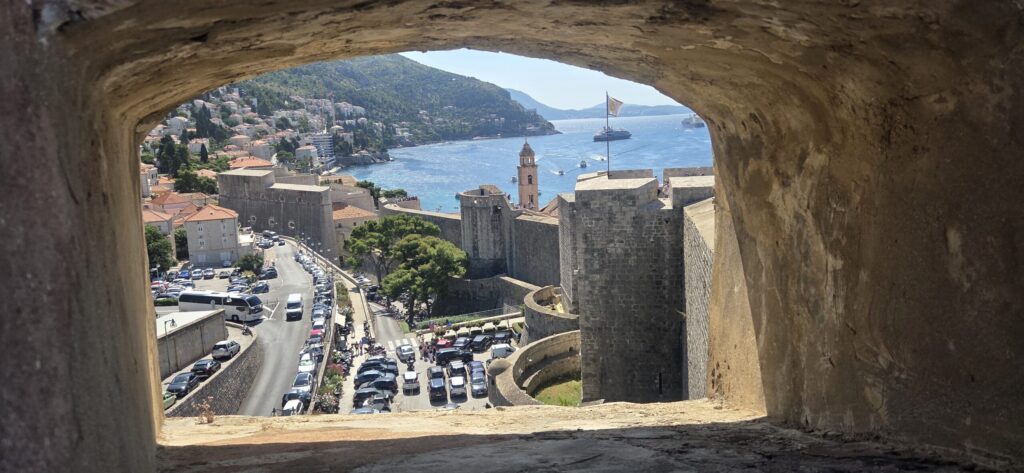
This is one practical detail Google Maps does not explain very well.
Your accommodation may appear only half a mile from the Old Town.
That does not tell you how many stairs are between the two.
Dubrovnik has steep streets, polished stone and significant elevation outside the flatter central part of the Old Town.
When choosing accommodation, check access and elevation, not simply distance.
| Area | Best For | Remember |
| Old Town | History and atmosphere | Pedestrian; many properties have stairs |
| Ploče | Views and proximity to Old Town | Short distance, but steep in places |
| Lapad | Beaches and families | Bus or taxi useful for Old Town |
| Gruž | Port and transport connections | Less historic atmosphere |
Senior travelers can still experience a great deal of Dubrovnik when the route is chosen carefully.
My Dubrovnik for Senior Travelers guide explains the easiest areas and how to avoid unnecessary climbing.
One Reason Americans Fall in Love With Dubrovnik
One reason many Americans enjoy Dubrovnik is that they can still find peaceful moments, particularly if they know when to explore.
I share many of those strategies in my guide to avoiding crowds in Dubrovnik.
Guests who want to experience Dubrovnik beyond the busiest tourist routes often enjoy reading about how experience the city like a local.
These lesser-known areas are often the highlights of Dubrovnik private walking tours away from the main tourist routes.
Dubrovnik With Children
When families ask me how much they can fit into a Dubrovnik day, my answer is usually:
Less than you think.
Children generally enjoy Dubrovnik more when history is mixed with:
- ice cream;
- swimming;
- boats;
- shorter walks;
- Game of Thrones stories for older children;
- and proper breaks.
My Dubrovnik With Kids guide has more practical family advice.
Families who prefer a private experience can also choose our Private Dubrovnik Family Walking Tour.
Dubrovnik for Game of Thrones Fans
Many American visitors first recognized Dubrovnik as King’s Landing in Game of Thrones.
Even guests who are not serious fans often enjoy recognizing filming locations while walking through the Old Town, around the City Walls and near Fort Lovrijenac.
For dedicated fans, a private Game of Thrones experience can add another layer to the city, especially when the filming locations are combined with the real history behind Dubrovnik.
I usually find that this works best when the television story supports the city’s history rather than replacing it.
Dubrovnik for American Cruise Passengers
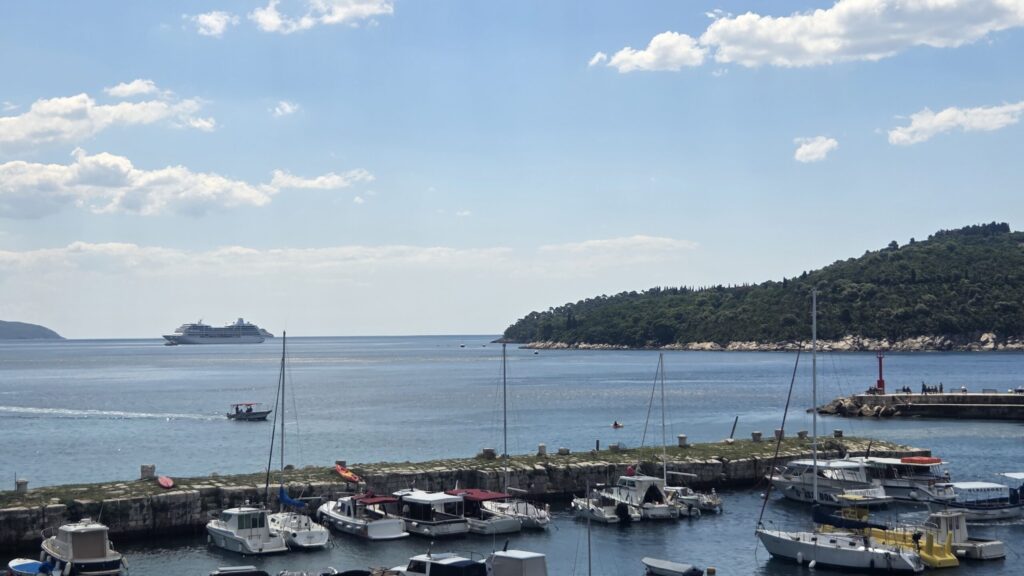
Many American visitors first meet Dubrovnik during a Mediterranean cruise.
Most large cruise ships use Gruž Port, outside the historic centre, so your day needs to account for transfers, traffic and the ship’s all-aboard time.
For practical logistics, see my Dubrovnik Cruise Port to Old City guide and One Day in Dubrovnik From a Cruise Ship.
Cruise guests who prefer port pickup, panoramic viewpoints, Old Town sightseeing and a carefully timed return can choose our private Dubrovnik shore tours.
Dubrovnik for Couples and LGBTQ+ Travelers
Dubrovnik becomes particularly romantic in the evening.
As the busiest daytime hours pass, the limestone changes color, the Old Town becomes calmer and restaurant tables fill the side streets.
For ideas, see my Dubrovnik for Couples guide.
LGBTQ+ travelers and same-sex couples generally move through Dubrovnik without attracting particular attention, whether they are staying in hotels, dining out, visiting beaches or exploring the Old Town.
Travelers interested in Dubrovnik’s lesser-known LGBTQ+ history can also explore our Private Pride Tour Dubrovnik.
Practical Details for Dubrovnik for American Travelers
Tipping: Tipping is appreciated but is not generally expected at U.S. levels. For good restaurant service, rounding up or leaving around 5–10% is common, depending on the situation.
Money: Croatia uses the euro. Cards are widely accepted, but a little cash is useful for markets, small purchases and tips.
Electricity: Croatia uses 230V electricity with Type C and Type F outlets. Most modern phones and laptops support 100–240V, but always check your charger.
Phones: International roaming or an eSIM works well. WhatsApp is widely used by guides, drivers and accommodation hosts.
Water: Tap water in Dubrovnik is generally safe to drink.
Passport: Your U.S. passport should be valid for at least three months beyond your planned departure from the Schengen Area, with at least one blank page available. You can verify current entry and passport requirements on the U.S. Department of State Croatia travel page.
International day trips: Bring your actual passport — not simply a copy — when traveling to Montenegro or Bosnia and Herzegovina. Both involve international border controls, so do not leave your passport in the hotel safe.
Frequently Asked Questions About Dubrovnik for American Travelers
Is Dubrovnik safe for Americans?
Yes. Croatia currently has a Level 1 — Exercise Normal Precautions U.S. travel advisory. Normal precautions still apply, but Dubrovnik generally feels safe and relaxed.
Is there a direct flight from New York to Dubrovnik?
Yes, seasonally. United Airlines offers nonstop service between Newark (EWR) and Dubrovnik (DBV) during the summer season, with operating days varying by date.
Do Americans need a visa for Croatia?
U.S. citizens currently do not need a tourist visa for short stays of up to 90 days in any 180-day period.
Croatia is part of the Schengen Area.
ETIAS is not yet operating as of August 2026. The European Union currently says it is expected to begin in the final quarter of 2026, and travelers do not need to take any action yet. Check the official EU ETIAS information before traveling, as implementation details can change.
What currency does Dubrovnik use?
Croatia uses the euro (€).
Do people speak English in Dubrovnik?
Yes. English is widely spoken, particularly in hotels, restaurants, shops and tourism businesses.
Do I need a car?
Usually not.
The Old Town is completely pedestrian.
A vehicle becomes useful for the airport, Mount Srđ, panoramic viewpoints, Cavtat, Ston and regional excursions.
How many days should I spend in Dubrovnik?
For a first visit, three to four days works very well.
See my Perfect 4-Day Dubrovnik Itinerary for a complete sightseeing plan.
Is Dubrovnik good for seniors?
Yes, provided accommodation and walking routes are chosen carefully around Dubrovnik’s stairs.
Is Dubrovnik gay-friendly?
Yes. Dubrovnik is generally welcoming to LGBTQ+ travelers and same-sex couples.
Is Dubrovnik expensive for Americans?
It depends entirely on what you are comparing it with.
Dubrovnik is expensive by Croatian standards, while many American visitors find prices reasonable compared with major U.S. cities.
Final Advice for Dubrovnik for American Travelers
I genuinely enjoy guiding American visitors.
They ask questions, engage with local stories and are usually enthusiastic about understanding the city beyond the postcard views.
The most important advice I would give anyone visiting Dubrovnik from the United States is this:
Plan enough to avoid disappointment. But not enough to remove every surprise.
Walk down a street because it looks interesting.
Ask which Croatian wine the waiter would drink.
Have coffee without checking the time.
Go swimming.
Stay for sunset.
If you would like to understand the city with a local guide, our private Dubrovnik walking tours are completely private and adapted to your interests and pace.
Visitors particularly interested in the fortifications can choose a Private City Walls and Old Town Tour, while cruise guests can explore our private Dubrovnik shore tours.
The best Dubrovnik trip is rarely the one with the fullest calendar.