If you want to experience Dubrovnik like a local, you do not need to avoid the Old Town, skip famous landmarks or search for supposedly secret places that no visitor has discovered.
The difference is much simpler.
It is about when you enter the city, how quickly you move, where you stop and whether you leave enough time to notice Dubrovnik beyond its monuments.
As a Dubrovnik local and guide, I have spent years walking these streets in every season and at almost every hour of the day. I often see visitors experience exactly the same places but leave with completely different impressions.
One says, “Dubrovnik was beautiful, but so crowded.”
Another tells me, “I didn’t expect it to feel so intimate.”
Usually, the difference is not what they saw.
It is how they experienced it.
If you are planning the practical side of your trip, my Ultimate Dubrovnik Travel Guide covers attractions, itineraries and essential travel information. This guide has a different purpose: showing you how to slow down, notice everyday life and experience Dubrovnik in a way that feels more natural.
What Does It Really Mean to Experience Dubrovnik Like a Local?
To experience Dubrovnik like a local does not mean pretending you are not a visitor.
Nor does it mean avoiding Stradun, the City Walls, Rector’s Palace or the Old Port simply because they are famous.
We know these places are extraordinary too.
The difference is mostly one of rhythm.
Many visitors walk through Stradun, photograph the main landmarks and immediately continue to the next attraction.
Someone who knows the city well is more likely to notice whether a side street is in shade, stop for coffee without watching the clock, return to the Old Town after dinner or decide not to squeeze another attraction into an already full afternoon.
Dubrovnik is compact, which makes it tempting to rush.
Try not to.
You often understand the city better when sightseeing stops feeling like a checklist.
Start With the Right Time of Day
Timing changes Dubrovnik dramatically.
The Old Town at 8:00 in the morning can feel like a completely different place from those same streets at noon.
If you want a detailed comparison of how the atmosphere changes throughout the day, read my guide to the best time to visit Dubrovnik Old Town: morning, afternoon or evening.
Early Morning
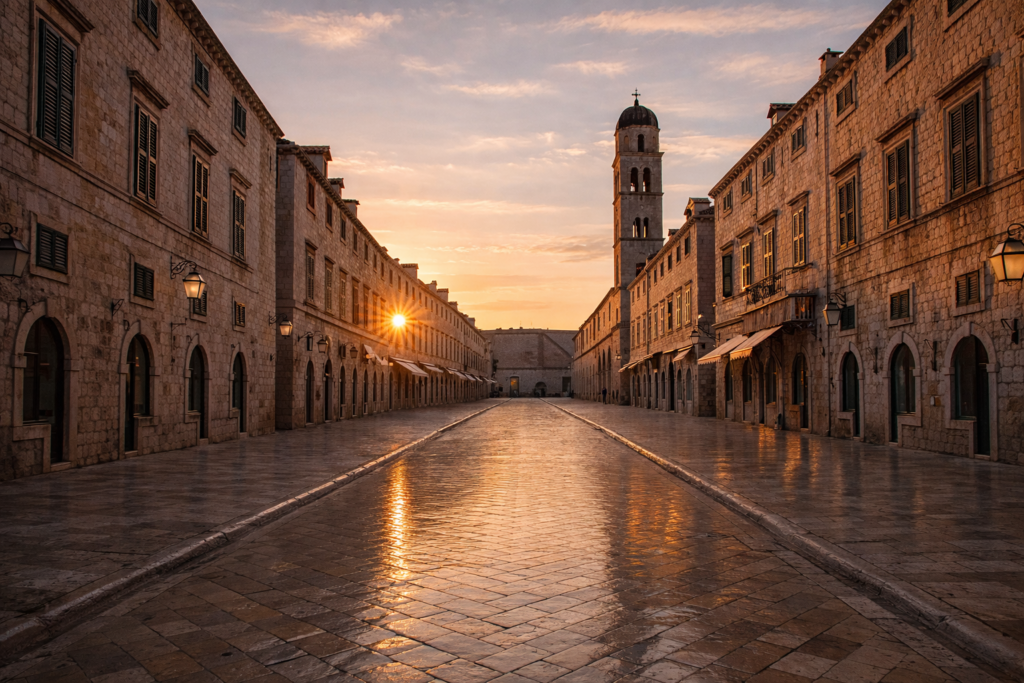
In summer, 7:00 to 9:00 AM is one of my favourite times to walk through the Old Town.
The stone is still relatively cool. Café terraces are beginning to open. Deliveries are finishing, and you start seeing residents heading to work before the main daytime crowds arrive.
You can hear footsteps on the limestone and notice details that are easy to miss later.
This is not simply about avoiding crowds. It is one of the best times to observe the Old Town functioning as a real neighbourhood.
If this quieter side of the city appeals to you, I explain it in more detail in my Dubrovnik Early Morning Walking Tour guide.
And if crowd levels are your main concern, my separate guide on how to avoid crowds in Dubrovnik goes deeper into the busiest hours and practical timing.
Midday
Summer midday is when many visitors try hardest to see everything.
It is often when I would do the opposite.
Heat builds between the stone buildings, the Old Town becomes busier and walking starts to require more energy.
Instead of forcing another attraction into the schedule, have lunch, find shade, go toward the sea or leave the Old Town for a few hours.
The point is not to do nothing.
It is simply to understand that you do not need to use every hour for sightseeing.
Evening
Evening brings another Dubrovnik.
The heat eases. Some day visitors have left. Restaurants fill. People meet for drinks or dinner, and walking becomes pleasurable again.
Stradun is still lively, but the atmosphere becomes less about completing attractions and more about spending time in the city.
For me, this transition from sightseeing Dubrovnik to simply enjoying Dubrovnik is one of the best parts of the day.
Coffee Is Not Just Coffee
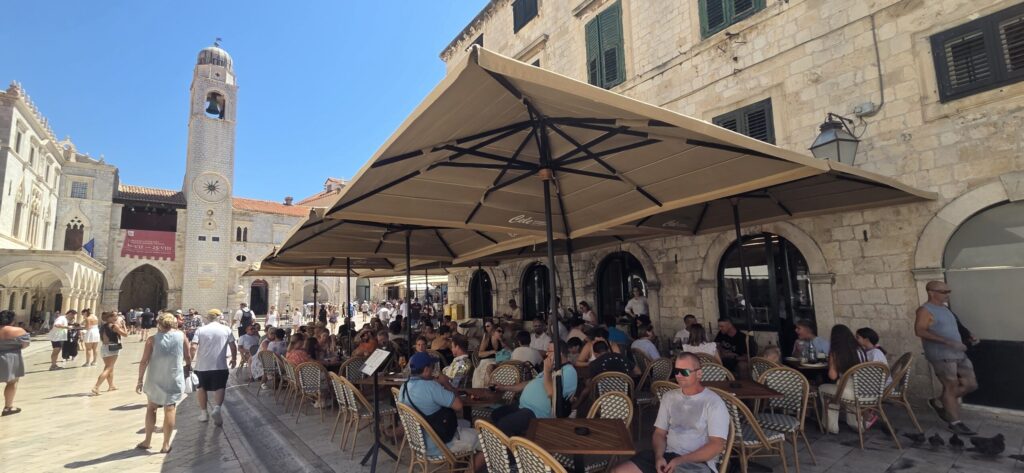
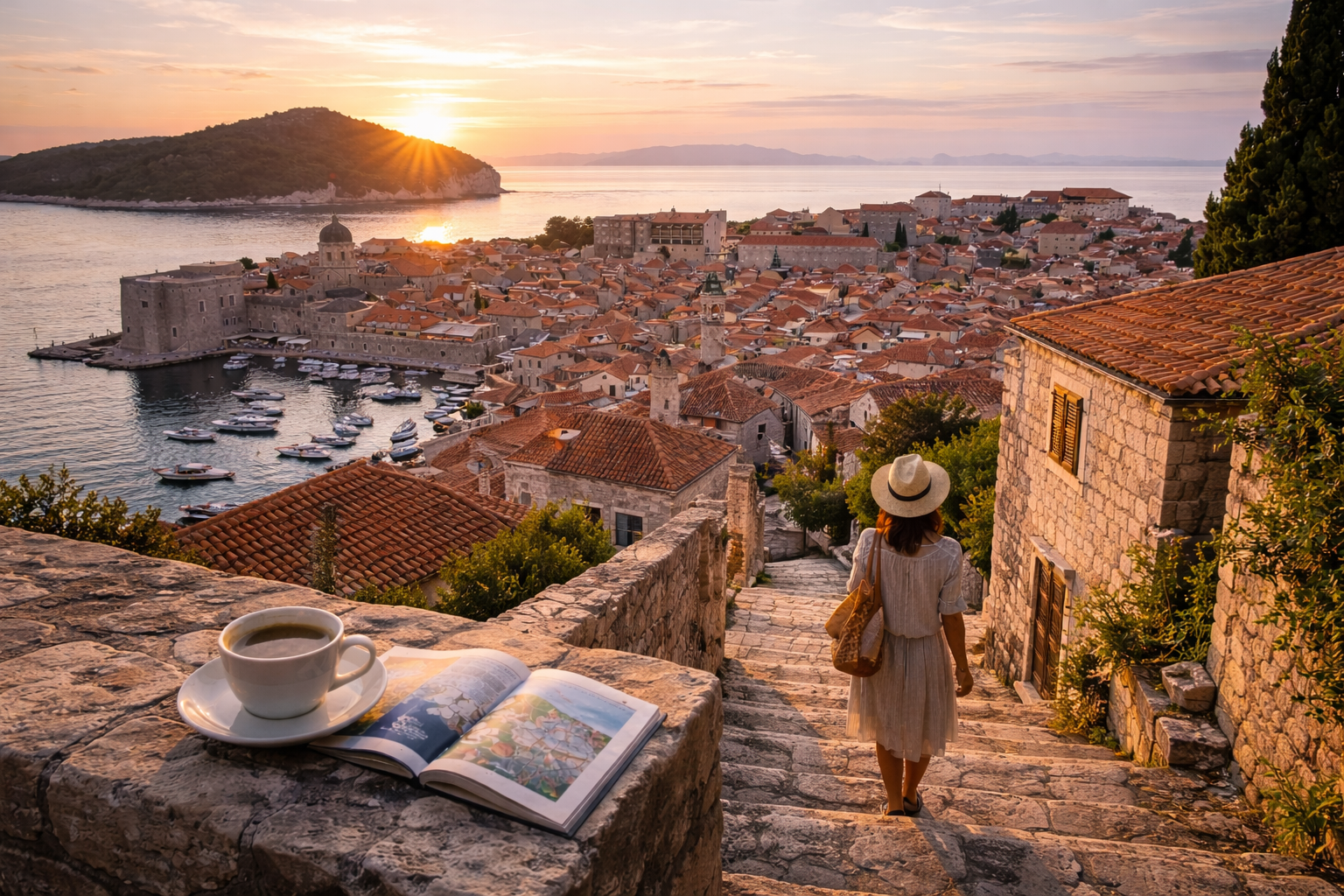
One of the easiest ways to experience Dubrovnik like a local is to understand what coffee means here.
Coffee is often less about caffeine than about time.
It can mean meeting a friend, taking a break, discussing work, watching people pass or simply sitting somewhere without needing a reason to leave quickly.
Visitors sometimes ask me how people can spend so long over one coffee.
That is precisely the point.
If you want to try it for yourself, choose a café where you actually want to sit rather than automatically ordering coffee at the nearest available table.
Then stay.
Talk.
Watch the street.
Do not immediately check what comes next on your itinerary.
I explain this part of everyday life in more detail in my guide to Croatian coffee culture in Dubrovnik.
Walk Stradun — Then Leave It
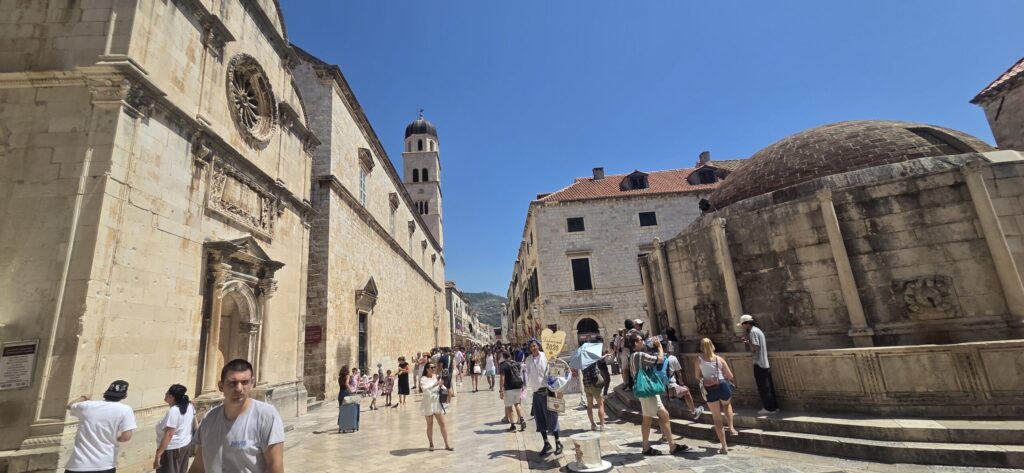
Stradun deserves its reputation.
Walk it.
Look at the façades, the polished stone and the way the street opens through the heart of the Old Town.
But do not mistake Dubrovnik’s main street for the entire city.
Move only a minute or two away and the scale changes.
On the northern side of Stradun, narrow streets and stairways rise toward residential parts of the Old Town. Prijeko runs through this part of the city and becomes especially lively in the evening, when restaurant terraces fill much of the street.
On the southern side, smaller lanes lead between churches, houses, courtyards and quieter corners.
This is also where a little consideration matters.
People still live here.
Do not block narrow entrances while taking photographs. Keep voices down late at night in residential streets. If you enter a church during a service, remember that it is first a place of worship and only second a sightseeing stop.
These are small things, but they are part of behaving as though Dubrovnik is a city rather than a stage set.
Do Not Search Too Hard for “Hidden Dubrovnik”
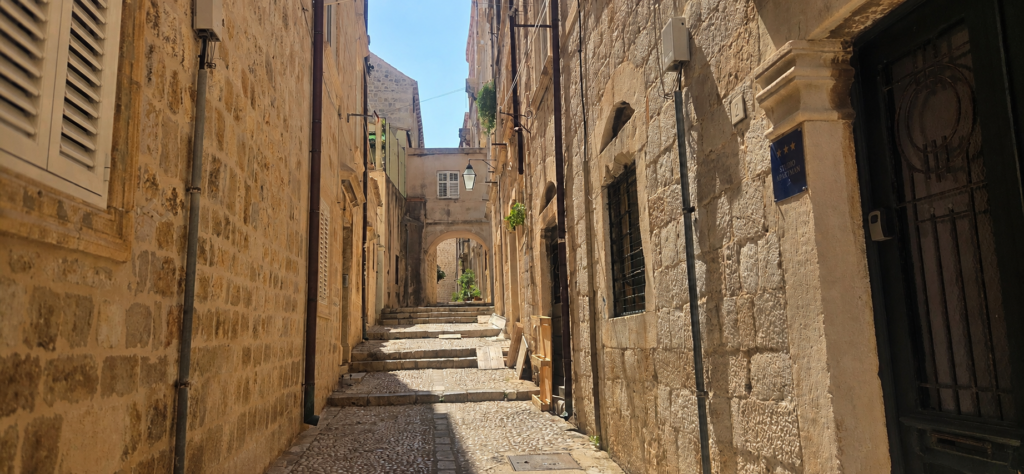
Visitors often ask where they can find the places tourists do not know.
The problem is that Dubrovnik is a small and famous city.
Very few beautiful corners are genuinely secret.
And they do not need to be.
A street can be well known and still feel completely different at 8:00 AM.
A busy square can become atmospheric after dinner.
A famous viewpoint can still be worth visiting if you understand why the view matters.
I think this is a much better way to experience Dubrovnik like a local than chasing a list of so-called hidden gems.
The goal is not to avoid everything other visitors see.
It is to see familiar places with more context and less urgency.
Pause at the Old Port
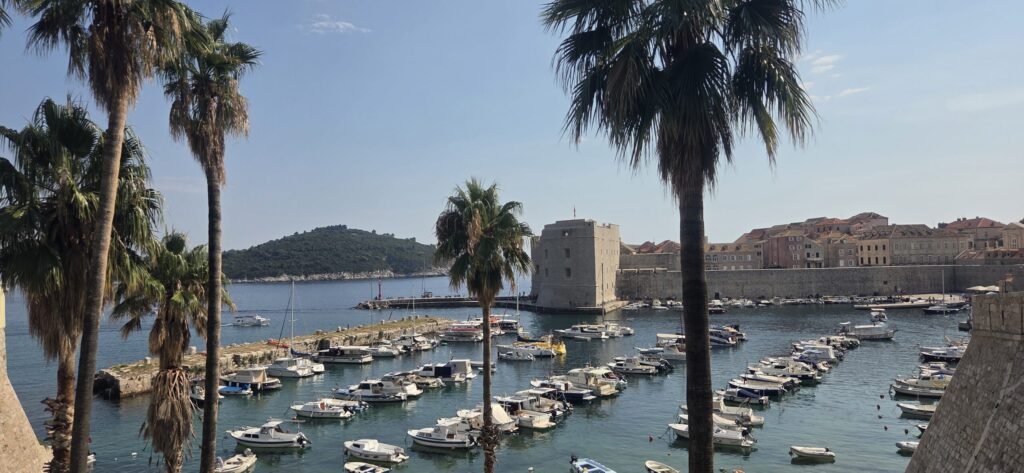
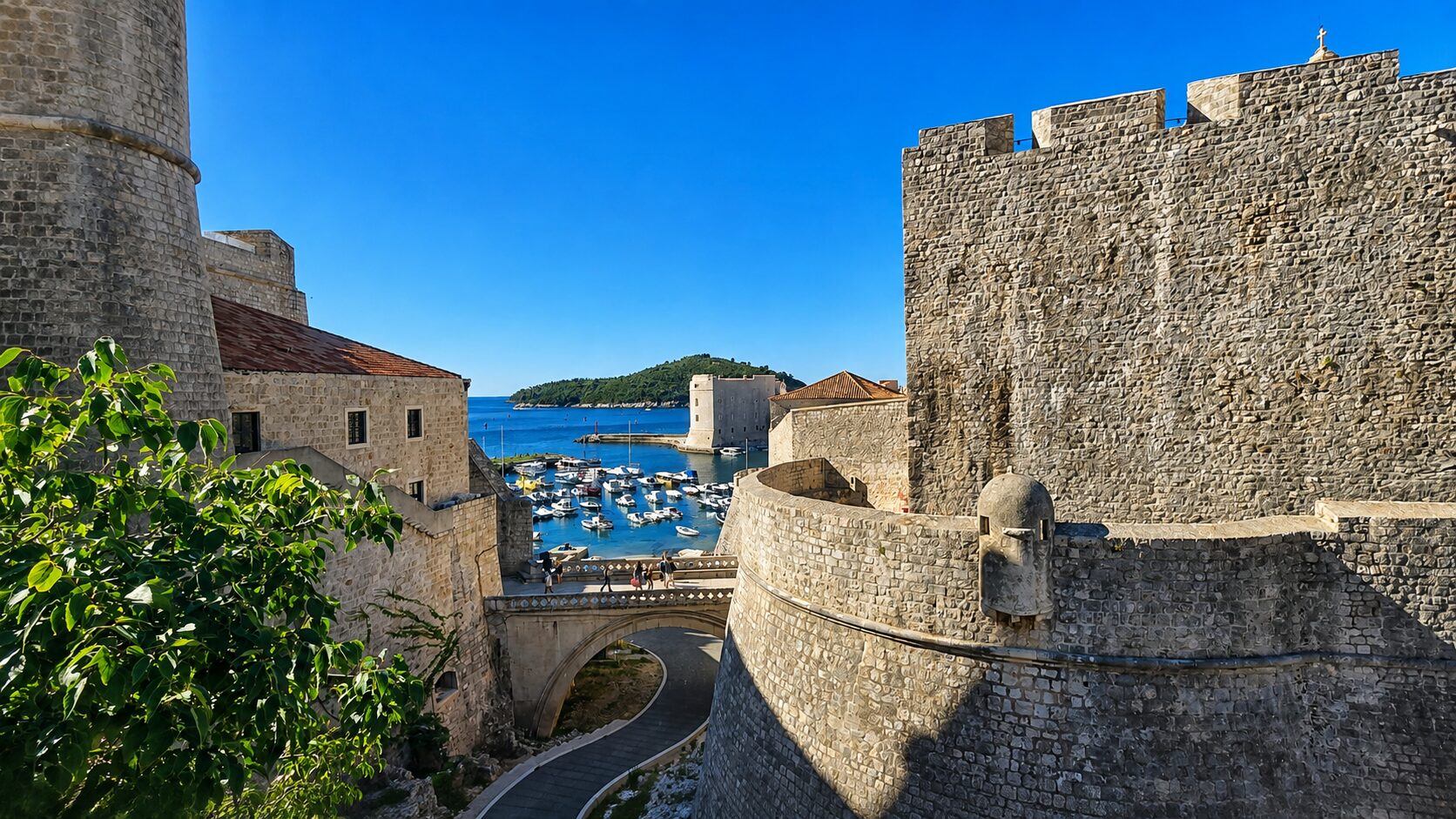
The Old Port is one of the places where Dubrovnik’s different identities meet.
Today you see excursion boats, ferries, small craft and visitors moving toward and away from the Old Town.
Historically, however, the harbour belonged to the maritime world on which the Dubrovnik Republic depended.
The fortifications around it were not decorative. The sea connected Dubrovnik to trade, diplomacy and the wider Mediterranean.
Knowing that changes the way you look at the port.
Instead of walking straight through, stop near the water for a few minutes.
Look back toward the walls.
Watch the movement of the boats.
Imagine how differently this harbour would have functioned centuries ago.
This is the kind of pause I like when guiding: very little needs to happen, yet suddenly the city makes more sense.
Choose Restaurants the Way You Would at Home
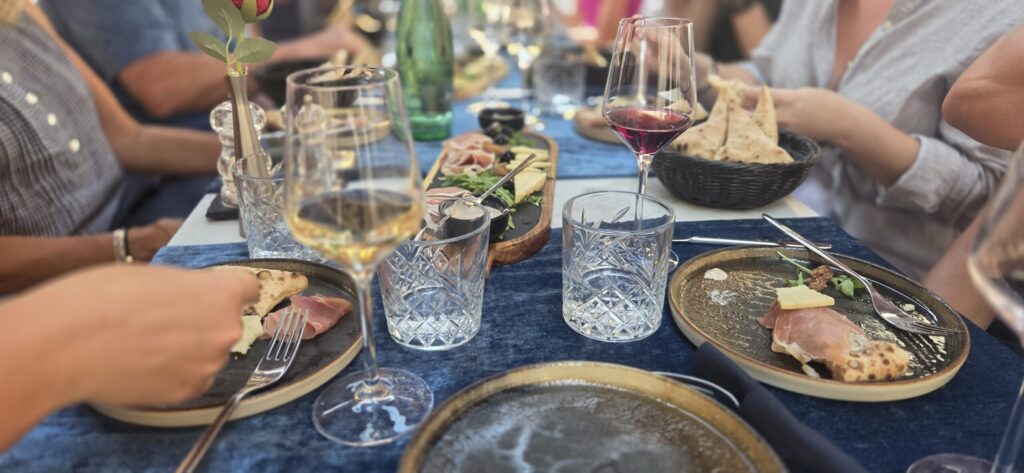
People regularly ask me:
“Where do locals eat in Dubrovnik?”
There is no single answer.
Residents certainly eat in the Old Town too.
The better question is how to choose.
I would look beyond location alone and pay attention to a few practical signals:
- a menu with some focus rather than dozens of unrelated dishes
- clearly displayed prices
- a menu that reflects Dalmatian or Croatian cuisine rather than relying mainly on generic international dishes
- seasonal ingredients where appropriate
- a terrace where people appear to be dining rather than being hurried through
- staff who give you time to look at the menu rather than pressuring you to sit immediately
And do not assume a restaurant is bad simply because it occupies a beautiful or central location.
Some excellent places do.
Likewise, a restaurant hidden in a narrow street is not automatically more authentic.
The safest habit is simply not to choose a restaurant because you happened to become hungry directly in front of it.
If budget matters, my guide to how expensive Dubrovnik is in 2026 gives a more detailed picture of local prices and typical visitor costs.
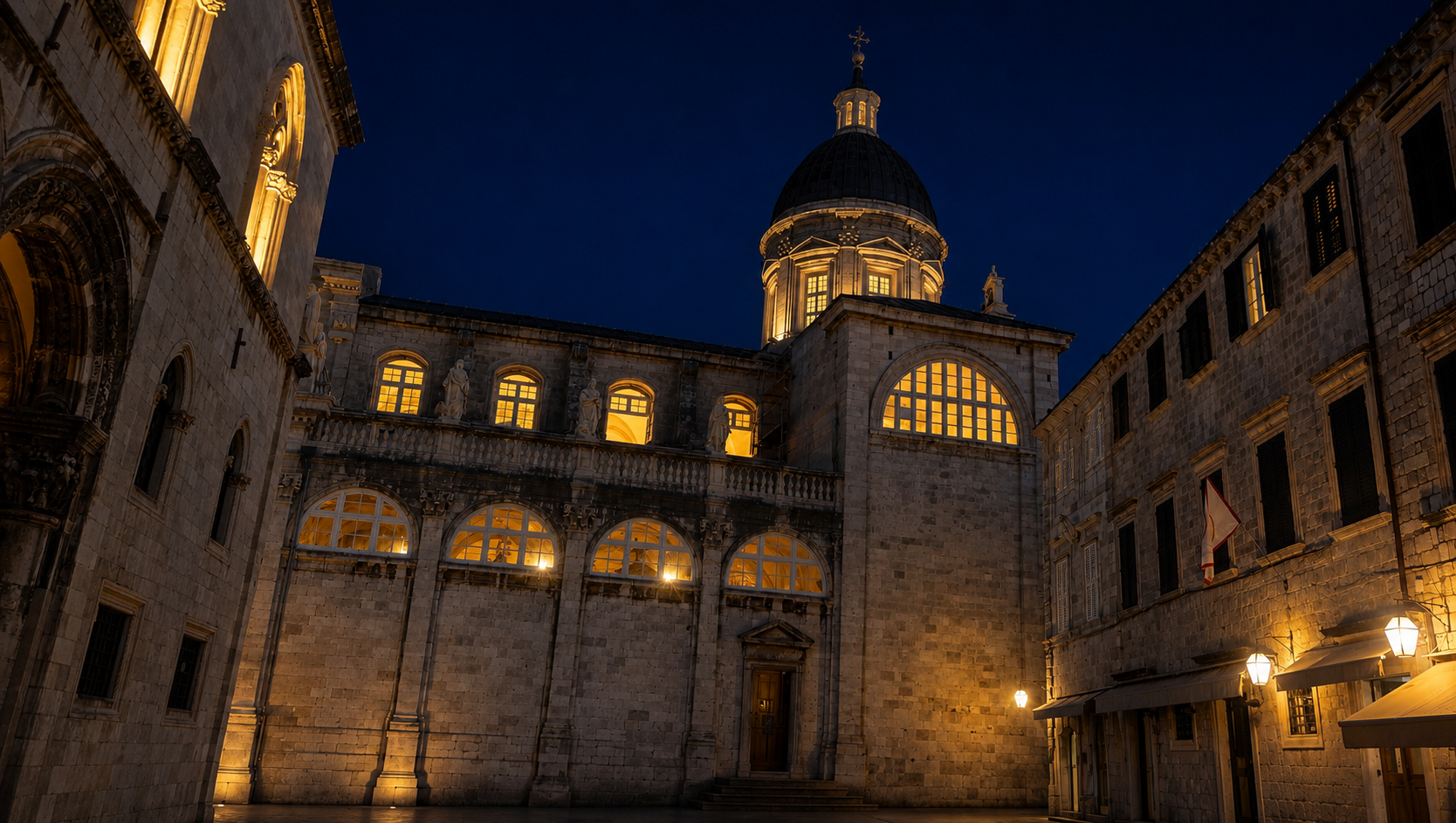
Return to Dubrovnik at Night
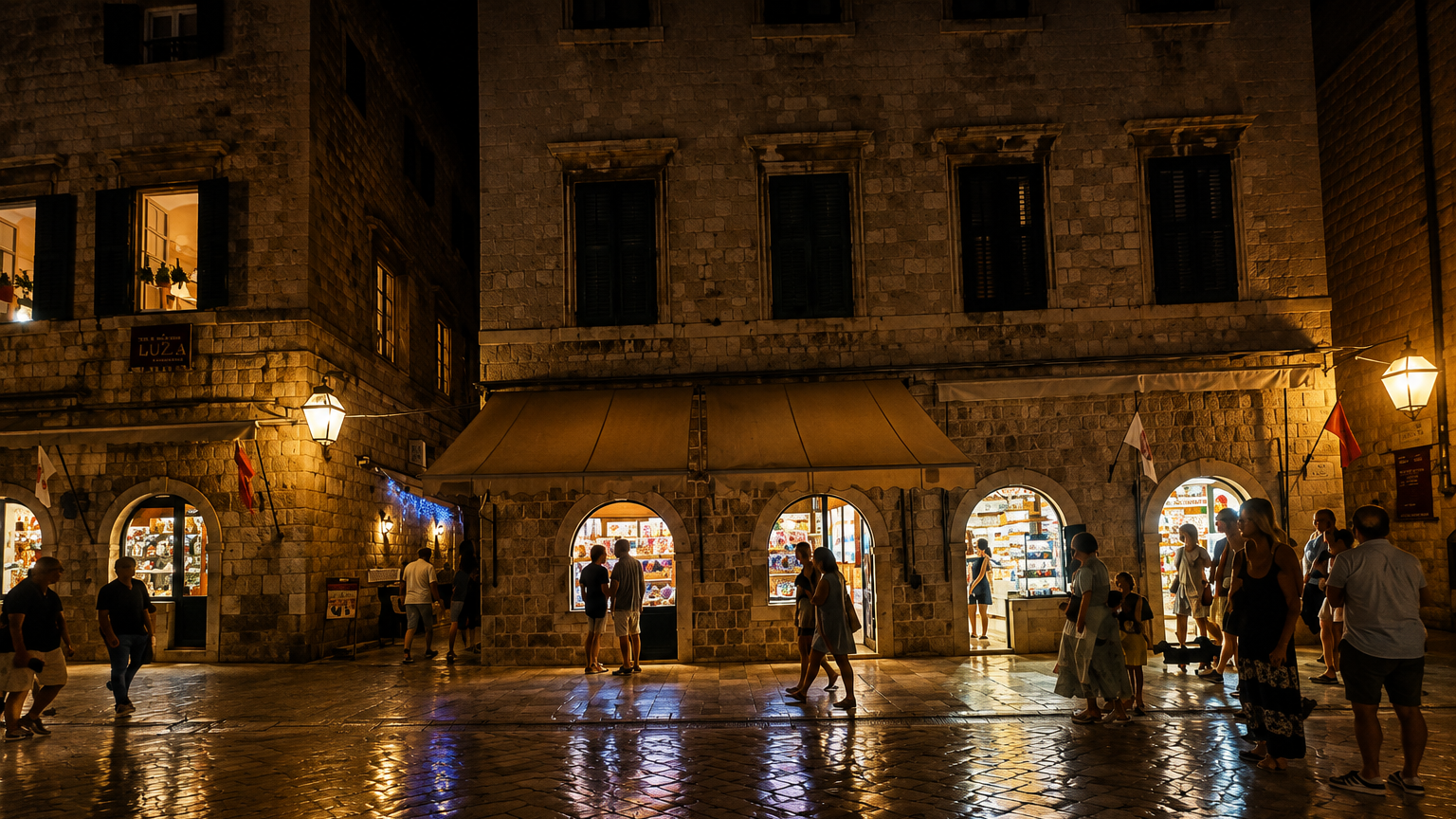
Some visitors leave the Old Town after completing their sightseeing and do not return.
I think they miss one of its best versions.
At night, there is less pressure to accomplish anything.
Couples walk along Stradun. Friends meet. Restaurant terraces remain lively. People stop for drinks. The illuminated stone gives the city a completely different character.
Even areas immediately outside the walls change.
At Pile, for example, the terrace at Dubravka has views toward the illuminated fortifications and becomes particularly atmospheric after dark.
It is certainly not a secret local location.
That is exactly why I mention it.
You do not always need an undiscovered place.
Sometimes you simply need to be in a familiar place at the right time.
Do Not Try to Complete Dubrovnik
This may be the most useful advice in the article.
Do not try to finish Dubrovnik.
I sometimes see itineraries that effectively say:
City Walls.
Rector’s Palace.
Cathedral.
Cable car.
Old Port.
Lunch.
Beach.
Sunset.
Technically, much of that may be possible.
But the day can easily become logistics rather than travel.
One advantage of living here is being able to say, “I’ll do that tomorrow.”
Visitors obviously do not always have that luxury, but you can borrow the mindset.
Choose the places that genuinely matter to you.
Leave some gaps.
Allow a coffee to last longer than expected.
Spend another fifteen minutes at the Old Port if you are enjoying it.
Skip something if the afternoon is too hot.
That freedom often produces the moments people remember most.
Notice What Most People Walk Past
Dubrovnik rewards people who look above eye level.
There are coats of arms, carved stone details, water channels, balconies, old windows, religious symbols and traces of earlier buildings everywhere.
Also listen.
Footsteps sound different on polished limestone. Bells define parts of the day. Voices travel through narrow streets.
Many places that appear insignificant become interesting once you know what happened there.
That is where a guide can be useful.
A Dubrovnik private local guide is not useful because the Old Town is difficult to navigate. The real value is context: understanding why an ordinary-looking doorway, square or stone façade matters.
Remember That People Still Live Here
Dubrovnik’s Old Town is a UNESCO World Heritage Site.
It is also a neighbourhood.
People go to work.
Children go to school.
Residents carry shopping through streets visitors photograph.
Laundry appears in windows.
Churches hold services.
Deliveries arrive in the morning.
Someone may simply be trying to get through a narrow street while several people stop for a photograph.
Once you start noticing this everyday layer, Dubrovnik becomes more interesting.
Instead of asking only:
“What should I see?”
you begin asking:
“How does this city actually work?”
For me, that question leads much closer to the real Dubrovnik.
A Simple Way to Experience Dubrovnik Like a Local for One Day
You do not need a complicated itinerary.
A natural day could look like this:
Morning: Enter the Old Town while it is still relatively quiet. Walk Stradun and explore some of the smaller streets.
Late morning: Stop for coffee. Do not make it a ten-minute break between attractions.
Midday: Have lunch, leave the Old Town for the coast or simply slow down during the hottest part of the day.
Late afternoon: Rest or enjoy the sea instead of trying to fill every hour.
Evening: Return. Walk through Stradun, Prijeko and the Old Port again and notice how different the city feels after dark.
It is not the only correct way to spend a day in Dubrovnik.
There is no such thing.
It simply follows the city’s rhythm rather than fighting against it.
Is Dubrovnik Too Touristy to Feel Authentic?
Dubrovnik is touristy.
There is no reason to pretend otherwise.
But tourism and authenticity are not opposites.
A famous city can still feel real.
Dubrovnik usually feels most touristy when you experience only the busiest streets, during the busiest hours, while moving rapidly from attraction to attraction.
Change one or two of those variables and the impression changes quickly.
Walk earlier.
Return later.
Leave Stradun occasionally.
Notice the life happening behind the stone façades.
That is much more realistic than trying to find a version of Dubrovnik untouched by visitors.
FAQ: Experiencing Dubrovnik Like a Local
What is the best way to experience Dubrovnik like a local?
The best way to experience Dubrovnik like a local is to slow down and structure your day around the city’s rhythm instead of trying to see everything at once. Early mornings, relaxed coffee breaks, smaller Old Town streets and returning in the evening all reveal different sides of Dubrovnik.
Where do locals drink coffee in Dubrovnik?
There is no single “local café.” Coffee culture is more about the habit of sitting, talking and taking time than finding one particular location. Residents use cafés throughout Dubrovnik, including in and around the Old Town.
Is Dubrovnik Old Town worth visiting at night?
Yes. The Old Town becomes particularly atmospheric after dark, when the stone buildings are illuminated, restaurant terraces fill and sightseeing gives way to a more relaxed evening atmosphere.
Should I avoid Stradun if I want an authentic Dubrovnik experience?
No. Stradun is central to Dubrovnik and absolutely worth experiencing. Walk it, but also explore the smaller streets on either side and return at different times of day.
Do I need a local guide to experience Dubrovnik properly?
No. Dubrovnik is easy to explore independently, but a knowledgeable local guide can add historical and cultural context that is difficult to notice on your own.
Finding the streets is easy; understanding what you are looking at is a different matter.
Final Thoughts: Experience Dubrovnik Like a Local
To experience Dubrovnik like a local, you do not need a secret restaurant, an undiscovered alley or an itinerary designed to avoid every famous landmark.
You need something simpler:
time, curiosity and a willingness to slow down.
Walk Stradun, but leave it occasionally.
See the monuments, but notice what happens around them.
Drink coffee without watching the clock.
Respect the fact that people live behind the beautiful stone façades.
Come back in the evening.
And do not worry if you leave one attraction unseen.
Dubrovnik is not only something to photograph or complete.
It is a city with its own rhythm.
Once you begin following that rhythm rather than rushing against it, you start to experience Dubrovnik like a local.
If you would like to explore the Old Town with more context and flexibility, you can also discover our private walking tours in Dubrovnik, designed around private guiding, adaptable timing and a more per