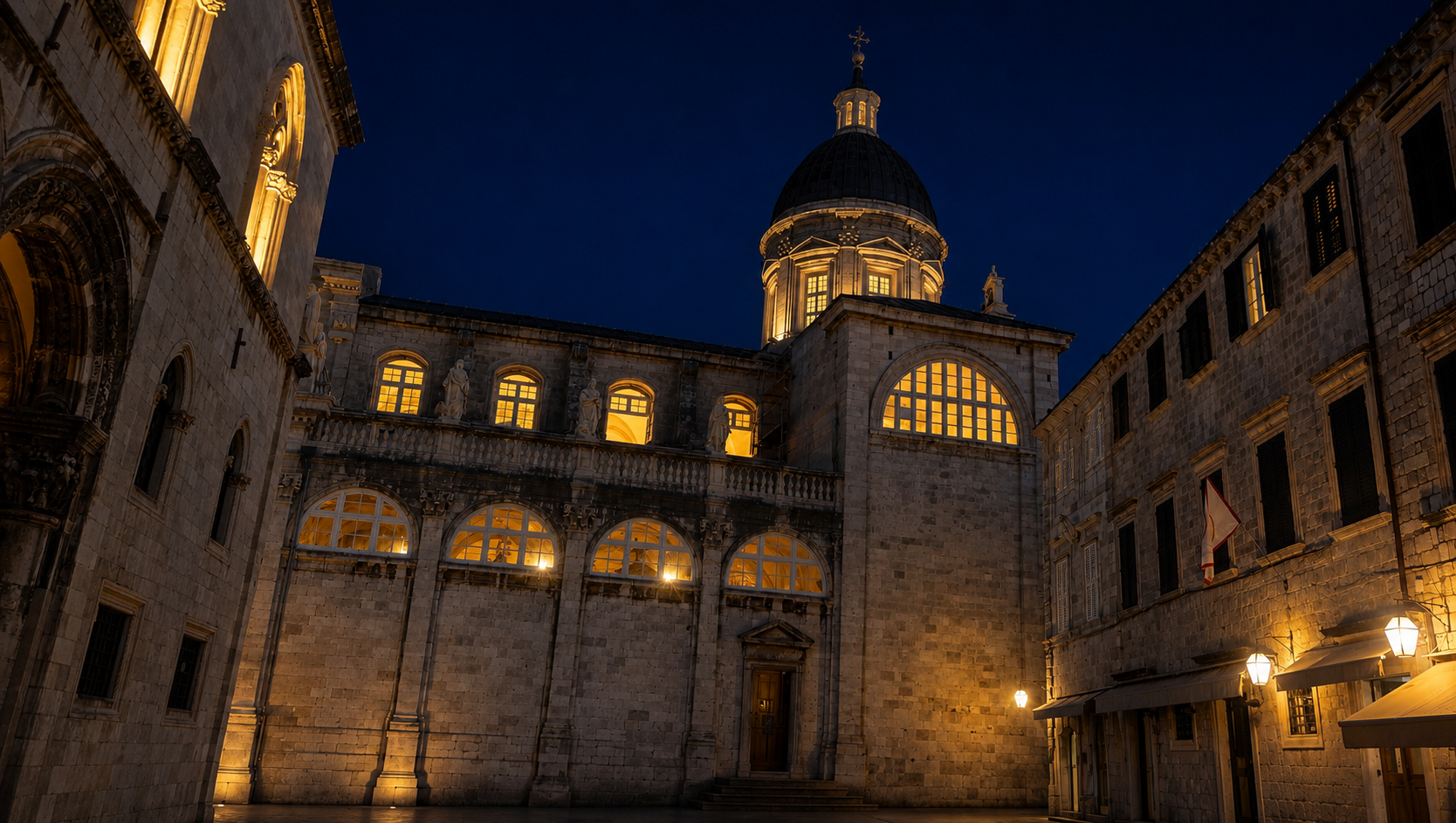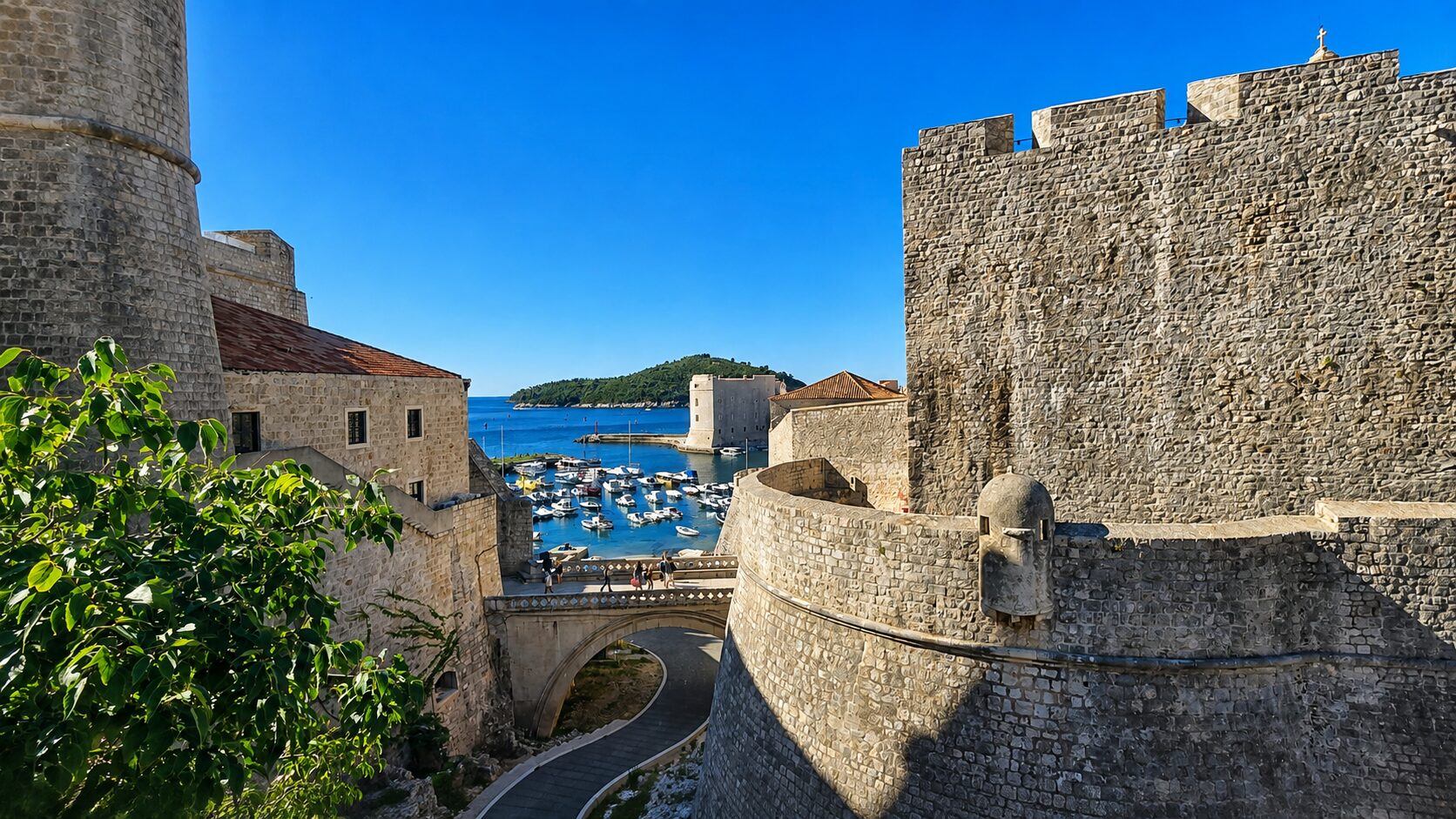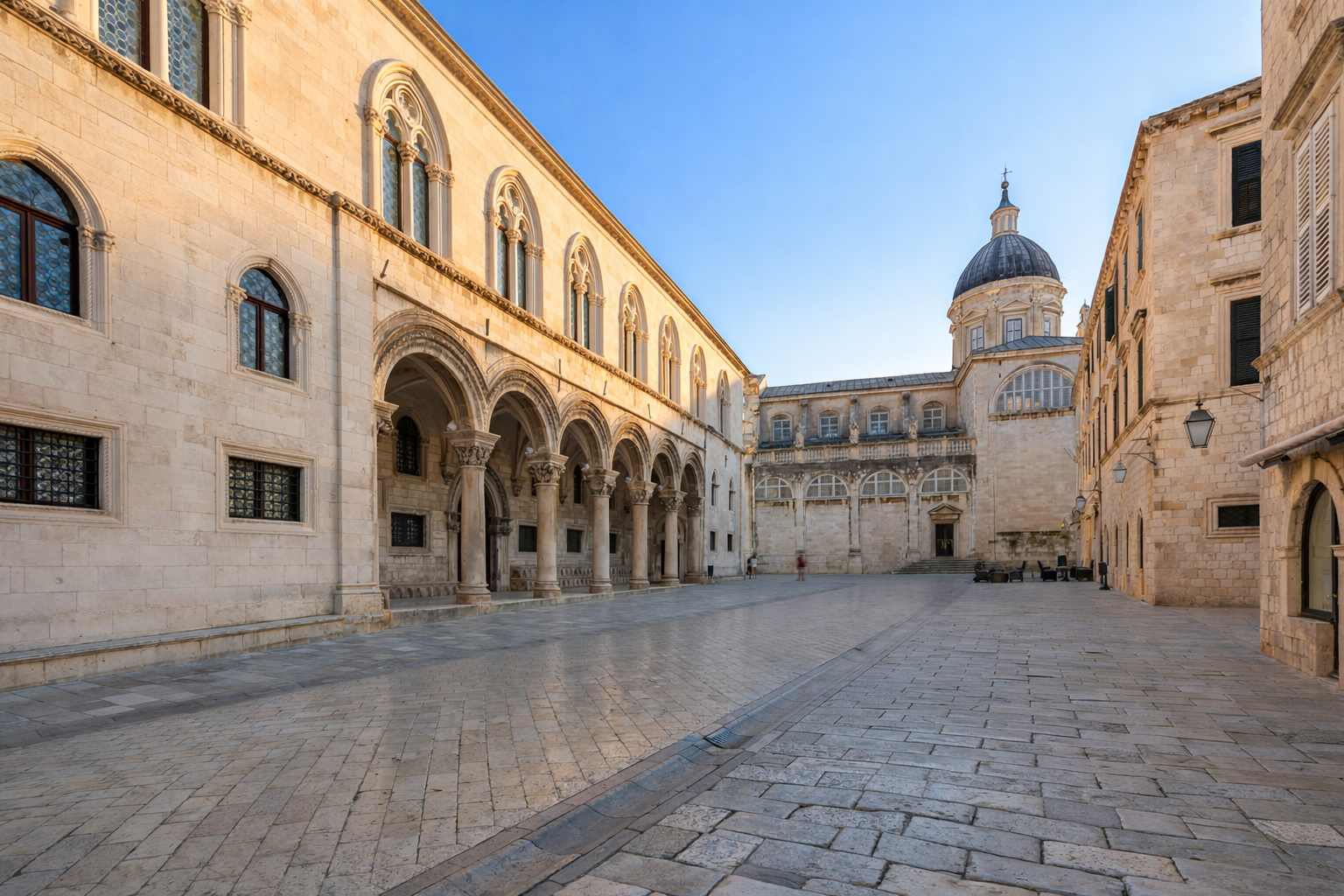
The best way to avoid crowds in Dubrovnik is not to avoid the Old Town, but to understand its rhythm. Visit the busiest sights at better times, step away from Stradun when the main visitor flow builds, and use quieter streets, viewpoints or a break by the sea to divide your day.
After years of guiding visitors through Dubrovnik, I have learned that the city is rarely simply “crowded” or “not crowded.”
It changes by the hour.
I can walk through Pile Gate early in the morning and hear café chairs being arranged and footsteps on the stone. A few hours later, the same entrance may be full of groups arriving at once. Later again, the atmosphere changes completely.
That is why I would not tell anyone to skip Dubrovnik because they are worried about crowds.
I would tell them to work with the rhythm of the city instead.
If this is your first trip, my Ultimate Dubrovnik Travel Guide for 2026 covers the broader questions of what to see, how long to stay and how to organize your visit.
Quick Tips to Avoid Crowds in Dubrovnik
If you want a calmer experience in Dubrovnik Old Town, these strategies make the biggest difference:
- Explore the Old Town early in the morning
- Avoid putting every major sight into the late-morning and early-afternoon period
- Check the official cruise-arrival schedule for your exact date
- Leave Stradun occasionally and explore the side streets
- Walk the City Walls when heat and visitor pressure are more comfortable
- Use lunch, a museum, Lokrum or a break by the sea during the busiest hours
- Consider April, May, late September or October, depending on what matters most to you
The goal is not to find an empty Dubrovnik.
It is to experience the real city at a better rhythm.
Why Dubrovnik Gets Crowded
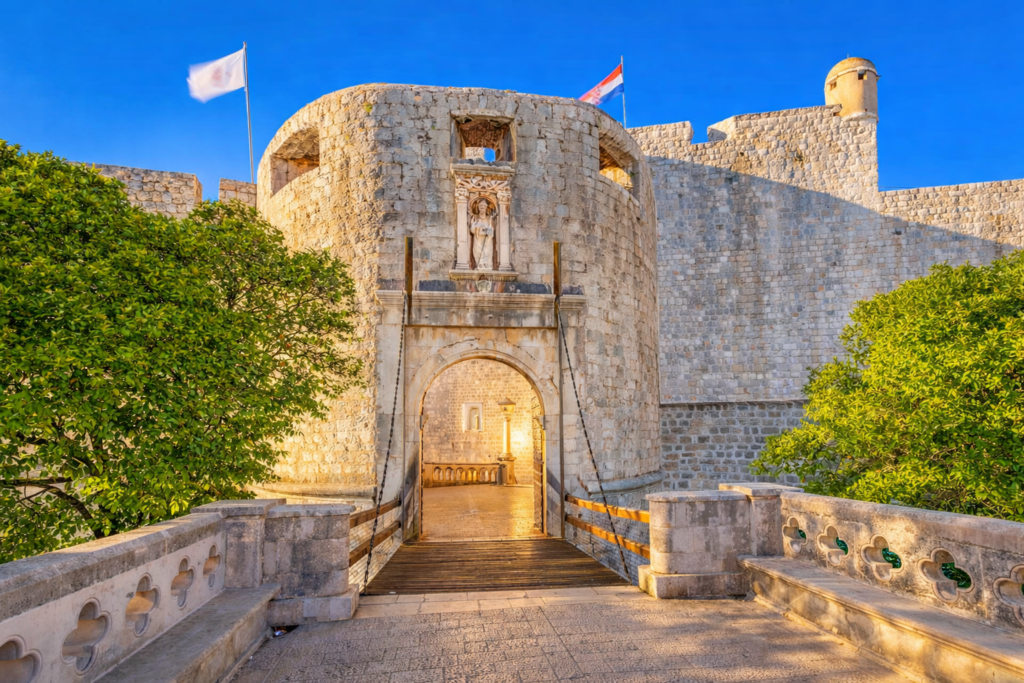
Dubrovnik’s Old Town is compact.
That is part of its charm, but it also means that large numbers of visitors can concentrate in a relatively small area.
Most first-time visitors naturally want to see the same places:
- Pile Gate
- Onofrio’s Fountain
- Stradun
- the City Walls
- Rector’s Palace
- the Jesuit Steps
- the Old Port
When several groups reach these places at similar times, Dubrovnik can suddenly feel much busier than it really is.
I sometimes meet guests who arrive expecting the Old Town to be packed from morning until night.
Then we turn off Stradun into a quieter street and somebody asks:
“Where did everybody go?”
Usually, nowhere.
We simply stepped out of the main visitor flow.
Cruise Ship Arrivals
Cruise traffic can influence crowd levels, particularly when several ships have passengers entering the Old Town within a similar period.
But no two days are exactly the same.
One summer morning can feel perfectly manageable, while another day during the same week can be noticeably busier.
Cruise-related visitor pressure can be particularly noticeable around Pile Gate, Stradun, the City Walls area and the Old Port.
Before your visit, check the official Dubrovnik Port Authority cruise-arrival schedule for your date. The published schedule is useful for planning, but arrival information can change.
If you are arriving by ship, my Dubrovnik Cruise Port to Old City guide explains the practical options for reaching the historic centre.
Cruise guests who prefer a flexible day can also choose a Private Dubrovnik Shore Tour, where the itinerary can be adapted around the ship’s schedule and conditions in the city.
Midday Visitor Flow
Late morning into early afternoon is often when several types of visitors overlap:
- organised groups
- day-trippers
- cruise passengers
- independent travellers
- hotel guests beginning sightseeing after breakfast
That creates temporary pressure around the best-known streets and monuments.
I have finished a tour on a busy summer day, stopped for coffee, and returned through the same area later to find it noticeably calmer.
Sometimes shifting one attraction by thirty minutes is more useful than searching for a supposedly secret route.
Famous Landmarks Create Natural Bottlenecks
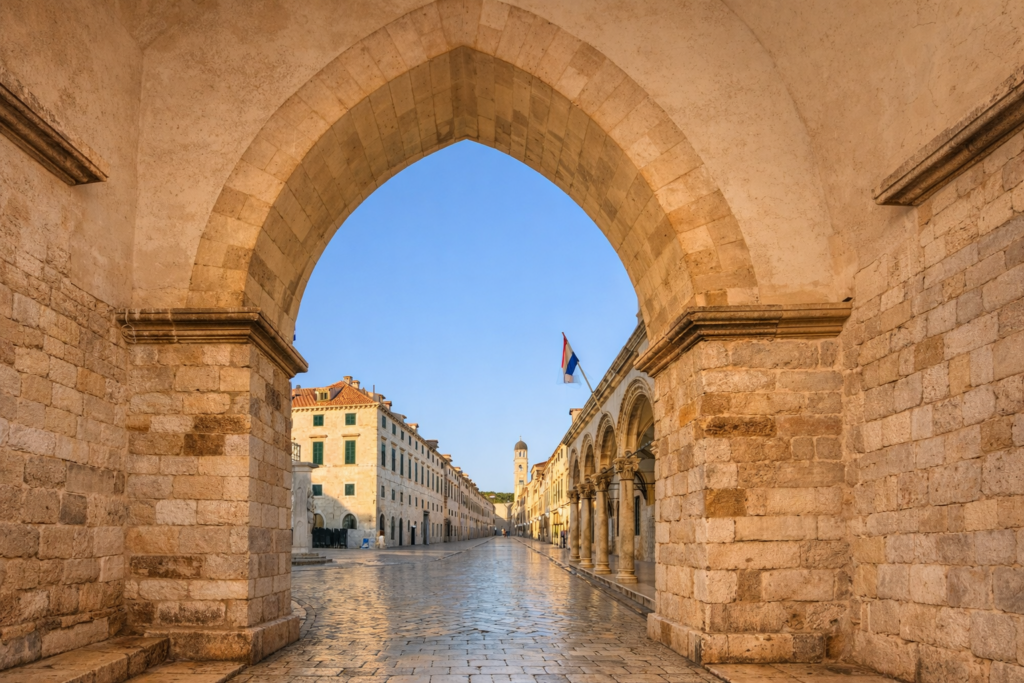
Certain places naturally attract more people because everybody wants to see the same landmarks and take the same photographs.
That is not a reason to skip them.
The better strategy is to avoid moving directly from one busy location to the next.
Alternate the main sights with smaller streets, quieter historical corners and places where you can slow down for a few minutes.
The Best Time of Day to Avoid Crowds in Dubrovnik
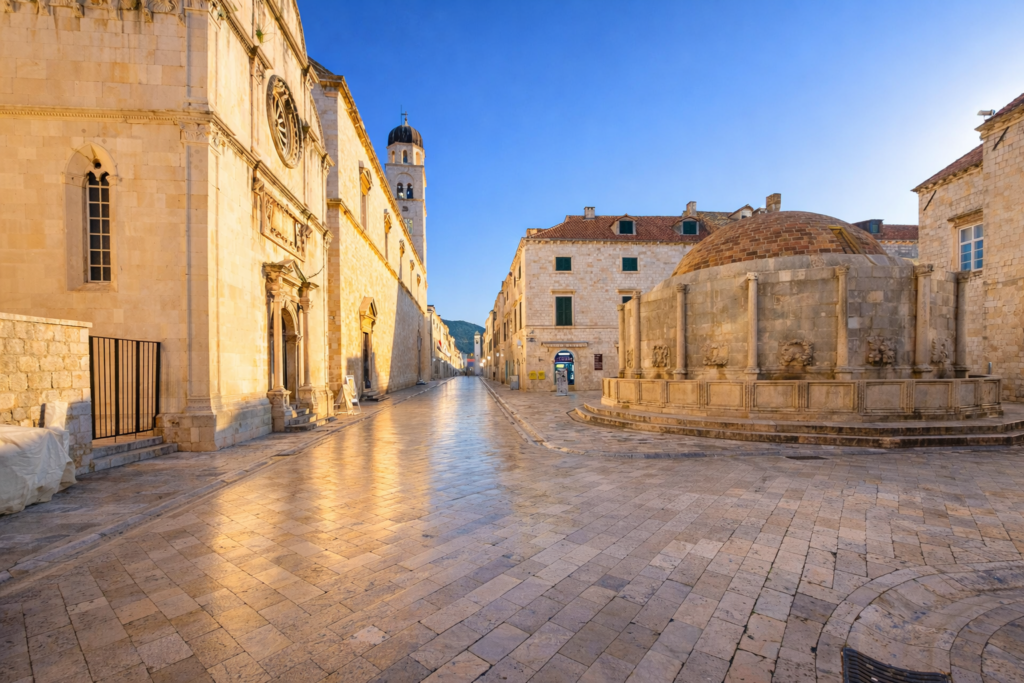
Early morning is usually your best chance of experiencing the Old Town before the main sightseeing flow builds.
Later in the morning and into early afternoon, visitor numbers often rise. Late afternoon and evening can feel easier again, although the character of the crowds may change rather than disappear completely.
The exact pattern depends on the season, cruise activity, weather and events.
Early Morning
Before the main visitor flow begins, the Old Town has a completely different character.
Cafés are opening.
Deliveries are finishing.
Shopkeepers are preparing for the day.
Locals are still crossing Stradun as part of their normal morning routine.
I have done early tours where guests could stop in the middle of Stradun for photographs without waiting for people to pass.
A few hours later, they understood why that moment felt special.
Early morning also has a major summer advantage: less heat.
If timing is one of the main questions for your trip, my dedicated Best Time to Visit Dubrovnik Old Town: Morning, Afternoon or Evening? guide compares the different parts of the day in more detail.
What Should You Do Around Midday?
I would not automatically leave the Old Town at noon.
Instead, change what you are doing.
Midday can be a good time for:
- lunch
- a museum
- coffee
- a shaded street
- a longer indoor visit
- a short break at your accommodation
- Lokrum
Trying to fit the City Walls, Stradun, outdoor viewpoints and every major square into the hottest and busiest part of the day is usually what makes Dubrovnik feel exhausting.
Sometimes the most effective crowd strategy is simply a long lunch.
Late Afternoon and Evening
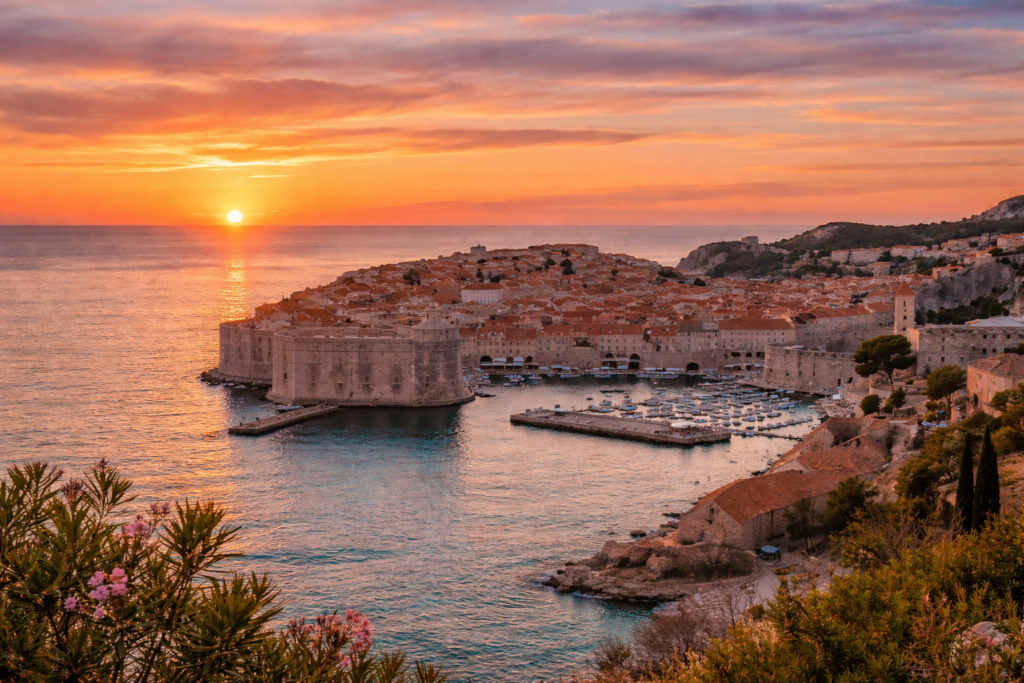
Later in the day, the atmosphere changes.
Some groups leave, day visitors start moving on, restaurant terraces fill and the light becomes softer.
The city can still be lively, especially in July and August.
But lively is not the same as congested.
Dubrovnik Crowd Levels by Time of Day
| Time | Typical pattern | Best use |
|---|---|---|
| Early morning | Often quietest | Old Town, photography, walking |
| Mid-morning | Building | Main sights |
| Late morning–early afternoon | Often busiest | Lunch, museum, side streets, break |
| Late afternoon | Often easing | Old Town, viewpoints |
| Evening | Lively; often less congested | Walking, dinner, atmosphere |
These are general patterns rather than fixed rules.
Check Your Exact Dubrovnik Date
One of the most useful planning habits is to look at your actual date, not just the month or day of the week.
There is no reliable rule that Tuesday will always be quieter than Saturday, or that every day in September will feel the same.
Before finalizing your itinerary, look at:
- the cruise-arrival schedule
- major cultural or sporting events
- weather and extreme heat
- seasonal opening hours
- whether several major attractions are likely to be busiest at the same time
This is particularly useful in summer and early autumn.
If one morning looks unusually busy, you may decide to visit a viewpoint first, take a slower breakfast or move your City Walls walk to another part of the day.
That kind of adjustment often makes a bigger difference than choosing your trip around a supposedly “quiet” weekday.
Side Streets to Explore Beyond Stradun
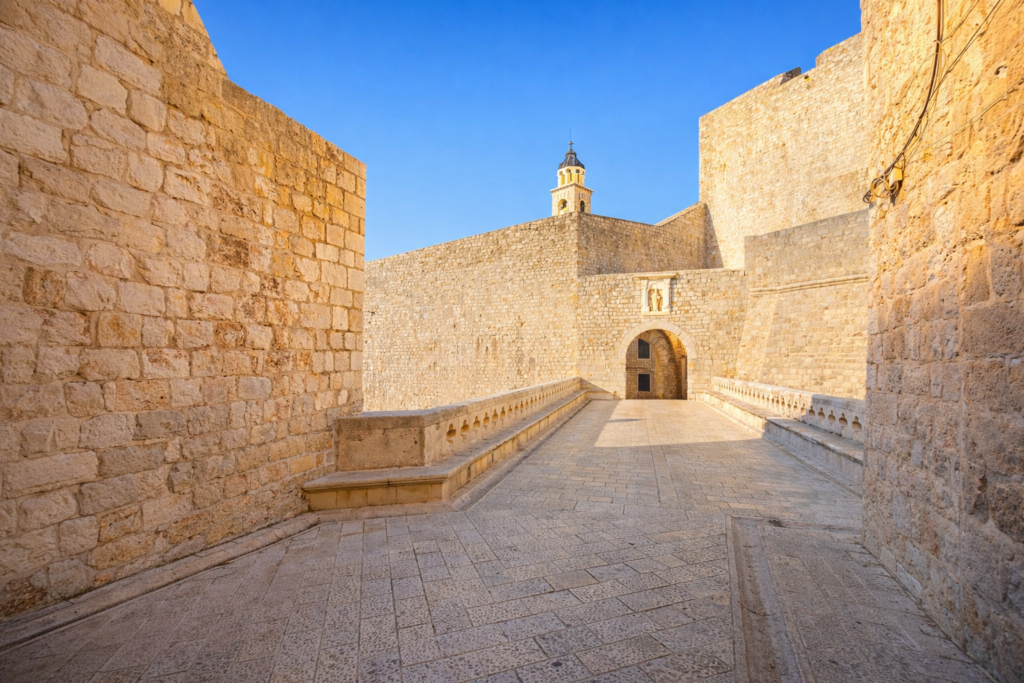
Side Streets to Explore Beyond Stradun
One of the easiest ways to step away from the busiest part of Dubrovnik requires no transport and no special ticket.
Simply leave Stradun for a while.
Stradun deserves its reputation. It is the ceremonial heart of the Old Town and one of Dubrovnik’s defining spaces.
But it is only one street.
A minute or two away, the atmosphere can change completely.
My Hidden Streets in Dubrovnik guide goes much deeper into these parts of the city.
Prijeko Street
Prijeko runs parallel to Stradun on the northern side of the Old Town.
It has historic houses, restaurants and numerous narrow passages leading back toward the main street.
It is certainly not undiscovered, particularly in the evening, but it gives you an alternative way to move through town without constantly returning to Stradun.
St Joseph Street
St Joseph Street is narrow, elegant and generally calmer than the main sightseeing axis.
I like stopping in streets like this because they remind visitors that the Old Town was never designed as an attraction.
People lived here.
Families raised children here.
Merchants conducted business here.
Water was carried through these streets centuries before anyone arrived with a sightseeing checklist.
That small change of perspective often changes the way guests see Dubrovnik.
Od Sigurate and the Northern Streets
The streets around Od Sigurate and the northern side of the Old Town give you another immediate change of atmosphere.
Some climb steeply toward the City Walls.
Others disappear between old houses and residential entrances.
I have taken guests only a few streets away from a busy Stradun and watched them start noticing doors, stone details and small architectural features they had walked straight past on the main street.
You do not need to skip Dubrovnik’s famous sights.
Just leave the obvious route occasionally.
Discover Dubrovnik’s Viewpoints Away From the Main Flow
When the Old Town feels busy, changing perspective can help.
Mount Srđ
Mount Srđ gives you the classic panorama over the Old Town, Lokrum and the Adriatic.
The cable car is the best-known way to reach the top, while road access and panoramic drives are alternatives.
The summit itself can become busy around sunset, so I would not describe it as a secret escape.
What it gives you instead is space and a completely different perspective on Dubrovnik.
Buža and the Southern Side of the Old Town
The sea-facing side of Dubrovnik feels completely different from Stradun.
Here, your attention shifts from streets and monuments to the open Adriatic.
The Buža areas are well known today, particularly in summer, but they can still provide a welcome break from the central pedestrian flow.
Fort Lovrijenac
Lovrijenac stands outside the western walls and offers one of my favourite perspectives back toward Dubrovnik.
Even the change of viewpoint is worthwhile after spending several hours inside the compact Old Town.
Best Months to Avoid Crowds in Dubrovnik
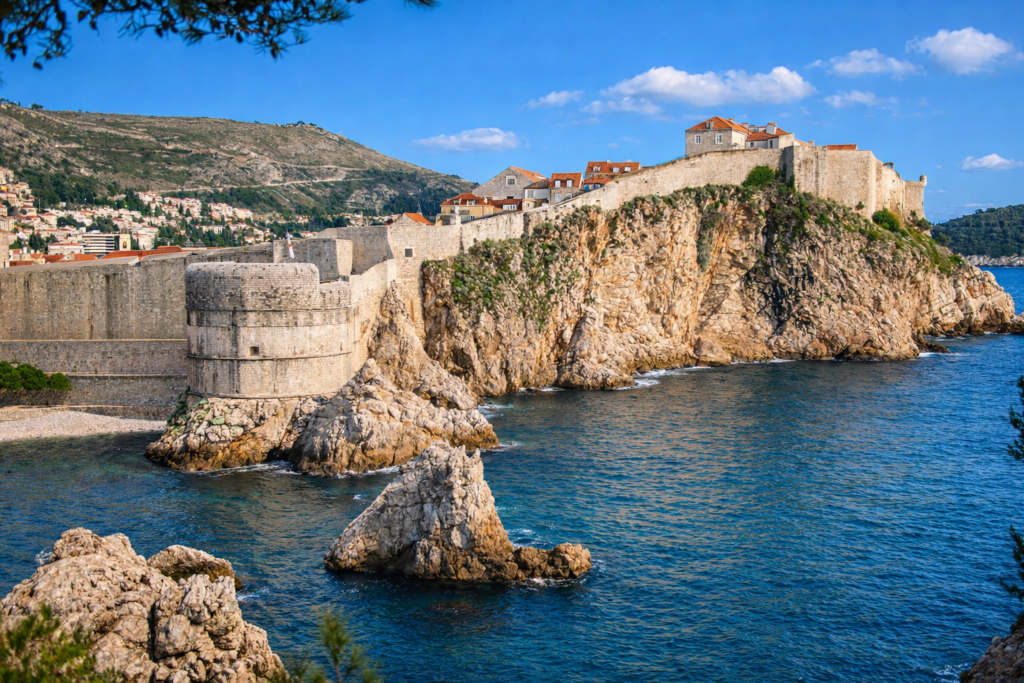
The month you choose can make a significant difference.
If minimising crowds is your main priority, April is one of the strongest choices.
October can also feel quieter overall, but it deserves a little more explanation because cruise traffic can remain significant. Check the Port Authority schedule for your specific date rather than assuming October will automatically be quiet.
For a stronger balance of pleasant sightseeing conditions, weather and seasonal activity, May and late September are usually attractive choices.
May is particularly good for walking and historical sightseeing.
September has another advantage: the Adriatic remains warm after summer, so it works especially well if you want to combine sightseeing with swimming.
However, shoulder season does not necessarily mean low cruise pressure.
September and October can still have substantial ship traffic, which means one day may feel surprisingly busy around Pile Gate while another date in the same month can be much more comfortable.
For a complete comparison of weather, swimming, sightseeing and visitor patterns throughout the year, see my Best Month to Visit Dubrovnik: Local Month-by-Month Guide for 2026.
Explore Beyond Dubrovnik Old Town
Sometimes the simplest way to avoid the busiest period is to spend part of the day somewhere else.
Dubrovnik is much more than the streets inside the walls.
Lokrum Island
Lokrum is one of the easiest escapes because it lies directly opposite the Old Town.
The journey is short, but the atmosphere changes almost immediately.
Stone streets give way to trees, swimming spots and open space.
I often recommend combining Lokrum with the Old Town rather than choosing between them.
Guests sometimes return after a few hours on the island saying it feels as though they have visited two completely different places in one day.
That is exactly why the combination works.
My Lokrum Island Local Guide covers boats, swimming and practical information.
Lapad
Lapad offers promenades, swimming areas, cafés and much more open space.
It can be especially useful for families who do not want every hour of the day to revolve around historical sightseeing.
A morning in the Old Town followed by an afternoon near the sea often works much better than six continuous hours on stone streets.
Elaphiti Islands
If you have more time, the Elaphiti Islands offer villages, beaches, swimming and a slower coastal rhythm.
They are part of the wider Dubrovnik experience and worth visiting in their own right.
How Flexible Touring Helps With Crowds
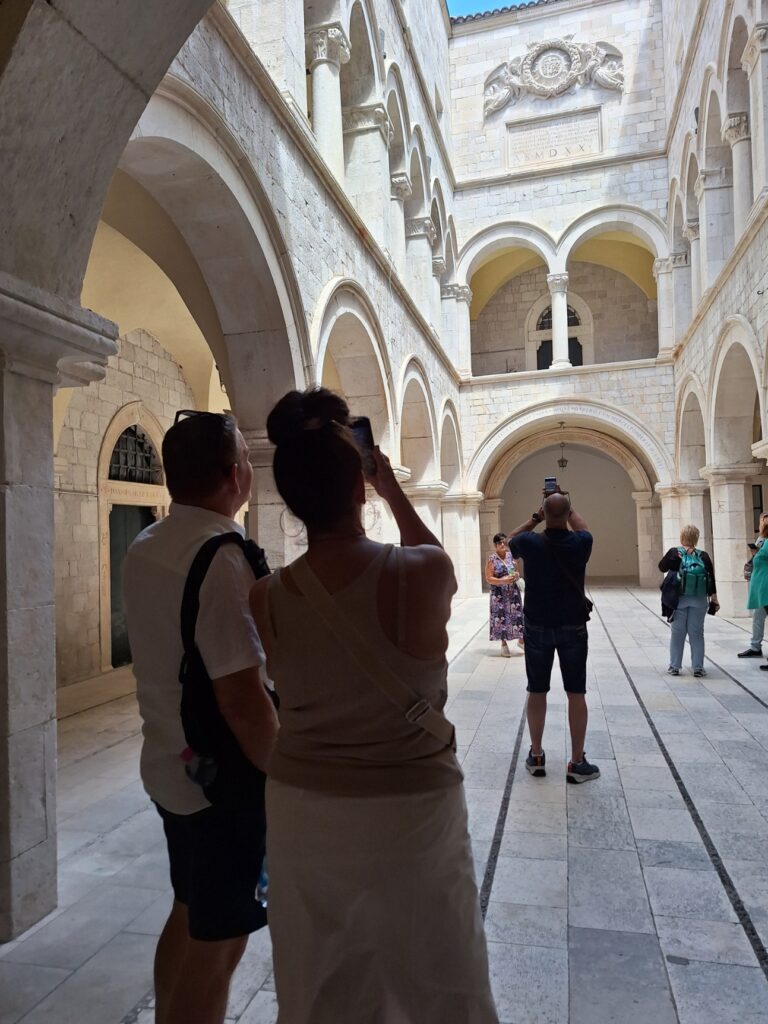
A private tour does not make other visitors disappear.
What it gives you is flexibility.
I remember one summer tour when several groups arrived around a place where I had intended to stop.
Instead of standing there trying to speak over everyone else, we changed direction and continued through a quieter nearby street.
About fifteen minutes later, we returned.
Most of the groups had already moved on.
Nothing was removed from the tour. We simply changed the order.
That is the advantage of flexibility in Dubrovnik: you work with the city as it actually feels that day.
If you prefer that kind of experience, you can explore my private tours in Dubrovnik.
A Simple Low-Crowd Dubrovnik Day
If avoiding the busiest periods is a priority, this is the type of rhythm I often recommend:
| Approximate time | What I would do |
|---|---|
| 7:30–10:00 | Explore the Old Town and major streets |
| 10:00–12:00 | City Walls or another major outdoor sight |
| 12:00–14:30 | Lunch, museum or slower indoor break |
| 14:30–17:00 | Lokrum, Lapad, swimming or rest |
| After 17:00 | Return to the Old Town, viewpoint, dinner or evening walk |
This is an example, not a fixed formula.
Opening hours, summer heat, visitor arrivals and your own pace should always come first.
But the principle is simple:
do not try to do everything during the same three hours.
Final Tips for Avoiding Crowds in Dubrovnik
A few principles matter more than a complicated itinerary.
Do not stay only on Stradun. Some of the most interesting parts of the Old Town begin a minute away.
Check the conditions for your actual date. Visitor flow, weather, events and ship arrivals can make two apparently similar days feel very different.
Use the busiest hours differently. Lunch, museums, shade, the sea or a short break can be smarter than forcing another major attraction into the itinerary.
Respect the heat as much as the crowds. A quieter City Wall under intense summer sun is not necessarily a better experience.
And most importantly:
Do not spend your holiday trying to avoid every other visitor.
Dubrovnik is popular because it is extraordinary.
The goal is not to find a crowd-free Dubrovnik.
It is to understand how the city moves and move with it.
Frequently Asked Questions About Avoiding Crowds in Dubrovnik
How can I avoid crowds in Dubrovnik?
Start sightseeing earlier, avoid placing every major attraction in the busiest part of the day, step away from Stradun occasionally and remain flexible with the order of your itinerary.
Is Dubrovnik less crowded early in the morning?
Usually, yes. Early morning is generally your best chance of experiencing Dubrovnik Old Town before the main sightseeing flow builds, particularly during the warmer months.
What time is Dubrovnik usually busiest?
Late morning through early afternoon is often the busiest period because organised groups, independent visitors, day-trippers and cruise passengers can overlap.
The exact pattern changes from day to day.
Are Dubrovnik crowds worse when cruise ships arrive?
They can be.
Large cruise arrivals can increase visitor pressure around the main entrances and sights, particularly when several groups reach the Old Town during a similar period.
However, cruise traffic is only one factor, and not every ship day feels equally busy.
How do I check cruise ships visiting Dubrovnik?
Use the official Dubrovnik Port Authority arrivals and departures schedule and check your exact date. Remember that published arrival information can change.
Which streets can feel quieter in Dubrovnik Old Town?
St Joseph Street, Prijeko and parts of the northern residential streets can often feel calmer than Stradun.
No street is guaranteed to be empty, but stepping away from the main pedestrian axis can make a noticeable difference.
Is Dubrovnik crowded all year?
No.
July and August bring strong overall tourism demand, while spring and autumn often feel more comfortable for sightseeing.
September and October can still have substantial cruise traffic, so shoulder season should not automatically be interpreted as an empty Old Town.
Can you avoid crowds in Dubrovnik in July and August?
Yes, although you should expect other visitors.
Use early mornings, quieter streets, better-timed City Walls visits and breaks outside the main Old Town flow rather than expecting peak summer to feel like the off-season.
Discover the Quieter Side of Dubrovnik
Dubrovnik does not need to be empty to be memorable.
Some of my favourite moments with guests happen only a street or two away from the busiest routes: an unexpected courtyard, a historical detail nobody had noticed, a conversation over coffee or a view that was not originally on the itinerary.
See Stradun.
Walk through Pile Gate.
Visit the City Walls.
Stand in front of Rector’s Palace.
But allow yourself to turn down a street simply because it looks interesting.
Very often, that is where Dubrovnik begins to feel personal.
If you would like to explore the city with a flexible itinerary and a local guide, you can discover my Dubrovnik Old Town Private Walking Tour.